

A union leader has enlisted the support of MHKs in a campaign to bring in a compensation scheme for victims of asbestos.
Eric Holmes is stepping down on July 31 as regional officer for Unite after being diagnosed with chronic obstructive pulmonary disease (COPD).
He suspects his condition has been brought on by his exposure to asbestos while working as an apprenctice in a Merseyside shipyard as a teenager in the 1970s.
Between 2011 and 2016, eight people in the island died of mesothelioma, an aggressive cancer of the lining of the lung caused by exposure to asbestos.

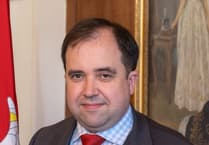


But Mr Holmes fears more Manx workers will be diagnosed with this and asbestos-related diseases over the next 40 to 60 years because he says the material was banned later here than elsewhere.
He said: ’The spotlight has been put onto the issue now.
’As an island we are facing increasing diagnosis of this disease. We lag behind the UK and the USA stopped using asbestos 20-plus years ahead of us.’
A Diffuse Mesothelioma Payments Scheme (DMPS) scheme was introduced in the UK in 2014 as an ’insurer of last resort’ for victims of this terminal disease.
It was brought in because insurance companies failed to keep proper records from the 1950s to the early 1990s. Not a penny in compensation was paid out by insurers as no policy proving liability could be traced.
But no such scheme exists in the Isle of Man.
Asbestos was banned in the UK in 1999 but Mr Holmes believes a ban did not come into force in the island until later.
He has not been able to establish exactly when but said the island woke up to the perils of asbestos after a prohibition order was placed on maintenance work being carried out on the Sea Terminal in 2008.
Last month, Mr Holmes, Unite lawyers and representatives from the Merseyside Asbestos Victims Support Group met with Health Minister David Ashford and Ramsey MHK and GP Dr Alex Allinson to discuss what can be done to help victims of asbestos-related diseases.
Dr Allinson said: ’Although the number is very small, the impact on victims and their families is devastating.
’It is wrong that people in the island who have been exposed to asbestos while working for companies in the island do not have the same access to compensation.’
The UK compensation scheme is funded by the insurance industry with an annual levy of up to 3% on employers’ accident at work insurance premiums.
Mr Holmes served his apprenticeship in a ship repairers company in Birkenhead and believes he was exposed to asbestos between 1976 and 1978.
He recalls: ’We were all pulled off the ship as there were asbestos fibres released into the working areas but we were told shortly thereafter it was okay as it was blue asbestos.
’Later on we were told that it could take 40 or 50 years to develop.’
He had two uncles who were cleaner labourers in the same shipyard who both died of asbestosis.
He says by the time a direct link is established to asbestos exposure, there is very little time left, especially any quality time, for those diagnosed with the condition.
For his part, he says with his stage one COPD, his health deteriorated over the last 18 months and his breathlessness increased dramatically but he believes his cycling is helping him deal with his condition.
Comments
This article has no comments yet. Be the first to leave a comment.