.JPG?width=94&height=94&crop=1:1,smart&quality=75)

A new oxygen-based treatment is being made available on the Isle of Man to help patients with chronic leg ulcers who are unable to use the island’s hyperbaric chamber.
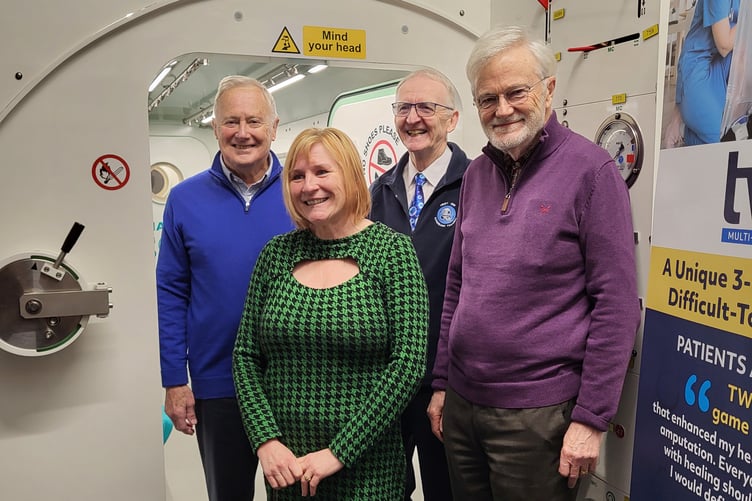
The treatment, known as the TWO2 ‘boot’, delivers oxygen directly to the surface of a limb under slight pressure and is now being used locally following a donation from the Henry Bloom Noble Healthcare Trust.
The equipment is being offered through HBOT IOM, which provides and operates the island’s hyperbaric oxygen chamber. The charity has recently completed a refurbishment of its facility and the installation of a new hyperbaric system, with full operations expected to resume later this year.
Hyperbaric oxygen therapy has long been used to help speed up healing in a range of conditions, including burns, fractures and leg ulcers. However, some patients are unable to use the chamber because of underlying medical conditions.



To help meet that need, the TWO2 system has been introduced as an alternative option. The equipment has been in use in the United States for around 15 years and has recently been approved for use by NHS England for patients who have not responded to conventional treatment.
The system has been shown to help relieve pain, improve healing rates and reduce recurrence in patients with chronic leg ulcers and similar conditions.
Unlike hyperbaric therapy, the TWO2 treatment can be used at home. Patients wear a sealed boot around the affected limb, allowing oxygen to be delivered directly to the wound area. Treatment is typically carried out five times a week for around 90 minutes, with average healing times of about 12 weeks.
Samantha Cook, from Aoti, the company which supplies the equipment, said the aim was to allow people to remain at home while receiving treatment.
‘It’s about trying to keep people at home,’ she said. ‘Most patients can use the equipment themselves after some initial support. I travel to the island regularly to train patients and I’m available to support them throughout the treatment.’
Debbie Barron, manager of the hyperbaric chamber, said the charity was grateful for the funding that had made the new treatment possible.
‘We are extremely grateful to the Henry Bloom Noble Healthcare Trust for making this substantial donation,’ she said.
‘The first patients began using the boot towards the end of last year and staff at the hyperbaric chamber, local healthcare workers and the patients themselves are already very pleased with the results.’
She said evidence was being gathered, with patients’ consent, to document outcomes.
‘This already shows that ulcers have healed exceptionally well and that associated oedema has reduced significantly, allowing patients to become more mobile,’ she said.
Former surgeon Malcolm Clague, a trustee of the Henry Bloom Noble Healthcare Trust, said chronic leg ulcers could have a serious impact on quality of life.
‘They can be very disabling, particularly for older people, affecting mobility and the ability to get out and socialise,’ he said.
‘The trust is pleased to fund this equipment as a useful addition to existing treatment options.’