
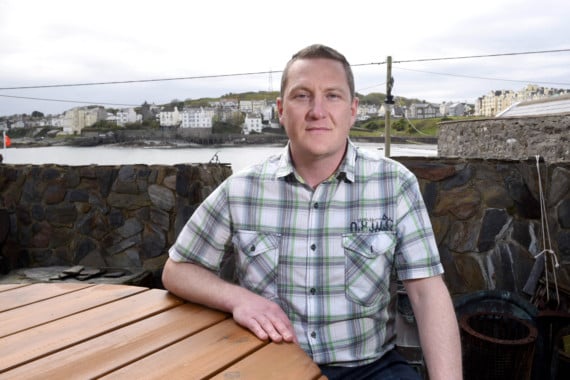
Living with ME (Myalgic Encephalomyelitis) is a ’half life’, an existence in the ’shadowlands’ said Craig Morris.
The 40-year-old has suffered from it for nine years and he described the attitudes towards ME patients - of which there are at least 350 in the island - as ’one of the scandals of the health profession’.
So he is naturally very excited by £170,000 pledged last week by Health Minister David Ashford to support ME patients, reports Mel Wright.
The announcement was prompted by a petition with over 1,500 signatures drawn up by charity ME Support Isle of Man calling for a Tynwald select committee to investigate the ME provision. This followed years of discussion between Craig and others involved in the charity with the department.


.jpeg?width=209&height=140&crop=209:145,smart&quality=75)
.jpeg?width=209&height=140&crop=209:145,smart&quality=75)
There are no ME specialist services in the island and the provision in England is patchy at best.
This is a global issue, and there is an international protest on May 12, last year 100 cities are around the world took part.
Last June a UK parliamentary briefing into the ME treatment and research said the disease affects an estimated 250,000 adults and children in the UK, and around 17 million people worldwide.
It said most people do not have adequate care and support. Many adults are unable to maintain employment or relationships with family and friends, while children fall behind at school.
ME sufferers are six times more likely to commit suicide.
Life was going well for Craig, a sporty Cambridge university graduate, who had just landed his ’dream job’ as head of English at King William’s College.
He was on a weekend trip to London in 2010 when he was struck down by glandular fever and everything changed.
He stopped working and his marriage foundered.
He now lives on benefits and is cared for by his parents; he said the financial impact has been ’crippling’
Crushing exhaustion is the fundamental symptom of this complex disease - also called chronic fatigue syndrome - but it can have many other impacts.
Craig described his current condition: ’I have to constantly rest and only have the energy for very short tasks or my symptoms become very severe and frightening.
’On a good day I have a profound lack of energy - like when you have the flu or glandular fever - and this is compounded by post-exertional malaise (where even a very small physical, or mental or emotional effort can cause significant symptom amplification for days, weeks, even months).
’This is why doing even the smallest of tasks - things people take for granted like sitting up, reading, listening to the radio, speaking, thinking - are things I have to budget for very carefully.
’Sleep isn’t refreshing so I wake up in the morning feeling exhausted.
’It’s also very difficult to fall asleep and to stay asleep. I often wake at 2-3am, 4am, 5am etc and may not be able to sleep until midnight.
’I suffer brain fog (problems with thinking and memory - forgetting words or names or what I was talking about), cognitive impairment, dizziness, severe headaches, I have a lowered immune system and suffer frequent infections and skin problems.
’I’m hyper sensitive to noise and light, I often trap nerves moving and have lost my sense of balance so am clumsy and fall and stumble and hurt myself doing simple personal care tasks or moving around. I have irrital bowel syndrome and small intestinal bacterial overgrowth and a lot of stomach problems which makes eating difficult.
’I also have orthostatic intolerance which means my symptoms get worse when sitting or standing upright - this means that I have to spend a lot of time laying in bed which causes acid reflux problems in my stomach.
’My body struggles to regulate its temperature so my hands and feet may be painfully cold - to the point I get chilblains - while my head is so hot I’m sweating.
’I’ve developed allergies and sensitivities to foods and chemicals and often get painful spots and burns on my hands from touching ordinary household objects (e.g. ones with rubber or adhesive in).
’Obviously being this severely ill and isolated is a mental battle too even on a good day but on a bad day it can seem completely overwhelming.
’I can’t watch a lot of things on TV anymore because they would be too tiring or upsetting so I like to watch things I’ve already seen before and slow-paced documentaries.
’Most people have actual friends whereas my friends are mainly fictional characters. Sad but it works.
’I used to read a lot but it’s very hard to do so now. My muscles are very weak and can tear doing personal care tasks you wouldn’t think even took energy.’
He alternates ’between resting for 30 minutes and trying to so a five, 10, 15 maybe 30 minute task such as listening to the radio, or a podcast resting in the sunshine or in bed before resting for another 30 minutes at least.
’Sometimes after a draining five minute task I need to rest for hours. Even after being wheeled about in my wheelchair it takes the rest of the day to recover from a 10 minute excursion even though I haven’t had to physically move. I can leave the house but at great physical cost and my symptoms are amplified by the smallest exertion but I would go mad if I was completely isolated and never left the house so I have to take turns trading off physical and mental well-being as best I can.’
He knows ’heartbreaking’ stories of others who suffer even more: ’I know people suffering much more gravely from seizures, who are literally bedbound, who cannot speak at all, who are tube fed.
’Life is hard with ME and I don’t know why people with ME aren’t taken more seriously.’
While there is no cure or treatment for ME, the funding means an ME specialist GP can be appointed along with an occupational therapist, physiotherapist and psychologist providing desperately needed practical, physical and emotional support.
Also it would improve the limited current advice to exercise which is not only ineffective it is harmful.
Plus it will speed up diagnosis, which can take years, so losing the chance to monopolse on a critical early stage
’There is a six month window of opportunity at the onset - like the golden hour with heart attacks - let’s spend the money to stop people devastatingly ill from deteriorating to the point they can’t recover - let’s help them pick up the pieces of their shattered lives and build something they can live for.’
â?¢ To lift public awareness there are videos of ME sufferers’ experiences on Facebook; To share your story, contact Phil Gawne on 834844 or [email protected] or through Facebook or Twitter.
Comments
This article has no comments yet. Be the first to leave a comment.