

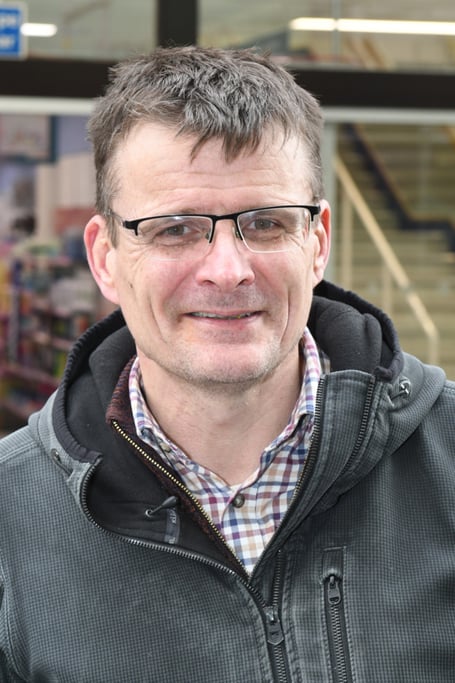
The director of a mental health charity has described how he felt ’bullied’ and ’ignored’ by professionals who work within the mental health service.
Graham Clucas, who founded Quing in 2017, made the comments in a Tynwald committee hearing, in which he stated his views on how he perceives the current treatment of mental health through the government system.
Quing is an education centre that offers peer mentor training and runs a social space, where people can talk openly about their mental health.
Mr Clucas was asked what the relationship was like between himself and the Manx government, to which he replied: ’What relationship? I’ve felt bullied, I’ve felt ignored, I’ve been stood upon - and so have the community members. We invited Mental Health Services a few months ago and I was utterly shocked at how they treated us.’




One member of the social affairs policy review committee, Martyn Perkins, then asked about how Quing’s training for health professionals was received, to which Mr Clucas said: ’We’ve always been ignored. We’ve had community experts who have been award-winning, and nobody from mental health or the prison service came.’
When asked by another member of the committee about experiencing bullying and incidents where he felt ignored, Mr Clucas described how during an independent review of the Isle of Man health and social care system, how the person from the third sector liaison had ignored him and that someone in Quing had been working towards a work placement with the mental health service for three months, then taken off the scheme without any prior warning.
Mr Clucas said: ’Where’s the safeguarding in that? This person has a history of mental health problems, a history of suicide and they just get rid of her like that.’
The committee asked if he could describe more of the bullying by mental health staff towards him, to which he said if he had nodded and said the right thing and talked about ’proper’ community building, he wouldn’t be acknowledged.
Another member of the committee, Julie Edge MHK, asked if he could describe how he was not recognised by government and if he knew of any particular reasons for this, to which he responded: ’I’ve been through the mill, I’ve been sectioned and I’ve had more diagnoses than I care to remember. Every time I go to see a GP there’s a set process and they go through my files.
’They start to move away from you and say: "People like you don’t heal." I am the lived example that their health model is wrong.’
Mr Clucas then said how Quing had told members of the mental health service what they were doing within the organisation, and how they had come up with a similar asset-based community initiative soon after. ’Why set something up to compete with something that’s already existing? Why not just help fund something that’s already going on?’
Mr Clucas said waiting lists were a big issue within the mental health service and that if professionals didn’t look at the trauma behind an individual’s mental illness, it would increase.
He touched upon the fact that if a mental health service worked at capacity, it would collapse: ’The mental health model isn’t helping people.’
In closing, Mr Clucas stated: ’I will keep Quing going for as long as I can. We’ll still deliver the courses. The people who have come through the system still keep in contact and there’s a sense of belonging and people know they can come down whenever they want.’