

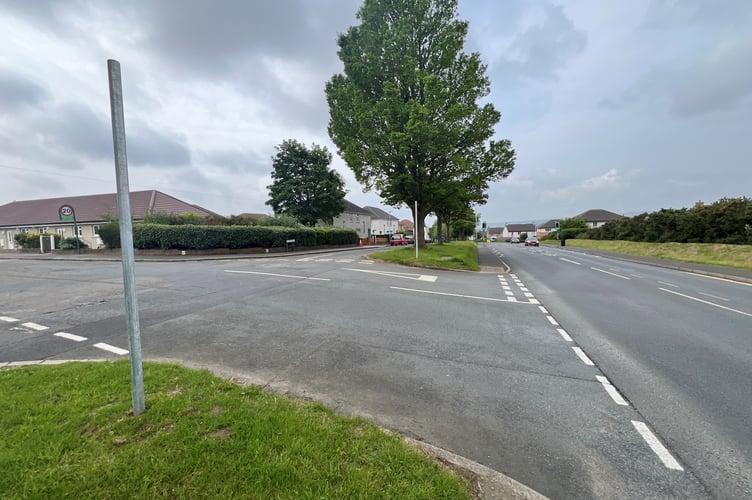
For an Isle of Man that still prides itself in having no national speed limit, the roll-out of a default 20mph in residential areas seems all the more surprising.
Public support for the policy appears limited.
The origins date back to 2019 when the Department of Infrastructure started to review the extent of 20mph provision in towns.

.jpg?width=209&height=140&crop=209:145,smart&quality=75)

Then at the July 2020 sitting of Tynwald, Douglas Central MHK Ann Corlett asked the then Infrastructure Minister, the late Tm Baker, if he would consider implementing a speed limit of 20mph on residential streets and roads in Douglas with special focus on proximity to schools.
Mr Baker, a keen cyclist, replied that it was already his department’s policy to introduce 20mph speed limits on residential roads in towns and villages.
He said designs had been prepared for Port St Mary, Castletown and Peel, and consultation was underway with local authorities regarding implementation. He said Douglas, Ramsey and Port Erin would be assessed over the coming year before design and implementation.
At the same sitting, then Middle MHK Bill Shimmins, another keen cyclist, tabled a motion that the maximum speed limit to apply on urban roads should be 20mph and narrow rural lanes should be 30mph.
He said it was a global debate and the evidence showed that reducing urban speed limits was the right thing to do.
But he acknowledged: ‘The evidence also shows that simply putting 20mph speed limits on does not mean that everyone respects those speed limits.
‘Simply putting signs out and publicising a change does not change everyone’s behaviour overnight. An element of enforcement is required on any speed limit to encourage compliance.’
Mr Baker stressed that 20mph zones must have community support.
‘We cannot credibly pluck speed limits out of the air and apply them across a wide swathe of our island,’ he said.
Mr Shimmin’s motion, as amended by Mr Baker, failed to carry with the branches in division and it returned to the October sitting for a combined vote.
Mrs Corlett said she could not support Mr Shimmins’ original motion, as she felt it was too broad and that it gave the impression that a blanket speed limit of 20mph or 30 mph would exist everywhere.
She tabled an amendment that the default speed limit should be 20mph in residential areas, with priority placed on reviewing areas around schools, and Tynwald voted unanimously to support the motion as amended.
With a new administration in place, Mrs Corlett returned to Tynwald in April 2023 with a motion calling for the court to reaffirm its opinion that the default speed limit should be 20mph in residential areas, with priority placed around schools, and that the DoI may apply higher speed limits where appropriate.
Her motion called for the DoI to report back to Tynwald with recommendations on implementation. This was carried unanimously.
The following month, the DoI announced it was engaging on a project to bring in 20mph limits in residential areas across the island.
In April the Infrastructure Minister Michelle Haywood revealed the total cost would be £400,000.
In May, Tynwald approved a phased implementation.
During the debate, Onchan MHK Rob Callister described the situation as a ’political train crash’ and insisted that at no point had Tynwald asked the DoI to roll out 20mph zones right across the island without any form of engagement or consultation.
But Dr Haywood insisted it was ‘not a done deal’ and her department was committed to detailed further consultation.
Public consultations were subsequently held for roads in the east, north, central and the south and some changes made as a result of feedback.
There was criticism that some poles for new signs were erected in Douglas and Onchan before the consultation had closed.
From Monday, January 19, the first new 20mph signs are to be erected, with the new limits coming into force on a road by road basis.