

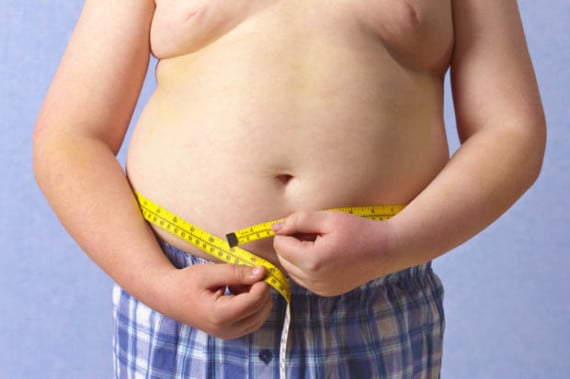
The Isle of Man has more overweight people than England but fewer of them are outright obese, according to statistics in the island’s annual public health report for 2018.
The report, entitled Childhood Healthy Weight: The road to a better future, says a quarter of children in the island are overweight or obese by the age of five. The statistic is even worse for adults, with two thirds of them similarly afflicted.
Public health director, Dr Henrietta Ewart, said in her introduction: ’We need to move beyond an approach based only on trying to change the behaviour of individuals or families to one that addresses the environment which all too often encourages poor diet and sedentary behaviour.’
Dr Ewart adds she hopes the report will be a starting point for tackling childhood overweight and obesity, which she describes as ’one of our greatest public health challenges’.

.png?width=209&height=140&crop=209:145,smart&quality=75)

According to statistics contained in the report, reception class aged girls are slightly more overweight than boys with 25.3% affected compared with 24.9% of boys.
The equivalent figures for England are 22.1% for girls and 23.2% for boys.
But figures for outright obesity are different with 9.6% of five-year-olds affected in England, compared with 8.8% in the Isle of Man.
It notes a range of danger factors which can lead to children being overweight. Some of these are obvious: parenting style, parental obesity, being driven to school, snacking and sedentary behaviour.
Others are less so, such as smoking in pregnancy, poor sleep and not being breast fed.
’Factors influencing a child’s weight begin even before birth. Children of women who were obese before and during pregnancy are more likely to become obese themselves as adults,’ the report says, adding babies weighing over nine pounds at birth have double the risk of being obese later on. The same applies to babies of mothers who smoked.
Moreover, the longer, up to nine months, a baby is breast fed, the less the likelihood of its being obese, yet breast feeding rates in the island, at 41% at six to eight weeks, is lower than the England average. The report stresses the importance of family influence in healthy eating and living a healthy lifestyle.
Primary school initiatives such as the Daily Mile and, for older children the Fit for Life programme, were praised, but the older children were more susceptible to adopting bad habits, the report said.
’The environment for secondary school pupils and factors such as peer pressure often make the healthy choice a difficult and unpopular one. The environment in their wider communities is also often not conducive to healthy lifestyle choices,’ the report adds.
It notes the number of fast food outlets within about half a mile of the island’s five secondary schools. In Douglas there are 19 within range of Ballakermeen, 11 around St Ninian’s Lower, while Ramsey tops the table with 20 in range of Ramsey Grammar School.
’Within a 10 minute walk of schools, pupils can get to take-aways, corner shops, cafes and petrol stations,’ the report notes, adding: ’Although some offer healthier options, high calorie, energy-dense choices are prominent, often in large portion sizes, high in sugar, salt or fat.’
The report notes the impact of poverty on the problem, with high fat and sugar foods costing, on average, £2.50 per 1,000 calories, while healthy options, on average cost £7.49 per 1,000 calories.
In conclusion, the report recommends promoting affordable healthy food, minimum nutritional standards for school meals and supporting schools to encourage healthy eating and physical activity. It also recommends a range of initiatives involving ante-natal and maternity services, working with families and communities and extending the Child Measurement Programme to include routine measurement of children age 10 to 11.
Comments
This article has no comments yet. Be the first to leave a comment.