
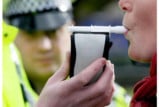
Cyclists could be breath-tested under a proposed law change.
The Legislative Council has supported the recommendation, made in a report by a select committee of MLCs who were examining a government bill that aims to update road traffic laws.
Juan Turner put the report before colleagues last week.
It wants the Road Traffic Legislation (Amendment) Bill to be amended so that drink and drug testing rules can be applied to ’all road users other than pedestrians’.
 Chief Minister stands firm on minimum wage rise but signals support for businesses
 National income falls again as GDP drops for a second year in row
 New organ donation law to come into force as island urged to ‘make informed choice’
 Department outlines new education priorities as Tynwald receives updated plan
He explained: ’We are saying that the drink and drug laws should apply to all road users, not just cars and motorbikes.
’But we have to draw the line at pedestrians - because you would not be able to walk home from a pub.’
The proposal to amend the bill was supported by Michael Coleman.
’Cyclists are subject to being stopped for being under the influence of alcohol, except that the test is the subjective test of a police constable,’ he said.
’What we are saying is that, if the police constable thinks that this person is under the influence of alcohol, maybe a binary test - like a breathalyser test - would be much better evidence in court than a subjective police officer’s opinion.’
Standards required from road users should not be dependent on the type of vehicle they were using, he said.
However, Jane Poole-Wilson asked, if a cyclist was just over the legal alcohol limit for driving, but was handling their bike in ’a safe way that is not causing a problem to another road user, would it not be preferable, in an environment where we are trying to encourage more active transport and certainly not for people to get behind to drive a car, still that that person would cycle or walk as opposed to drive a car?’
The Department of Infrastructure, whose bill the report was investigating, opposed the move.
Department member David Anderson told the other MLCs that the police believed the current provisions were adequate and there were few examples of road collisions involving a cyclist who was impaired.
Mr Anderson said: ’The chief constable advised the committee he was only aware of two incidents of this nature and, in his view, although the provisions could be amended for clarity, he felt the number of incidents did not warrant any change in this area.’
MLCs, however, voted in support of the recommendation, 6-2, with Mrs Poole-Wilson and Mr Anderson against.
Other recommendations approved included the removal of the proposed extension of driving offences to animal-drawn vehicles, plus a zero limit for ’all psychoactive substances’ under the drug-driving provisions.
The bill started its scrutiny in Legislative Council and has yet to appear before the House of Keys in any form.
* President of Tynwald Steve Rodan said the select committee report and Legislative Council debate demonstrated the value of the upper chamber.
In pointed remarks, just one week after Tynwald debated parliamentary reform, Mr Rodan said: ’May I just say for the record that I think proceedings this morning has demonstrated the value of Legislative Council as part of the Tynwald structure.’
He called on critics of the upper chamber, including the media, to note, ’the work that individual Members of Legislative Council actually do, as opposed to what we are wrongly perceived to do’.
Mr Turner agreed.
’This is the Legislative Council at work,’ he said.
’It may be that really we should be doing this a bit more with legislation that comes before us - where appropriate, not just for the sake of it - but where we have issues that arise during the passage of bills.
’This is absolutely what we are here for.’
Comments
This article has no comments yet. Be the first to leave a comment.