

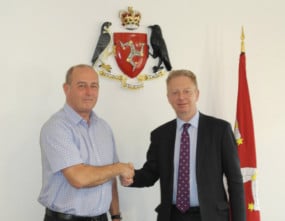
The Isle of Man Government has donated £81,989 to help fund Red Cross health facilities for pregnant women in Yemen.
The donation will go towards a two-year project at the Red Cross hospital in Hajjah, Yemen.
The emergency obstetric care project provides a range of services for women and children, from antenatal care to mother and child health consultations.
The funds will help the Red Cross to supply essential medicines, hospital supplies and laboratory work, as well as contributing towards staff costs for doctors, a gynaecologist and nurses.



.jpeg?width=209&height=140&crop=209:145,smart&quality=75)
As the conflict in Yemen enters its fifth year, only half of health facilities are still functioning.
Around 16m people in Yemen don’t have access to healthcare. Where clinics are still open, some staff are working without pay or necessary equipment.
Martin Birchenough, British Red Cross’s Isle of Man development manager, said: "This is an incredibly generous contribution on the part of the Isle of Man Government
’The money will make a real difference to the lives of women living in a very difficult and dangerous situation in Yemen. This vital health service means expectant mothers in Hajjah will have the help they need, and their children will get a safer, healthier start in life.
’This gift is a great testament to the longstanding relationship between the Red Cross and the people of Isle of Man that has existed for many years and brings hope to people in crisis around the globe.’
Chief Minister Howard Quayle said: ’The Isle of Man recognises how important healthcare provision is for empowering all women and girls in developing countries.
’Every day, approximately 830 women die from preventable causes related to pregnancy and childbirth. Because of the ongoing political situation in Yemen much of the healthcare system has broken down and we believe that the emergency obstetric care being provided by the British Red Cross is essential to prevent further loss of life and to protect the future for that country.’
Dr Alex Allinson MHK, a political member of the Cabinet Office, said: ’The Isle of Man is a responsible member of the global community and is committed to supporting international development. The Isle of Man Government is pleased to support this vital work by the British Red Cross.’
Women, in particular pregnant women, and their new-borns are a high-risk group and require special medical attention. Without access to reproductive health services, these women face an increased risk of life-threatening complications.
CASE STUDY:
Fatima Khamisi, a 30 year-old mother of two from Mostabaa’ District, Hajjah, experienced the lack of access to healthcare first-hand.
The living conditions in this area are difficult, and Fatima and her husband were already struggling to provide for their family.
Seven months in to her pregnancy with her second child Fatima started to experience complications.
’I didn’t know what to do. The pain was so severe, I could barely get out of bed each day,’ said Fatima.
With the highest number of Internally Displaced People (IDPs) in Yemen, Hajjah is bearing a heavy burden, given the already limited and overstretched medical services.
Health facilities in general are far away and hard to reach.
Despite the pain, Fatima didn’t seek medical help until two months later.
With financial support from a neighbour she and her husband decided to undertake the long journey to the district’s main health facility.
The journey took over three hours and they arrived only to find out the hospital’s only gynaecologist was not available that day.
They family decided to leave without proper medical assistance. But on top of the excruciating pain, she was worried that she would deliver soon and was afraid of losing her child. A man in front of the hospital saw the desperate family and advised them to seek medical help at the Yemen Red Crescent Society (YRCS) emergency obstetric care facility nearby.
After a consultation by the gynaecologist, Fatima was diagnosed with anaemia and a severe cervix stenosis, a condition that increases the risk of pregnancy loss and premature birth. The doctor and medical staff took care of Fatima and seven hours later, she gave birth to a healthy baby boy.
Fatima’s biggest fear was not being able to give birth naturally - and ultimately, losing her child.
She is very happy that her journey brought her to the Red Crescent emergency obstetric care facility and now, one month after her difficult experience, she is happy back home with her husband and her two healthy children.
Comments
This article has no comments yet. Be the first to leave a comment.