
We don’t have any rabbits for rehoming in our small animals unit at the moment, although we do have a few who are boarding with us, and a couple who are going through a bonding process.
Having no unwanted rabbits is an excellent thing and indicates that it’s not as easy as it has been to simply go out and buy a pet rabbit - for example, there are none for sale in local pet shops at the moment.
Sadly, when life gets back to normal after lockdown we will start to see rabbits that have all too often been the subject of impulse buys, and bought for children who simply want something cute and furry to cuddle for a few days.
Despite being the third most popular pet in the UK, rabbits are the most abused and neglected because owners don’t do their homework before they buy them.




Countless rabbits spend miserable lives confined to a hutch, alone and with inadequate space to exercise.
And they can live for more than 10 years - they are a huge, long-term commitment and can cost thousands of pounds to care for properly.
However, they can make excellent pets if they are given the life they deserve.
A rabbit must have the freedom to:
Display their natural behaviours, including running, jumping, digging, foraging and rearing up on their hind legs
Have the companionship of at least one other rabbit either of the same sex or as a neutered pair (studies have shown that rabbits as such social animals that they value companionship as much as food)
Have a natural diet and an unlimited amount of fresh hay or grass
Live in adequate accommodation with a run of at least 10 feet long and three feet tall. A hutch should be viewed as a bedroom and not as a living area
Be vaccinated annually against fatal diseases, and be health checked daily (as a prey animal, when rabbits are unwell they don’t show their symptoms lest they are picked on by a predator).
A rabbit’s teeth grow continuously and can easily become overgrown; and all too often they suffer from ’tail rot’ and fly-strike - so an owner must be vigilant.
Although rabbits look cuddly, in reality they don’t enjoy being held above ground level.
Again, this is because they are prey animals and being lifted up makes them feel vulnerable.
Children should never be allowed to pick up a rabbit (if at all) without very, very careful supervision - it’s all too easy to hold a rabbit incorrectly and damage their spine.
And if they are scared or angry they are capable of giving their handler serious scratch wounds with the nails on their powerful back legs.
This is the time of year when we have to deal with rabbit issues of a different sort - namely when baby wild rabbits, called kittens, are brought in to us.
If you accidentally unearth a burrow with babies in it, and there’s no reason to think that the mother is dead, then cover the burrow back up and leave it alone.
But if you come across an abandoned baby, or your cat brings you one as a present, then please bring it to us for hand-rearing
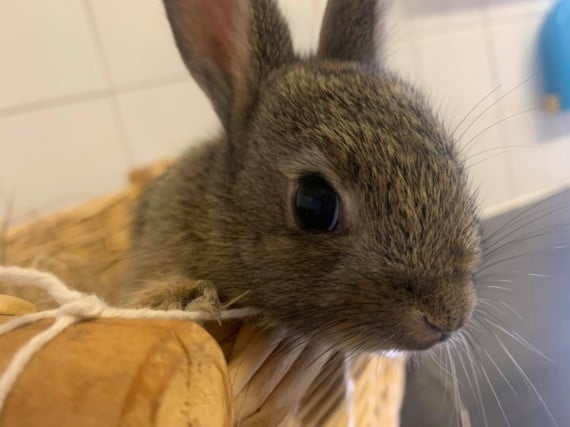
The baby pictured was very lucky to survive being caught by a cat, and he’s now doing well in our care.
Over the holiday week-end we asked people to suggest names for him and the most popular one was ’Easter’ - and so little baby Easter will stay with us until he’s fit and well enough to be successfully returned to the wild.
Comments
We've recently changed our login process. If you have an account for commenting, you will need to re-register on the login window.
This article has no comments yet. Be the first to leave a comment.