
Almost half of people in the UK have never seen a hedgehog in their garden, according to a recent survey for BBC Gardeners’ World magazine; and only one in 10 of the 2,348 people surveyed said they saw the much-loved mammal regularly in their gardens.
The hedgehog has suffered a serious long-term population decline and numbers continue to drop, with populations thought to have fallen by 30% since 2003 to less than one million in the UK - down from an estimated 36 million in the 1950s.
Last year’s hot, dry summer led to the death of many of the UK’s hedgehogs as they roamed further in search of worms and slugs, resulting in many more road-deaths than usual.
The BBC survey suggests that people are keen to save the species. When asked which one UK species they would like to save from extinction 52% said hedgehogs, beating other at-risk British species such as the sparrow, puffin and bumble bee.



We all need to play our part to help stem the decline in hedgehog numbers, particularly at this time of year as they start to come out of hibernation and they wake up hungry.
Regular readers of this article will know that they enjoy both wet and dry dog and cat food (but not the fish variety), white meat, nuts and raisins and some hedgehog experts recommend scrambled or chopped up eggs as a particular favourite.
Hedgehogs also need a fresh supply of water in a shallow bowl.
Back to the survey - seven out of 10 respondents said they would be happy to cut a hole in their garden fences to allow hedgehogs to roam more freely in search of food.
The Hedgehog Street project (www.hedgehogstreet.org) has contributed to the increase in numbers in some urban areas.
The project promotes the creation of hedgehog ’highways’ between gardens, and encourages us all to ensure that we have gaps and holes in, or under, our garden fencing that are large enough (13cm by 13cm) for hedgehogs to fit through.
A hedgehog will travel about a mile every night in his or her search for food, and enabling them to travel freely between gardens helps make their foraging more efficient.
Other hedgehog-friendly measures we can all take include: not using slug pellets; ensuring that garden ponds have a hedgehog ramp (such as a piece of timber) in them so that a thirsty hog doesn’t accidentally drown; taking great care when using strimmers (checking grass and hedges thoroughly for nesting hogs); covering drains; and not setting light to garden fires without moving the contents of the fire to a new spot first (just in case a hedgehog has fallen asleep underneath the twigs and leaves).
The ManxSPCA works closely with several very dedicated hedgehog rehabilitators on the island, and between us we are able to give sick or orphaned hedgehogs a second chance.
If you are worried about the health of a hedgehog you should place it carefully (ideally using gardening gloves!) in a cardboard box and bring it either to Ard Jerkyll or to your nearest vet.
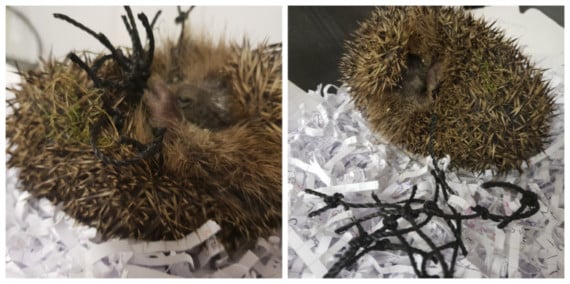
The hoglet pictured was brought in to us last summer. She had become tangled in the mesh covering a recycling container, and it took quite some time to cut her free.
She then spent a few days with us, having been named ’Netty’, and was checked by a vet before she was released back into the wild.
Hedgehogs are susceptible to becoming trapped in mesh and netting, be it the sort that protects strawberry plants or that forms part of a football goal. If you have this sort of material in your garden please check it daily or, better still, keep it at a hedgehog-safe height.
Let’s hope that 2019 is a year when hedgehogs increase in number. We can all celebrate forthcoming Hedgehog Awareness Week (May 5 to 11) by doing something to help these amazing little creatures.
Comments
This article has no comments yet. Be the first to leave a comment.