
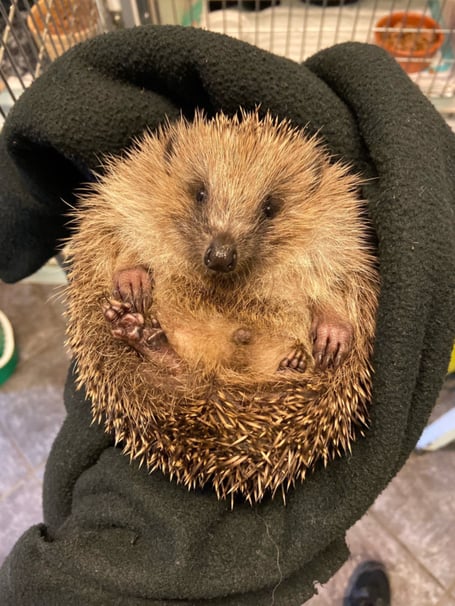
We make no apology for issuing our annual hedgehog alert, although regular readers of this article will already know how important it is that we help this little mammal, especially at this time of year.
The majority of hedgehogs wake up during April having been in hibernation since October.
Their first priority is to replace the weight they have lost, and some will be in a very poor condition. The newly-awakened hedgehog’s second priority is to find a mate and males can travel several miles throughout the night in search of a female.
For females the size of their territory will depend upon the availability of food in the local area, and so this is a perfect time of year to start to supplement hedgehogs’ diet both to help them replace lost body weight and to encourage them to stay in one area.

.jpeg?width=209&height=140&crop=209:145,smart&quality=75)


This will lessen the likelihood of them needing to cross busy roads, with almost inevitable fatal consequences.
Regular readers will not need reminding that the hedgehog is a declining species, due in the main to the use of pesticides and a loss of habitat, as well as the large numbers that are killed on our roads.
The People’s Trust for Endangered Species (PTES) estimates that hedgehog populations fell by as much as 50% in the UK between 2000 and 2019, which is a frightening statistic.
And yet the hedgehog is a much-loved species.
In a recent BBC survey which asked which one UK species respondents would like to save from extinction, 52% said hedgehogs, beating other at-risk British species such as the sparrow, puffin and bumble bee.
We all need to actively play our part to help stem the decline in hedgehog numbers, and here are some reminders about how we can do this.
Create a hedgehog feeding station using both wet and dry dog and cat food (but not the fish variety), white meat, nuts and raisins (scrambled or chopped up eggs are a particular favourite). Hedgehogs also need a fresh supply of water in a shallow bowl.
Cut a hole, or holes, in your garden fence to allow hedgehogs to roam more freely to search for food and mates.
The Hedgehog Street project (www.hedgehogstreet.org) has contributed to the increase in numbers in some urban areas. It promotes the creation of hedgehog ’highways’ between gardens, and encourages us all to ensure that we have gaps and holes in, or under, our garden fencing that are large enough (13cm by 13cm) for hedgehogs to fit through.
Don’t use slug pellets and, instead, go for safer alternatives such as sprinkling crushed eggshells or coffee grounds around any vulnerable plants.
Ensure garden ponds have a hedgehog-friendly ramp in them, such as a piece of timber, so that a thirsty hedgehog doesn’t accidentally drown.
Take great care when using strimmers and check long grass and hedges thoroughly for any hedgehogs (and frogs, for that matter) that may be hiding in them.
Cover the entrances to drains so that a hedgehog doesn’t fall in and then be unable to climb back up.
When using garden mesh, try to place it several inches above the ground to prevent a hedgehog becoming tangled in it.
Don’t set light to garden fires without moving the contents of the fire to a new spot first, just in case a hedgehog has fallen asleep underneath the twigs and leaves.
The ManxSPCA works closely with several very dedicated hedgehog rehabilitators on the island, and between us we are able to give sick or orphaned hedgehogs, like the one pictured, a second chance.
If you are worried about the health of a hedgehog you should place it carefully (ideally using gardening gloves!) in a cardboard box, keep it warm, and bring it either to Ard Jerkyll or to your nearest vet.
Comments
We've recently changed our login process. If you have an account for commenting, you will need to re-register on the login window.
This article has no comments yet. Be the first to leave a comment.