
The Manx Wildlife Trust is the island’s leading nature conservation charity with more than 300 acres of land as reserves.
We are promoters and champions of the wonderful wildlife and habitats in, on and around our beautiful island.
This month, we are asking you to keep an eye out for dragonflies and damselflies.
No summer outing would be complete without hearing the tell-tale sound of a patrolling dragonfly as it hunts over a nearby pond.



-Michelle-Cain-(R).jpeg?width=209&height=140&crop=209:145,smart&quality=75)
Their aerial manouevres rival the fastest military aircraft as they duck and turn in pursuit of prey, or narrowly avoid the clutches of hungry birds.
These adaptable insects lord over wetlands, moorland and even woodland glades, feeding on flies, midges and even each other.
If you thought butterflies were the only insects worth a second glance, these multi-coloured, iridescent predators demand much appreciation too.
What is the difference between dragonflies and damselflies?
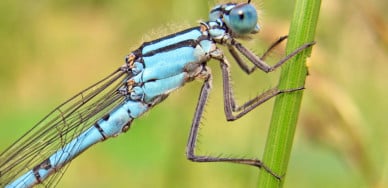
As a general rule, the damselfly is slimmer, and rests with wings folded, while the stockier dragonfly keeps its wings spread outwards.
Dragonflies have bigger eyes wrapping around the side and the front of the head, their eyes touch together. Damselflies eyes are slightly smaller and always have a gap between them.
The earliest damselflies are on the wing by early May, while the last common darter of the year might still be flying on a warm October day, with the highest species diversity found during July and August.
Like most insects, dragonflies are at their most active in warm sunny conditions, so pick your day wisely. Binoculars will come in handy, as most will fly off if you get too close. And of course, take care at the water’s edge.
Dragonflies and damselflies have an amazing life cycle. They start as eggs, which are laid on aquatic plants and are submerged in the water.
Dragonfly eggs are only laid in still water. These eggs hatch into nymphs which live in the water and are voracious predators.
They can shed their skins up to 12 times and some species remain in this stage for four years.
In the last moult they will emerge out of the water as an adult form.
If you want to encourage them into your pond remember fish will eat the nymphs, so sectioning off an area of the pond from the fish will keep the nymphs safe.
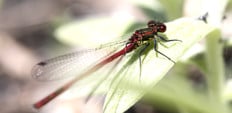
Our earliest emerging damselflies are the blue tailed, common blue and large red damselflies.
The four spot chaser dragonflies is our earliest dragonflies. We would love you to report back to us if you find any of these species, ideally with a date, location (it is better to have a six figure grid reference) the species you have seen and any photographs which you take.
Ballaugh Plantation and South Barrule Planation ponds are excellent areas to see damsel and dragon flies as well as Ballannette Nature reserve near to old Lonan Church. Happy spotting!
You can either send an email your finds, along with your contact information, to [email protected] or message us on our Facebook page.
By Dawn Dickens
Biodiversity Education Officer
www.manxwt.org.uk
Comments
This article has no comments yet. Be the first to leave a comment.