
The Manx Wildlife Trust is the leading nature conservation charity on the Isle of Man, protecting the fragile Manx wildlife by creating living landscapes, living seas and encouraging and fostering a society where nature matters.
Throughout last year, we ran a series of articles, asking for help from our wonderful ’citizen scientists’ with keeping an eye on the island’s wildlife.
This year, our monthly articles will be based on the positive ways we are trying to help our unique wildlife.
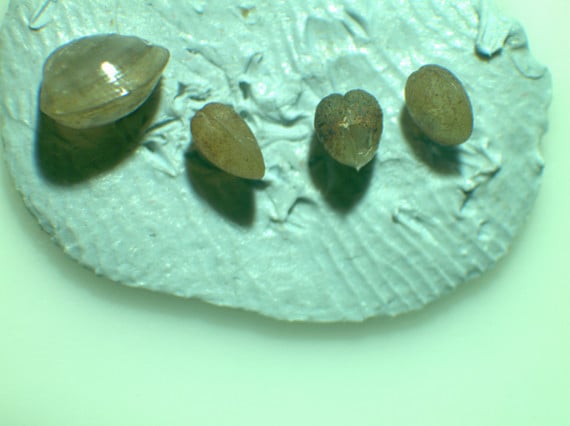
We have been very lucky this year to receive funding from the Curraghs Wildlife Park to help us to find out about the numbers and spread of some tiny bivalves, the freshwater pea clam and pea mussels on the island.



Why are we getting excited about these tiny molluscs?
After all, they are only less than 1cm long.
They are good indicators of water quality and their density of numbers indicates the richness of other species present.
Freshwater molluscs are currently most at risk to extinction throughout Europe, with at least 43.7% of species being classified as threatened.
But we know very little about what is happening to these molluscs on our island.
Pea mussels are filter feeders, consuming microscopic organic matter using a tube-like structure called a siphon, which they suck their food in with.
They move around using a tongue shaped foot and can bury themselves deeper into the mud during dry periods meaning they can live in areas which temporarily flood.
Pea mussels have a fascinating life cycle and are hermaphrodites (with one individual being both male and female).
The young are kept within the mussel’s gills and only released as young clams when the temperature and oxygen conditions are right.
Since 1909 there have been 47 recorded sightings of pea mussels and the spread is throughout the island in both flowing and more stagnant water and ditches.
However, the Curraghs area has been selected by the trust to concentrate our searches in.
Given the Curraghs’ unique wetland habitat and the increasing need for habitat conservation this research into the abundance and distribution of pea clams could help form new action plans for protecting this precious area.
The first example of pea mussels were found during survey work by the invertebrate group, and with the help of students we have identified them at a further 10 sites within the Curraghs and also at the Trust’s Close Sartfield reserve.
Next year will see more in-depth surveys in these areas, but findings so far indicate that we have more pea mussels present than we previously believed were there.
We would love to extend this work by using flow rate and are currently raising money to buy the equipment needed to do this.
We would also like to thank the Curraghs Wildlife Park for allowing us access to the Curraghs and surveying sites within the park and also to Manx National Heritage who own large areas of the Curraghs on which we are carrying out our sampling.
This is one of the many projects which we are running and if you would like to find out more about the work of the Manx Wildlife Trust, please follow us on our Facebook page or look at mwt.im
The Manx Wildlife Trust (MWT) was founded in 1973 and is the Isle of Man’s leading nature conservation charity.
Its members, staff and volunteers support MWT to protect Manx wildlife for the future by driving the development of a nature recovery network across the island to create more places for wildlife.
by dawn Colley
Biodiversity Education Officer
www.mwt.im
Comments
This article has no comments yet. Be the first to leave a comment.