
The Manx Wildlife Trust is the leading nature conservation charity in the Isle of Man.
It protects the fragile local wildlife by creating living landscapes, living seas and encouraging and fostering a society where nature matters.
This month we are asking if you can spot two new garden incomers, the rosemary beetle and the lily beetle.
Of the two, the rosemary beetle is not as common whilst the lily beetle seems to have a hot spot around the north of the island.

.jpeg?width=209&height=140&crop=209:145,smart&quality=75)


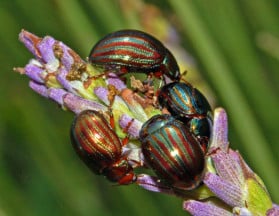
The rosemary beetle is an insect which feed on the leaves and flowers of rosemary, lavender, sage and thyme plants.
They are about one centimetre long, metallic green with purple stripes and have dull grey grub-like larvae.
They do not cause a great deal of damage in your garden but the RHS would like to track their spread. They are most likely to be seen between late summer and spring.
The rosemary beetle has spread rapidly since first being found in central London in the late 1990s.
They have become widespread throughout England and Wales, and are now established in Scotland and present in Ireland.
The Royal Horticultural Society are running two surveys about these insects and you can take part and record your sightings at rhs.org.uk/science/help-our-research
Our next garden invader we want you to look out for is the red lily beetle which can strip bare lilies and fritillaries. The leaves and buds are eaten by both the red beetles and their black knobbly-looking grubs.
Look for the adult beetles which are eight millimetres long. They have bright red wing cases and their head and legs are black.
Lily beetles lay their eggs in clusters of orange-red, sausage-shaped eggs on the underside of leaves during April to mid-summer.
The eggs hatch and the larvae feed on the foliage.
The larvae are between six to eight millimetres long and are reddish brown with black heads.
They are usually covered under their own black excrement, known as frass, so the red colouration may not be seen.
Lily beetles overwinter as adults in soil, leaf litter and sheltered places. The beetles then begin to emerge on brighter days in March and April, looking for their host plants of lilies and fritillaries
Please take care as lily beetles can be confused with our native cardinal beetle and soldier beetles.
Please check our website for more details.
Citizen scientists are our eyes and ears and we rely a great deal on the information you can provide for us.
We would strongly discourage the use of pesticides especially when plants are in flower and pollinator insects visiting. We have plenty of wildlife gardening ideas our new website, mwt.im
by Dawn Dickens
Biodiversity education officer
www.mwt.im
Comments
This article has no comments yet. Be the first to leave a comment.