
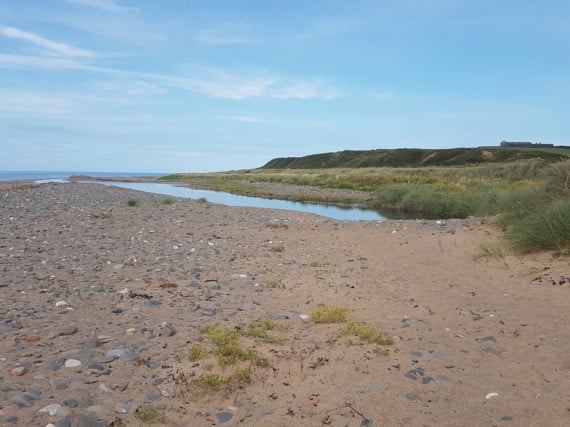
The Manx Wildlife Trust currently manages 24 nature reserves across the Isle of Man, of which nine are open to the general public.
These help us to preserve and to protect the fabulous and varied wildlife found in our island.
The reserves total almost 300 acres of land to help conserve some of the best habitats for birds and animal life, and to protect our vulnerable species.
We encourage locals and visitors alike to vist them and to enjoy their tranquility, and to cherish the sights and sounds found on them.
.png?width=209&height=140&crop=209:145,smart&quality=75)
Cronk y Bing
Map reference NX378014 Lat and long 54°22’59.02"N 04°29’56.31"W
Take the A10 travelling from Jurby towards Andreas, travel for 1.8 miles and you will reach a right hand 90° bend in the road, which goes over a narrow humped back bridge. Take the track which leads off this bend to the left. It is an uneven track so please drive carefully. At the bottom of the track is a car parking area and turning place. Walk down the track leading to the sea and you will see the sign and entrance gate to the reserve on your right.
It takes about 30 minutes to cover this reserve. Download the spotting sheet from www.manxwt.org.uk to take with you to stop and admire the wildlife.
This reserve is completely different to our other reserves, being a dune system, and even on windy days the dunes offer protection and acts like a sun trap.
You will be walking across sand and if you walk to the top of the reserve, be aware that the Lhen trench is on your right, is deep and fast flowing and has very steep sides. However if you stay on the path this is not a problem.
At this time of year the dunes are packed with wildflowers, butterflies and moths, and is a delight to walk through. Look out for the beautiful purple spikes of the pyramidal orchids, the pink and white trumpet flowers of sea bindweed, the tufted purple flowers of sheep’s bit and a the nodding blue bell shaped flowers of harebells.
Being a fantastic sun trap means the insect life flourishes here. Look in the gorse bushes here and you will see the funnel shaped webs of the labyrinth spiders. These shy and retiring spiders hide down the tunnels nurturing their eggs. You might just get a glimpse of one.
You might see the startling black and red of the six spot burnet moth, a day flying moth with its spotted wings, or even the similarly coloured cinnabar moth with red stripes on its top and red underwings. The Cinnabar moth has bright yellow and black striped caterpillars which look very like tiger’s tails.
If you walk back along the beach, be sure to take your binoculars and look for the ariel antics of the diving gannets. Listen to the peep peep call of the oystercatchers and, on the low water mark, watch for the ringed plovers running up and down as the waves roll up the beach. Please be mindful on our beaches as many sea birds nest at the top of the beach. Their eggs and chicks are so well camouflaged they are not easy to spot. Keep to the sea edge as you walk along and if you see any birds that are calling continually, remaining nearby rather than flying off or dive bombing you please walk quickly from the area.
The Manx Wildlife Trust is the leading nature conservation charity on the Isle of Man, we are a major force in protecting and promoting wildlife and wild places in the Isle of Man. The Trust manages 24 local nature reserves, encompassing almost 300 acres of land, two visitor centres and one shop.
For details of our regular events check our website and Facebook page.
by Dawn Dickens
twitter:@mwislandlife
Comments
This article has no comments yet. Be the first to leave a comment.