
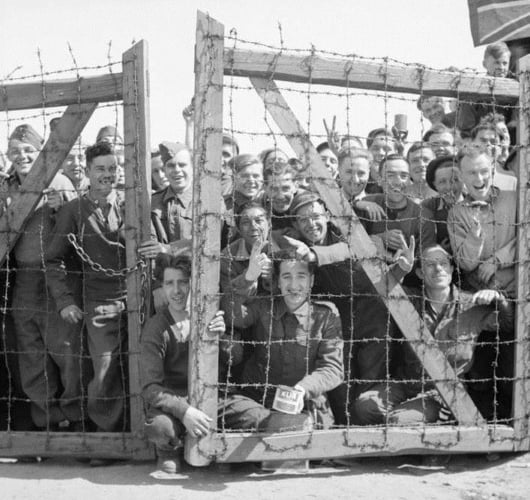
Mental health issues were pervasive in these camps and were an inherent part of camp life and the overall experience of captivity.
Those who were not affected themselves would be in contact with those who were.
Many terms were used by medical professionals and inmates to refer to the mental distress experienced by prisoners of war.
These include, but are not limited to: barbed wire disease, camp disease, Stalag happy, The blues, kriegy weariness, Stalag loopy, wire happy, barbed wire fever, and bag happy.



.png?width=209&height=140&crop=209:145,smart&quality=75)
During the First World War, provision for the exchange of prisoners of war suffering from physical illness such as blindness, loss of limb, and facial disfigurement, was adopted in March 1915. In July 1917, a new term, ’barbed wire disease’, was added to the list of eligible criteria for repatriation, thus acknowledging the existence of mental health problems among prisoners of war.
However, recognition of the illness didn’t guarantee that the mental health implications of imprisonment (especially in the long term) were well understood, or even widely accepted.
Swiss physician, Dr Adolf Lukas Vischer, studied mental health issues among prisoners in civilian and Prisoner of War camps in Britain during the First World War. He wrote extensively about their causes, their symptoms, and their effects. But many other medical professionals disputed the existence of mental health diagnoses, or found them difficult to identify.
For example, military physician Captain Harold Wiltshire stated that it was impossible for prisoners of war to experience mental health issues because they were safe in camp.
Hermann Oppenheim, a psychiatrist who believed that mental health issues were likely and was sceptical about the lack of cases reported by his colleagues, was himself unable to classify any instances of mental health issues in the large number of prisoners of war he examined.
The consequence of this is that, despite mental health being considered a criterion for repatriation during the First World War, there were no clear diagnostic tools available to medical staff who would soon be dealing with cases of ’barbed wire madness’ in the prisoner of war camps during the Second World War.
Stacey Astill’s research combines an analysis of prisoner memoirs, diaries, and oral testimonies, with articles published in the British Medical Journal, The Lancet, and other academic journals.
Mention of mental illness in prisoner of war memoirs is limited and inconsistent.
Men were rarely inclined to speak about experiences with depression, disordered eating, and suicidal ideation.
As a result, the sources reveal a range of partial, fleeting, or obscure references to mental health within the camps, interspersed with some accounts which are more forthcoming.
Despite the patchy nature of the evidence, this in itself provides information about the views of mental illness within camps at this time.
In her lecture, Stacey will consider how medical staff and civilians in the camps viewed mental health disorders and will explore the different ways in which they attempted to classify and treat these cases.
’Stalag Loopy, Stalag Mad’ will take place at 6pm on Wednesday, April 18 in the Main Hall at University College Isle of Man, Homefield Road, Douglas.
All are welcome, and no booking is required.
The lecture will be recorded and made available online later this year.
â?¢ Further details about the History & Heritage lecture series, together with videos of last year’s lectures, can be found online at http://catrionamackie.net/lectures/.
Although this talk marks the end of this year’s History & Heritage lectures, there are two further #UCMTalks this year. On Wednesday April 25, Dr Adele Creer and Myles Dempsey, lecturers in computing and IT at UCM, will be giving a talk at The Nunnery on the use of technologies in the classroom.
The last of this year’s #UCMTalks takes place on Wednesday, May 9, when Dr Fiona Gell, senior marine conservation officer at DEFA and honorary fellow of UCM will be speaking about ’Biosphere and Business - UNESCO Biosphere Isle of Man in a Changing World’. Both lectures begin at 6pm. All are welcome.
The last of this year’s History & Heritage Lectures at University College Isle of Man takes place on Wednesday, April 18 when Stacey Astill will be speaking about mental and physical health in European prisoner of war camps during the Second World War.
The last of this year’s History & Heritage Lectures at University College Isle of Man takes place on Wednesday, April 18 when Stacey Astill will be speaking about mental and physical health in European prisoner of war camps during the Second World War.
Mental health issues were pervasive in these camps and were an inherent part of camp life and the overall experience of captivity.
Those who were not affected themselves would be in contact with those who were.
Many terms were used by medical professionals and inmates to refer to the mental distress experienced by prisoners of war.
These include, but are not limited to: barbed wire disease, camp disease, Stalag happy, The blues, kriegy weariness, Stalag loopy, wire happy, barbed wire fever, and bag happy.
During the First World War, provision for the exchange of prisoners of war suffering from physical illness such as blindness, loss of limb, and facial disfigurement, was adopted in March 1915. In July 1917, a new term, ’barbed wire disease’, was added to the list of eligible criteria for repatriation, thus acknowledging the existence of mental health problems among prisoners of war.
However, recognition of the illness didn’t guarantee that the mental health implications of imprisonment (especially in the long term) were well understood, or even widely accepted.
Swiss physician, Dr Adolf Lukas Vischer, studied mental health issues among prisoners in civilian and Prisoner of War camps in Britain during the First World War. He wrote extensively about their causes, their symptoms, and their effects. But many other medical professionals disputed the existence of mental health diagnoses, or found them difficult to identify.
For example, military physician Captain Harold Wiltshire stated that it was impossible for prisoners of war to experience mental health issues because they were safe in camp.
Hermann Oppenheim, a psychiatrist who believed that mental health issues were likely and was sceptical about the lack of cases reported by his colleagues, was himself unable to classify any instances of mental health issues in the large number of prisoners of war he examined.
The consequence of this is that, despite mental health being considered a criterion for repatriation during the First World War, there were no clear diagnostic tools available to medical staff who would soon be dealing with cases of ’barbed wire madness’ in the prisoner of war camps during the Second World War.
Stacey Astill’s research combines an analysis of prisoner memoirs, diaries, and oral testimonies, with articles published in the British Medical Journal, The Lancet, and other academic journals.
Mention of mental illness in prisoner of war memoirs is limited and inconsistent.
Men were rarely inclined to speak about experiences with depression, disordered eating, and suicidal ideation.
As a result, the sources reveal a range of partial, fleeting, or obscure references to mental health within the camps, interspersed with some accounts which are more forthcoming.
Despite the patchy nature of the evidence, this in itself provides information about the views of mental illness within camps at this time.
In her lecture, Stacey will consider how medical staff and civilians in the camps viewed mental health disorders and will explore the different ways in which they attempted to classify and treat these cases.
’Stalag Loopy, Stalag Mad’ will take place at 6pm on Wednesday, April 18 in the Main Hall at University College Isle of Man, Homefield Road, Douglas.
All are welcome, and no booking is required.
The lecture will be recorded and made available online later this year.
â?¢ Further details about the History & Heritage lecture series, together with videos of last year’s lectures, can be found online at http://catrionamackie.net/lectures/.
Although this talk marks the end of this year’s history and heritage lectures, there are two further #UCMTalks this year. On Wednesday, April 25, Dr Adele Creer and Myles Dempsey, lecturers in computing and IT at UCM, will be giving a talk at The Nunnery on the use of technologies in the classroom.
The last of this year’s #UCMTalks takes place on Wednesday, May 9, when Dr Fiona Gell, senior marine conservation officer at DEFA and honorary fellow of UCM will be speaking about ’Biosphere and Business - UNESCO Biosphere Isle of Man in a Changing World’. Both lectures begin at 6pm. All are welcome.
The last of this year’s history and heritage Lectures at University College Isle of Man takes place on Wednesday, April 18 when Stacey Astill will be speaking about mental and physical health in European prisoner of war camps during the Second World War.
Mental health issues were pervasive in these camps and were an inherent part of camp life and the overall experience of captivity.
Those who were not affected themselves would be in contact with those who were.
Many terms were used by medical professionals and inmates to refer to the mental distress experienced by prisoners of war.
These include, but are not limited to: barbed wire disease, camp disease, Stalag happy, The blues, kriegy weariness, Stalag loopy, wire happy, barbed wire fever, and bag happy.
During the First World War, provision for the exchange of prisoners of war suffering from physical illness such as blindness, loss of limb, and facial disfigurement, was adopted in March 1915. In July 1917, a new term, ’barbed wire disease’, was added to the list of eligible criteria for repatriation, thus acknowledging the existence of mental health problems among prisoners of war.
However, recognition of the illness didn’t guarantee that the mental health implications of imprisonment (especially in the long term) were well understood, or even widely accepted.
Swiss physician, Dr Adolf Lukas Vischer, studied mental health issues among prisoners in civilian and Prisoner of War camps in Britain during the First World War. He wrote extensively about their causes, their symptoms, and their effects. But many other medical professionals disputed the existence of mental health diagnoses, or found them difficult to identify.
For example, military physician Captain Harold Wiltshire stated that it was impossible for prisoners of war to experience mental health issues because they were safe in camp.
Hermann Oppenheim, a psychiatrist who believed that mental health issues were likely and was sceptical about the lack of cases reported by his colleagues, was himself unable to classify any instances of mental health issues in the large number of prisoners of war he examined.
The consequence of this is that, despite mental health being considered a criterion for repatriation during the First World War, there were no clear diagnostic tools available to medical staff who would soon be dealing with cases of ’barbed wire madness’ in the prisoner of war camps during the Second World War.
Stacey Astill’s research combines an analysis of prisoner memoirs, diaries, and oral testimonies, with articles published in the British Medical Journal, The Lancet, and other academic journals.
Mention of mental illness in prisoner of war memoirs is limited and inconsistent.
Men were rarely inclined to speak about experiences with depression, disordered eating, and suicidal ideation.
As a result, the sources reveal a range of partial, fleeting, or obscure references to mental health within the camps, interspersed with some accounts which are more forthcoming.
Despite the patchy nature of the evidence, this in itself provides information about the views of mental illness within camps at this time.
In her lecture, Stacey will consider how medical staff and civilians in the camps viewed mental health disorders and will explore the different ways in which they attempted to classify and treat these cases.
’Stalag Loopy, Stalag Mad’ will take place at 6pm on Wednesday, April 18 in the Main Hall at University College Isle of Man, Homefield Road, Douglas.
All are welcome, and no booking is required.
The lecture will be recorded and made available online later this year.
â?¢ Further details about the History & Heritage lecture series, together with videos of last year’s lectures, can be found online at http://catrionamackie.net/lectures/.
Although this talk marks the end of this year’s history and heritage lectures, there are two further #UCMTalks this year. On Wednesday, April 25, Dr Adele Creer and Myles Dempsey, lecturers in computing and IT at UCM, will be giving a talk at The Nunnery on the use of technologies in the classroom.
The last of this year’s #UCMTalks takes place on Wednesday, May 9, when Dr Fiona Gell, senior marine conservation officer at DEFA and honorary fellow of UCM will be speaking about ’Biosphere and Business - UNESCO Biosphere Isle of Man in a Changing World’. Both lectures begin at 6pm. All are welcome.
The last of this year’s history and heritage Lectures at University College Isle of Man takes place on Wednesday, April 18 when Stacey Astill will be speaking about mental and physical health in European prisoner of war camps during the Second World War.
Comments
This article has no comments yet. Be the first to leave a comment.