

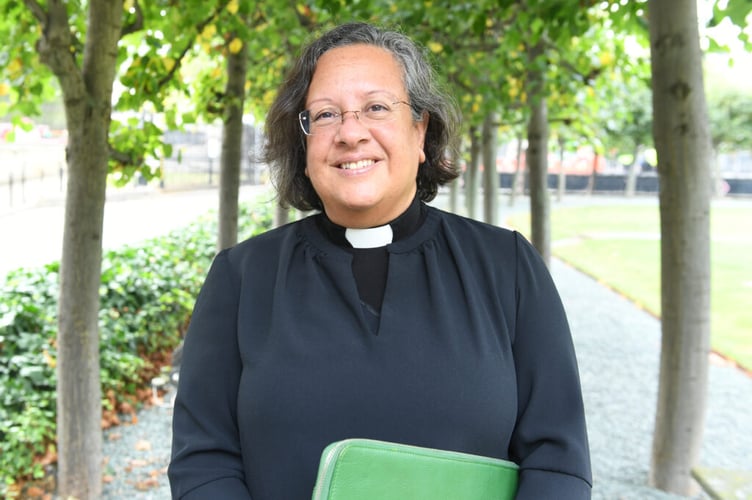
The Bishop is to ultimately lose their vote in Tynwald following a showdown House of Keys vote - despite last-minute jitters that it could also result in the island losing its separate diocese.
Critics of Lawrie Hooper’s private member’s bill had been pinning their hopes on a Legislative Council report to stop the Bill in its tracks.
That select committee report pointed out that the Bishop’s role in the legislative work of Tynwald dated back at least as far as 1614.
And it concluded that removing the Bishop’s vote made it likely that the Church of England will consider the future of a separate Diocese of Sodor and Man.

Onchan MHK Rob Callister said the report raised serious concerns about the historical, constitutional and practical consequences of removing the Bishop’s vote.
He said the potential loss of the Diocese and the distinctive role of the Lord Bishop were a direct threat to the island’s cultural heritage.
Mr Hooper’s Bill will keep the Bishop as a member of Tynwald and the Legislative Council, but no longer with the right to vote.
In November, LegCo supported an amendment from Gary Clueit MLC to delay the change until five years after the Bill receives Royal Assent, or until the end of the tenure of current Bishop, Tricia Hillas.
In the Keys this week, Central Douglas MHK Chris Thomas said it was a momentous decision. He tabled an amendment that the Keys strongly supported the continuation of a separate Diocese of Sodor and Man in the Church of England.
But fellow Central Douglas MHK Ann Corlett said she couldn’t help but feel that her vote was being ‘held to ransom’ - no Bishop’s vote, no Diocese.
Following a lengthy debate, MHKs voted to receive the LegCo report as amended by Mr Thomas by 23 votes to one.
The Keys then turned to debate the LegCo amendments.
But before that Mr Callister moved to adjourn the item ‘sine die’, ie without a fixed date, which would in effect have ended the Bill altogether.
He was seconded by Chief Minister Alfred Cannan who spoke of a ‘democratic deficit’ and the ‘great deal of consternation’ in both branches in taking the vote through. He said instead of the Bishop having the deciding vote, it would be the Tynwald president.
‘What kind of democracy is that?’ he asked.
But Dr Alex Allinson, sacked last week as Treasury Minister, pointed out there was a huge difference between a president voted in by the House of Keys and a Bishop appointed by the Church of England.
Cabinet Office Minister David Ashford said: ‘How long and how many more times do we have to debate this? The amount of hours that have been taken up debating this.’
But Glenfaba and Peel MHK Kate-Lord Brennan said the Bishop’s vote was a ‘further example of a complete disconnect’ from the ordinary Manx public who she said were asking ‘why are you messing around with this?’
The motion to adjourn was lost by 11 votes to 13.
MHKs voted to agree the LegCo amendments to the Isle of Man Constitution Bill by 18 votes to six.
It will now go off for Royal Assent once it has been signed by at least five members of the Council of the Ministers and 13 members of the Keys.
Posting on Facebook afterwards, Mr Callister said it will be the first time that he won’t sign a piece of legislation in Tynwald.
He said he feared that the island will retain the Diocese of Sodor and Man in name only, with the next Bishop based in England and commuting to the island.
And the Chief Minister told Media IoM: ‘I sincerely hope that the Keys have not triggered the beginning of the end of the Diocese and we can move forward and retain our faith and values as a nation.’
The LegCo select committee report states: ‘We believe that the Archbishop of York has made it clear that, when the Church of England is looking to reduce the number of Bishops, the cost of a separate diocese is hard to justify
‘We do not think there can be much doubt that if the Bishop’s vote were lost this could be used as a reason to trigger a review of the status of the Diocese.’
Research by Professor Peter Edge, expert in Manx constitutional law, shows the Bishop has held a seat on the body which became the Legislative Council since the first half of the 17th century apart from a brief period from 1777-1790.