

Many people will know about the wreck at Jurby beach, with its haunting remains accessible at low tide.
But there is another wreck in Ramsey which is also well worth seeking out when the tide is low.
Regular visitors and dog walkers will no doubt be aware of the wreck at the southern end of Ballure beach, but it is not as well-known as its Jurby counterpart.
The St Cevic ran aground on the beach in June 1927.
The steam trawler left Fleetwood on June 24 that year for the fishing grounds before arriving in Ramsey Bay the following day.
Captain Richard Collinson, along with the mate, boatswain and chief engineer, went ashore, leaving seven men on board.
They had intended to return to the Cevic later, but a gale whipped up from the north which meant they could not make it back to the trawler.
They had managed to moor a small boat alongside the vessel and, at daybreak, second engineer John Dick got into it to try to take it back to shore.
But John Dick was cast adrift and, seeing him in difficulties, the crew attempted to reach the small boat but failed, with the Cevic eventually running aground on rocks below Ballure.

Ramsey Lifeboat attempted to launch with coxswain Garrett in charge and John Christian as second coxswain, but the low tide made it impossible.
The decision was taken to run the reserve lifeboat, the ‘Matthew Simpson’, on to the beach and she was hauled towards the Queen’s Pier.
Thanks to a large body of willing helpers, the Matthew Simpson was successfully launched and headed towards the stricken Cevic.
The crew of the Cevic could be seen on deck, anxious to get off their vessel. The lifeboat crew managed to get the six men from the Cevic on board before heading back to Ramsey harbour.
Meanwhile, John Dick, in the small boat, narrowly missed being wrecked on the Carrick in Ramsey Bay and landed at Port Lewaigue. It took him several hours to walk along the beach and find his way back to Ramsey.
Due to the conditions, the Cevic was driven further on to the bottom of the cliffs and lay wedged between the rugged rocks. Attempts were made to save her and much of the gear was salvaged.
But she could not be saved and eventually became a total wreck. The wreck was bought by Arthur Coffey, who started dismantling it in August that year. However, almost 100 years on, much of the vessel remains as a reminder of that dramatic event.
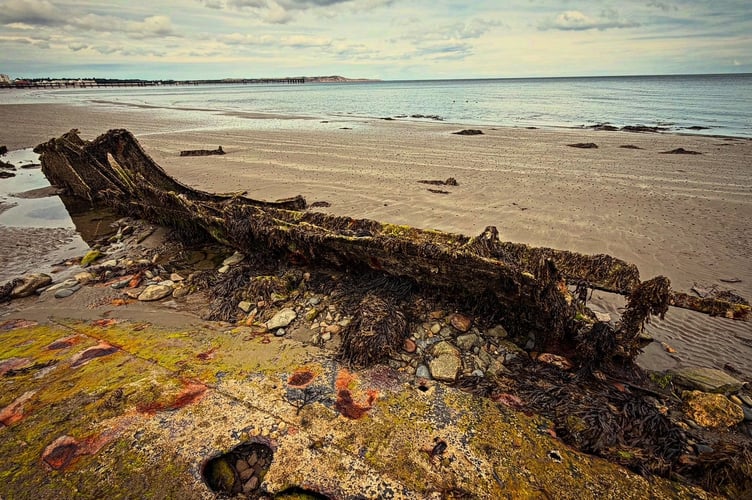
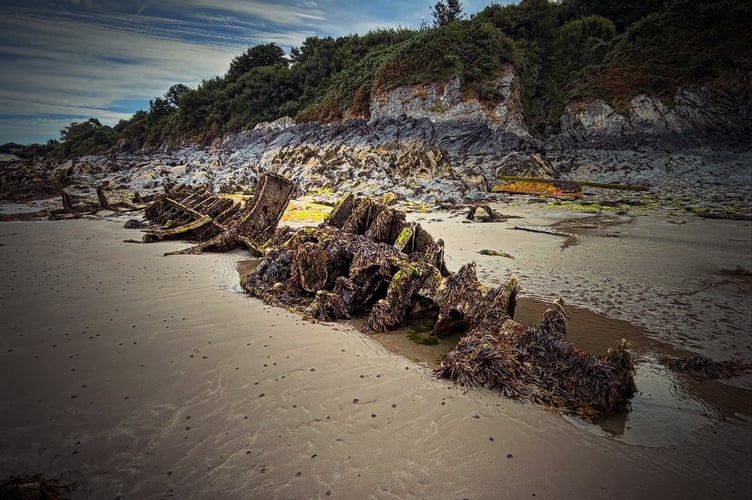
The wreck is difficult to spot from a distance as it merges with the rocks which ultimately led to its downfall.
Not much is left, but the vessel resembles the remnants of a decomposed whale, with sections of the hull looking like ribs.
Other metal parts are strewn nearby and clad in seaweed, while the water around the wreck is full of life.
The good news is that the wreck is only a 15 or 20-minute walk from Queen’s Pier, but you will need to keep an eye on the tide.