


A specific law is needed to prevent sex-selective abortion, according to a campaigner.
Jasvinder Sanghera, who founded the charity Karma Nirvana to fight against abuse based on ’honour’ codes, said that the strict guidelines already in place by the General Medical Council - which would mean that a doctor would be struck off if he enabled a sex-selective abortion - were not enough.
Some cultures saw women who were expecting a female baby pressured into having an abortion because failure to give birth to a boy did not fit in with the ’honour’ code, she said
Although she later admitted she was not fully aware of what procedures were in place in the island to protect vulnerable women who were pregnant, she argued the Abortion Reform Bill should be amended.

.jpeg?width=209&height=140&crop=209:145,smart&quality=75)
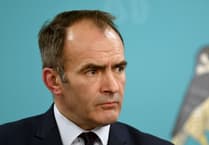
’I think the failure to address sex selection and coercive abortion is a problem which I believe has to be addressed through amendments, because that in itself will send out a very direct, clear message,’ she said.
’We know there is evidence clearly in the UK. In 2011, the National Census in the UK highlighted 4,700 unborn girls aborted.’
She welcomed an indication from Chief Minister Howard Quayle that he planned to table an amendment specifically to deal with sex-selective abortions.
Her charity has a helpline for women are subject to abuse, including forced marriage and coerced abortions. She said it received 850 calls per month.
When pressed as to how many calls were from the Isle of Man, she admitted she did not have a figure.
That caused Geoffrey Boot (Glenfaba and Peel) to remark: ’I have to express some surprise that you have not done some due diligence in terms of the number of phone calls or inquiries you have had on your helplines from the Isle of Man.’
Dr Alex Allinson (Ramsey) pointed out that Unicef and the World Health Organisation had looked at the impact where countries had specifically outlawed sex-selective abortions, but they found: ’These laws have largely had little effect in isolation from broader measures to address underlying social and gender inequalities.’
Education had been a more effective approach, he said.
Dr Allinson pointed to a press release issued by Stop Gendercide on the morning of the debate. It described Ms Sanghera as a co-founder and carried quotes from her.
Referring to her evidence to the House of Keys, he said: ’While you said you did not want to remove the rights and choices of women, part of that press release argued for no abortion on request up to 14 weeks minimum, I think you said maybe up to seven weeks, and also called for abortion not to be available to women who request it for social or health grounds
’How does that marry with your original statement that you do not want to remove rights and choices for all women?’
Ms Sanghera replied: ’First and foremost, I have not read that press release this morning.
’For me, the women I am talking about, that right and that choice has been taken from them by virtue of the fact they have been pressured by multiple perpetrators and coerced into believing that this may be part of their destiny, kismet, faith, religion, culture, whatever.’
Asked if Stop Gendercide was the only organisation in the UK campaigning against sex-selective abortions, she said: ’No, there are other organisations and in fact I do not represent that organisation, I represent Karma Nirvana here.’
The Keys heard there were already guidelines in place to ensure GPs would not perform an abortion where they believed the woman had been coerced.
Lawrie Hooper, (LibVannin, Ramsey) said the bill provided that informed consent had to be given ’by a woman of her own free will’.
Dr Allinson asked Ms Sanghera: ’Are you aware that we already have a system whereby women who are introduced to maternity services on the Isle of Man can be flagged up as vulnerable women and get a lot more social support and help in doing that, and that vulnerability is not just in terms of coercion due to sex-selection abortion, it is due to coercion on a whole range of issues or due to their own mental health problems?’
Ms Sanghera said: ’I am not fully aware of the process in terms of what exists currently, but whether that is robust enough in terms of identification and risk I am not aware, no, I am afraid.’
Comments
This article has no comments yet. Be the first to leave a comment.