

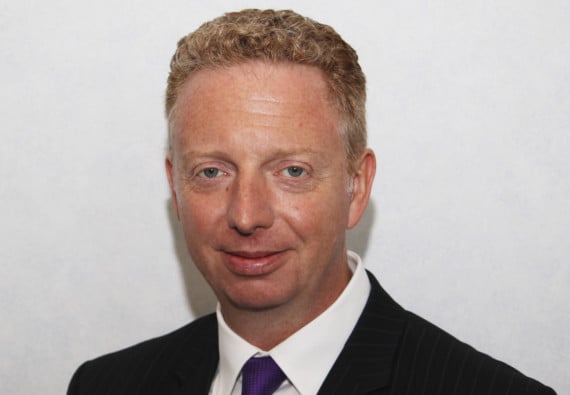
Attempts will be made to force fundamental changes to the Abortion Reform Bill when it returns to the House of Keys for debate today (Tuesday).
In total, 60 amendments have been tabled to the 17-clause bill, which aims to modernise the Isle of Man’s current law that campaigners argue is restrictive and forces women to go off-island for a termination or to seek abortion pills illegally.
Most of the amendments that would make significant changes to the proposals were signalled at an earlier date.
There will also be a further amendment tabled at a later sitting. Douglas North MHK Ralph Peake intends to introduce a clause providing for ’safety zones’ around any premises where procedures are carried out. As this would require a change of the long title of the bill itself, it cannot be submitted this week.
.jpeg?width=209&height=140&crop=209:145,smart&quality=75)



Garff MHK Daphne Caine has 25 amendments that will change wording. She is a supporter of the bill and her amendments are designed to enhance it.
Dr Allinson says that he is against 18 of the amendments tabled for today’s sitting.
Douglas East MHK Chris Robertshaw will make the first move likely to be contentious.
He wants to re-word the bill’s definition of health to remove the reference to ’social well-being’ - opponents of Dr Allinson’s reforms have expressed concern at clauses that use social factors as a reason for permitting an abortion.
His amendment also includes reference to ’person or foetus’.
Dr Allinson said Mr Robertshaw’s amendment would alter the definition of health from that by the World Health Organisation and lead to a more restrictive version. He added that if the health of the foetus was judged as equal to the health of pregnant woman, that could restrict access in future.
Mr Robertshaw will also seek to reduce the time limit for abortion on request from 14 weeks to 12 weeks, and the subsequent time periods for permitting abortions - for serious medical reasons or serious social grounds - down from 15 to 24 to 13 to 22.
He has argued already that this would recognise advances in medicine.
But Dr Allinson countered that the vast majority of abortions take place between three-nine weeks, with only 2% of abortions in England and Wales carried out after 20 weeks. The 14-week limit would mean ’over 94% of abortions can be carried out without excessive bureaucracy and in a safe and non-judgemental manner’.
Reducing the 22-week limit would be at odds with legislation in England and cause problems with referrals.
Dr Allinson added: ’The definitive EPICure study shows that of all births at 22 weeks only 0.4% of children survive without disability and at 23 weeks this only rises to 8%’
Mr Robertshaw also wants to remove the bills provision for permitting an abortion after 24 weeks where the child would ’suffer a significant impairment which is likely to limit either the length or quality of the child’s life’.
The move reflects concerns raised about the circumstances in which late abortions can be performed.
If that amendment fails, he will seek to change the wording of the provision to instead say, ’both the length and quality of the child’s life’.
Arbory, Castletown and Malew MHK Graham Cregeen has an amendment that would enable the government to reduce time limits through a Tynwald order, rather than legislation. Some pro-choice campaigners are concerned this could lead to future changes without full debate.
Mr Robertshaw and Chief Minister Howard Quayle will seek to remove the provision that would permit an abortion on ’serious social grounds’.
Both of these amendments will be opposed by Dr Allinson.
Mr Robertshaw also has amendments specifying that two doctors must agree there are medical grounds for an abortions. During the ’whole house committee’ stage of the bill’s consideration, disability rights campaigner Lord Brennan said the two doctors rule, which is in place in England, was an added safeguard.
Some organisations are campaigning for it to be dropped, however, pointing out there is no other healthcare procedure that demands two signatures.
The bill contains provision that protects health care professionals from having to participate in treatment specified in the bill if they have a conscientious objection.
Health Minister David Ashford has an amendment that would remove the current stipulation in the bill that places the burden of proof with the objector.
Mr Robertshaw has a number of amendments to this clause that would replace the word ’treatment’ with ’activity’.
However, there are likely to be objections to the broadness of the term ’activity’.
Mr Robertshaw will also seek extra provision to ensure the DHSC does not refuse to employ someone on the grounds they may refuse to participate in an ’activity’ connected with the termination of a pregnancy.
Alfred Cannan (Michael) has an amendment that would remove the bill’s provision that would exempt from prosecution any woman who obtained, illegally, abortion pills online. The bill provides for prosecution of anyone supplying abortion pills illegally.
Mr Cannan’s amendment may meet objections who argue that a fear of prosecution might prevent a woman from being honest with their GP.
Mr Quayle will seek to add a new clause to the bill that would specify nothing in the legislation could be construed as permitting sex-selective abortions. It follows concerns raised by campaigners that some women could be coerced into an abortion, on the grounds of the sex of the foetus.
When giving his evidence, retired gynaecologist Bob Fayle argued legislation was not necessary as any doctor who permitted a termination in such circumstances would be struck off. Dr Allinson is against the amendment, fearing it could have unintended consequences including racial profiling.
Comments
This article has no comments yet. Be the first to leave a comment.