

Something miraculous happens whenever a corner of the Manx countryside is earmarked for housing development.
Even if it is the most mundane of agricultural plots, the land in question is automatically elevated to the status of an area of outstanding natural beauty. It is transformed into a national environmental treasure, to be protected at all costs.
Local residents, comfortable in homes built on what were once green fields, campaign angrily against the principle of, err, building on green fields.
And they are instant experts on traffic, drainage or any other infrastructure issue that can be used to object to the proposed construction.

.jpeg?width=209&height=140&crop=209:145,smart&quality=75)
So it is not surprising that the Eastern Area Plan, attempting to zone sites for fresh development in the east of the island, has met with much hostility and hype from members of the Nimby tribe.
The war cry of these people, infamously, is ’Not In My Backyard’.
Their propaganda against the plan includes dire warnings about concreting over the countryside and jeopardising the island’s biosphere designation.
They have claimed that new houses around Union Mills would desecrate ’The Plains of Heaven’, suggesting a celestial aspect to the village that is not immediately apparent to the passing motorist.
(My understanding is that the ’The Plains of Heaven’ is the expansive view from the Braaid looking over to the central hills and Baldwin valleys. Union Mills is on the far eastern edge of this vista and indeed barely features in it. Perhaps there are two of them.)
Of course planning is a contest between vested interests, so residents and their representatives cannot be blamed for fighting their corner. The fact that some of the surrounding rhetoric is ridiculous does not mean they have no legitimate concerns.
What has been disappointing about the public debate thus far is that it has been so one-sided.
The Nimby narrative has been allowed to drown out other important considerations, such as managing economic growth and the housing needs of local families.
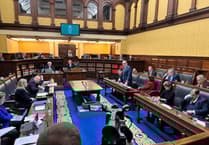
The ultra-Nimby position, expressed without embarrassment at the October sitting of Tynwald, is that there should be no more greenfield development, full stop. This is because: a) there is no housing crisis b) the island’s countryside is of high landscape value and c) new homes can be provided on brownfield sites within existing towns and villages.
To which short-sighted and complacent argument one might respond: a) try telling that to young people struggling with high housing costs b) every single of inch of it? c) yes but brownfield is more expensive and opportunities are limited.
What are the implications of a policy of zero greenfield expansion for the future availability and cost of housing, particularly if there is an upturn in immigration? Do the laws of supply and demand not apply to the Isle of Man?
In the climate of unprecedented uncertainty around Brexit, an unscheduled increase in population is far from inconceivable. Estate agents are already reporting a trickle of refugees from the political chaos on the mainland, and that could turn into a flood if Comrade Corbyn ever gets into power.
Much is made by the Nimbyists of population projections, which have been revised downwards in recent years. Yet migration movement is especially difficult to predict in a small open economy that is so vulnerable to external influences.
In the latter half of the 1980s the island’s population grew by 5,000 in five years and the average house price shot up from £35,000 to £82,000, pricing many young locals out of the market. Few if any saw that boom coming.
So perhaps it makes sense to be prepared for a range of scenarios and allow for an element of controlled flexibility. Unless, that is, we want to close the doors and abandon the policy of growing the economy and increasing the economically active population, which would hit job opportunities and funding for public services.
Now I defer to no-one when it comes to appreciation of the Manx countryside, having spent thousands of happy hours walking its hills and footpaths. The landscape is an essential element of the quality of life here for residents old and new. Does that mean, though, that every field has to be regarded as some kind of sacred site?
Of course building should be carefully controlled, with an emphasis on quality and sympathy of construction that was sadly lacking in the past. It would also help if the public could be confident that those areas which really need protection are permanently ring-fenced. And we could do with a clearer idea of government’s overall housing strategy, if there is one.
The Eastern Area Plan will eventually be presented to Tynwald for approval, following a report from the independent inspector who took evidence in September.
Politically this is a debate in which a variety of interest groups have to be taken into account, whether or not they are good at lobbying MHKs and making a noise in public.
Let us not forget, in this process, the housing needs of our children and grandchildren, and something called inter-generational fairness.
Comments
This article has no comments yet. Be the first to leave a comment.