

Imagine a wonderful new invention that was going to kill or seriously injure at least one person in the Isle of Man every week and cause damage costing £28 million a year.
The prospect would be regarded as absolutely outrageous, would it not?
Yet that is the current local impact of the internal combustion engine as felt through road traffic accidents.
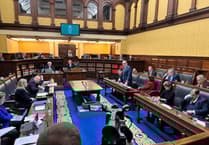
The horrifying statistics come from the government’s new road safety strategy, which was endorsed by the January sitting of Tynwald with only one vote against.


.jpeg?width=209&height=140&crop=209:145,smart&quality=75)
Between 2015 and 2017 the annual average was seven fatalities and 58 serious injuries on our roads, running up a total economic bill of £85 million over the period.
Unsurprisingly casualties peaked during the motorcycle festivals, but these visiting bike fans are still human beings killed or maimed on public highways for which the Manx authorities are responsible.
Given the island’s reputation as a venue for motorised mayhem it is remarkable that the ten-year road safety strategy is the first of its kind. Better late than never, hopefully.
The strategy’s ambitious vision is of a future where no-one suffers death or serious injury on the roads, though the more immediate target is a 40% reduction in these categories of casualty.
Most significantly the document commits government to an evidence-based approach to road safety. That should mean action is taken when the data shows there is a real problem requiring a solution.
This scientific approach is the only acceptable way forward when dealing with matters of life or death. But their brave undertaking to be bound by the evidence could put politicians on a collision course with noisy vested interest groups.
Interventions that encroach upon the ’rights’ of motorists are inevitably controversial. This is certainly the case in the Isle of Man, where the motor vehicle, particularly the motorcycle, is our biggest sacred cow.
Take, for example, the vexed question of speed limits.
One of the island’s national peculiarities is the phenomenon of derestricted roads, stretches of highway in the countryside that have no limit. The most notorious of these, of course, is the mountain section of the TT circuit, hugely popular with visiting bikers who love to race across it as fast as they can.
Talk of change in the interests of safety, perhaps by introducing an all-island speed limit, has always been shouted down by the pro-bike lobby. They warn that such nanny-statism would spoil the fun of the TT festival, although it is the type of fun that can quickly turn into carnage.
The road safety strategy recognises these sensitivities, offering the apparent reassurance that the Council of Ministers does not plan to change the policy on derestricted roads ’at the present time’.
It acknowledges the economic value of motorsport events, and accepts that road racing is part of the cultural identity of the Isle of Man. (This is true, and it helps to explain why we as a community have never given road safety the priority it deserves).
However, the document does state that speed limits will be addressed, on a case by case basis as informed by the evidence. It also pledges ’bold’ action to tackle the high level of open road casualties during the motorcycle festival periods.
So what happens if the evidence calls loud and clear for the introduction of a speed limit on the mountain road? I am assuming here that the relevant information would be in the public domain and could not be quietly shelved as a political inconvenience.
Ministers, committed as they are to follow the evidence wherever it may lead, would be obliged to support the controversial change.
Their only way out would be to contend that the popularity and economic benefits of motorcycling festivals are more important than public safety.
How many of us could agree with that argument?
Comments
This article has no comments yet. Be the first to leave a comment.