

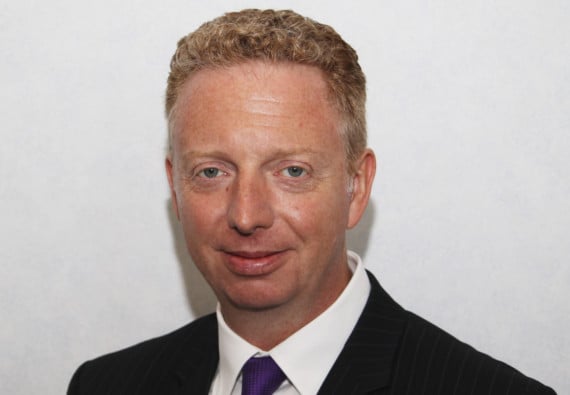
The MHK steering abortion reform proposals through the House of Keys is consulting with a UK expert to see if one of the clauses needs to be re-worded.
During last week’s House of Keys, it was suggested that the wording of clauses covering when an abortion would be permitted after 24 weeks might need to match the UK law, if that was to be where most such procedures would be carried out.
Dr Alex Allinson, who is due to bring the Abortion Reform Bill back to the House of Keys for further consideration of its clauses on March 6, said he was contacting Professor Zarco Alfirevic at the Fetal Medicine Centre at Liverpool Women’s Hospital to check with him.
’I don’t think there will be a problem but would obviously change some of our wording if it were to become an issue with those rare referrals across,’ he said.
.jpeg?width=209&height=140&crop=209:145,smart&quality=75)
.png?width=209&height=140&crop=209:145,smart&quality=75)

The issue arose after consultant gynaecologist Bob Fayle said any terminations after 21 weeks and six days needed to take place in a specialist unit. He said it was unlikely such a unit would be available in the Isle of Man in the ’foreseeable future’ because of the complicated procedure required and the rarity of such occurrences.
’It is very important that when we consider our legislation the two dovetail because there is no point in having the legislation that permits late termination of pregnancy on the Isle of Man but not in the UK, because we will not be able to do it here.’
It caused questions to be asked about whether that caused a potential problem as the Abortion Reform Bill would require one practitioner to determine the situation met the criteria for an abortion, as opposed to two, under UK law.
Mr Fayle pointed out, however, that the need to refer to a UK practice could effectively mean that a second opinion was obtained.
Last week’s sitting saw MHKs go into whole house committee mode, enabling them to question witnesses.
Disability rights campaigner Lord Brennan also argued that differences in the wording, from the UK act, could present an issue.
Legislative drafter Howard Connell was asked for his opinion and said: ’There is obviously a problem if something is authorised by the law of the Isle of Man that can only take place in the adjacent island, because obviously medical practitioners there are bound by the 1967 (UK) Act.
’When drafting this I had in mind, I confess, that these abortions might in time take place here, so the mismatch did not actually matter. But having listened to Mr Fayle’s evidence this morning I am conscious that the mismatch might create some quite serious problems.’
He said that if the provisions of the bill meant there would be circumstances where women would still have to go off-Island for a specialist procedure, ’clearly we have got to make it align with the UK, otherwise it will not work’.
There were calls for sex-selective abortion to be outlawed explicitly in the legislation and Chief Minister Howard Quayle has indicated he plans to table an amendment to that effect.
During that discussion. the issue of coercion of a pregnant woman was raised, after witness Jasvinder Sanghera said some cultures would see women pressured to have an abortion if they were not expecting a boy.
Mr Fayle told MHKs he had never been approached to conduct a sex-selective abortion in the Isle of Man and it had only ever happened once in his entire career, in the UK.
He said General Medical Council guidelines and the certainty that a doctor would be struck-off if they permitted a sex-selective abortion was likely to prevent such a decision being made, but pointed out that it would be unlikely anyone would give that as a reason for an abortion.
’The issue is about coercion to have terminations and you see this a lot over the issue of termination,’ he said.
’You will recognise it in most cases, but I think the issue for the Isle of Man is we are not very diverse here and it is recognising coercion in the different circumstances and recognising some of the subtle coercion that occurs.’
But he was not convinced of the need to specifically criminalise sex-selective abortion.
’It is not for me to say whether it should be in the Act or not - that will be for Keys to decide. But I do not see an advantage, from my point of view as a doctor, in having it criminalised.’
Dr Allinson said afterward that extra training across the medical profession to help them spot coercion would be ’useful’.
Current law allows termination in the island up to 24 weeks, but only where medical practitioners consider there is substantial risk the child will not survive birth, will die shortly afterwards or will be seriously handicapped.
Pregnancies resulting from rape, incest or sexual assault may be terminated up to 12 weeks, but women must provide an affidavit attesting to the cause of the pregnancy.
Terminations on social grounds are not allowable.
Reform campaigners argue the rules are too restrictive and force women to travel off-island or seek abortion pills on the internet.
Dr Allinson’s bill would allow for abortion on request up to 14 weeks. Up to 24 weeks it would be allowed for serious medical reasons, in cases of rape or sexual assault, or on ’serious social grounds’.
After 24 weeks, an abortion may be permitted in exceptional circumstances, such as risk to the life of the woman or a chance of ’grave’ long-term injury. Other provisions include serious risk of the baby dying before or after birth or suffering ’significant impairment’ that would limit the length or quality of the child’s life.
The bill places strict restrictions on who can prescribe or supply abortions pills, but also makes clear that a pregnant woman seeking to obtain abortion pills would not be committing an offence.
Comments
This article has no comments yet. Be the first to leave a comment.