
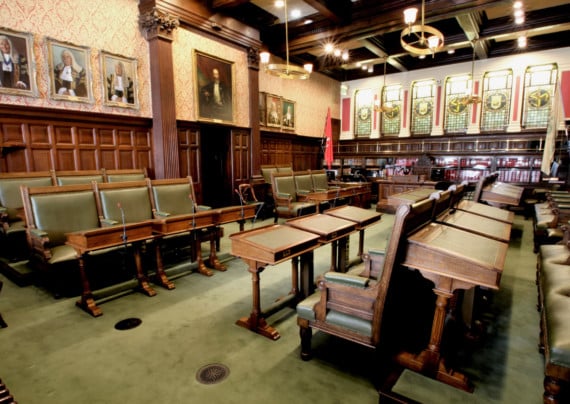
With the Douglas South by-election taking place today, reporter Sam Turton thought it was a good time to look at what an MHK is and what they do.
Members of the House of Keys represent the elected chamber of Tynwald.
Since 2016, when the constituency map was redrawn in an effort to improve democratic representation, the island is divided into 12 constituencies of roughly equal population size. Each constituency is represented by two members, making up the 24 members of the House of Keys.
One of their major roles is to draw up and pass laws. They can draft Bills and persuade their colleagues to back them.
.jpeg?width=209&height=140&crop=209:145,smart&quality=75)
In reality, most come from government departments and are taken through the Keys by members, where they must pass three readings before being sent for Royal Assent and becoming law.
Bills must also go through Legislative Council.
MHKs, having been elected, also take on a variety of roles within Tynwald but the primary focus for any MHK should be representing the views of their constituents. In doing this, they can table questions to ministers as well as tabling motions or presenting public petitions.
The basic pay is £44,675. But most get more.
Of the 24 members, one member is chosen as Speaker whose salary is 60% higher than basic pay (currently Rushen MHK Juan Watterson), with eight taking up roles as ministers (basic pay plus 50%) at the invitation of the Chief Minister (currently Howard Quayle) who is also an MHK but earns 80% more than the basic pay.
The remaining 14 MHKs are referred to as ’back benchers’ meaning they have no ministerial position. However, many of them occupy other roles as members of departments, for which they get paid more, chairing statutory boards or as members and chairs of committees.
The number of members of the Keys has, as far as records show, always been 24. The Manx-language name of the Keys is Yn Kiare as Feed (the four and twenty).
Members also have the responsibility of nominating and selecting eight members of the Legislative Council (referred to as LegCo). Other members of LegCo include the President of Tynwald, who is chosen by Tynwald sitting as a whole, the Attorney General who has no vote and the Lord Bishop who does.
Normally sitting alone each Tuesday from the fourth Tuesday in October to the last Tuesday in June, on the third Tuesday in the month, the Keys sits in Tynwald Court alongside the Legislative Council.
The Keys was a self-elected body until 1866 when following pressure from the tax paying public, the British Crown and Isle of Man Times editor James Brown, the Keys agreed to be elected by popular vote.
Until 1869, the Keys sat in Castletown, they now sit in the Tynwald building, known as the Wedding Cake, on Buck’s Road, in the former offices of the Bank of Mona.
Every five years there is a general election at which seats are up for grabs.
When seats fall vacant between general elections, as is the case in Douglas South, candidates are invited to stand in a public vote in the constituency.
Comments
This article has no comments yet. Be the first to leave a comment.