
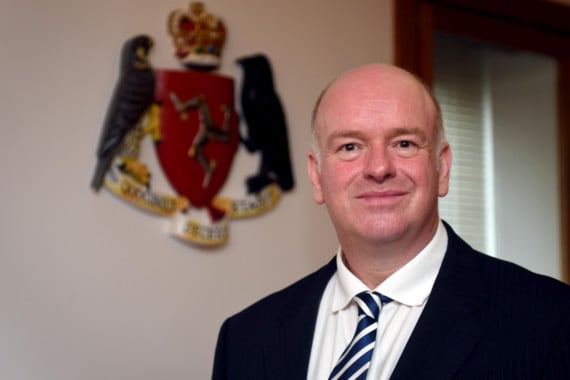
Chief Minister Howard Quayle has admitted he gave a commitment to meet EU requirements that have yet to be properly defined.
Mr Quayle said he made the commitment to prevent the Isle of Man being blacklisted by the EU.
In the House of Keys last week, he was questioned by former minister Kate Beecroft (LibVannin) over what commitments he had made to avoid a blacklisting.
The commitment came in response to the EU telling the Isle of Man it did not have ’legal substance requirements’ for everyone doing business in the Isle of Man. But it is not yet clear what the requirements are.


.jpeg?width=209&height=140&crop=209:145,smart&quality=75)
Mr Quayle added: ’I gave a commitment to comply with the rules and regulations, otherwise the Isle of Man would have been blacklisted, but we are working on the definition of" substance".
’It is highly complex and that is something that we have to work on and agree exactly what the EU Code of Conduct Group want, because they themselves cannot agree on what they require the numerous jurisdictions in opposition to do.’
Mrs Beecroft remarked: ’It seems a bit funny, giving a commitment to do something that we do not know what we are committing to.’
In December last year the Isle of Man was recognised as a co-operative jurisdiction by European Finance Ministers in December.
Mr Quayle said that, without the commitment he gave on the legal substance requirements, that may not have happened.
He said the Isle of Man had an ’excellent track record’ on tax co-operation, meeting all the EU listing criteria.
’The Isle of Man does not, however, have legal substance requirements for all relevant entities doing business in the Isle of Man and this was the concern raised by the Code of Conduct Group that we have been working to address since November 2017,’ Mr Quayle added.
’We have been seeking dialogue with the Code Group and all relevant parties to understand better exactly what is required, as this is a concern that has not been raised with us before and there are no international model requirements to work from.’
The Chief Minister said the island was working with the OECD, as well as Jersey and Guernsey.
’This work is difficult and time-consuming but needs to be done correctly,’ he added. ’I was and remain confident that we can address any legitimate concerns of the international community in a proportionate and practical manner, as we have always successfully achieved in the past.’
Comments
This article has no comments yet. Be the first to leave a comment.