
The clock is ticking in the bid to improve election procedures.
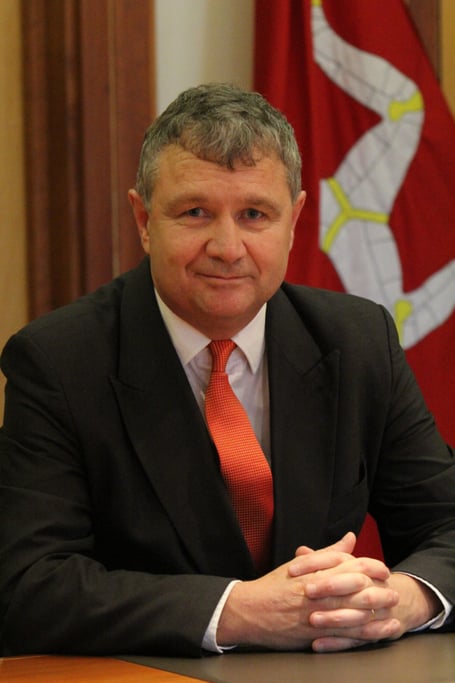
That’s the message from Policy and Reform Minister Chris Thomas after the Council of Ministers accepted all bar one of the recommendations in a select committee report on the organisation and operation of last year’s general election.
Many of the matters raised by the select committee were already set to be covered in a ’root and branch’ review of current election laws, he says.
’The clock is already ticking ahead of the September 2021 general election,’ Mr Thomas states in his foreword to the formal Council of Ministers response to the report, published last week.
.jpg?width=209&height=140&crop=209:145,smart&quality=75)
He adds: ’It has long been recognised that a full review of this important legislation is overdue, and to this end the chief executive of the Association of Electoral Administrators (John Turner) has been engaged to assist the Cabinet Office with the root and branch review that is already under way.
’Although recently updated, current legislation has been updated in a piecemeal fashion and does not easily enable the use of technology, efficiencies and cost savings that could be realised going forward.
’The root and branch review is the opportunity to establish a robust and modern electoral system for the House of Keys, a branch of Tynwald, the oldest continuous parliament in the world.’
Mr Thomas points out there were a number of differences in the 2016 general election, compared with 2011, the most obvious being the switch to 12 two-seat constituencies. Other changes included the need for political parties to be registered and obligations on candidates with regards to expenses and donations.
There were controversies last year, too, ranging from queries over whether providing a cuppa could be construed as an attempt to influence voters and election night staff having a break for a pizza, through to miscounted votes and one result being reported by the BBC before it was announced formally.
The biggest controversy was the discovery that 103 ballots papers went uncounted in Ayre and Michael, only realised after the result was declared. It did not affect the election result.
An inquiry by the Acting Attorney General John Quinn, who found the discrepancy was the result of human errors and the returning officer Simon Cain not having a robust process in place for reconciling the number of ballots presented and counted.
He also concluded that the returning officer had acted unlawfully when he subsequently opened sealed ballots to find out what had gone wrong - but decided it was not in the public interest to prosecute him.
The select committee report did little more than refer to the action taken in this case and it is a similar case with the CoMin response.
Mr Thomas comments: ’As in any election there were a small number of incidents, which were much discussed on social and in other forms of media; "pizzagate" et al.
’The most serious incident, the uncounted ballot papers in Ayre and Michael, was immediately investigated and reported upon publicly by Her Majesty’s Attorney General.’
Tynwald will next week be asked to receive the select committee’s original report and vote on all 15 of its recommendations - including one, on releasing ’marked’ voters’ lists, that the Council of Ministers says it does not support.
Comments
This article has no comments yet. Be the first to leave a comment.