
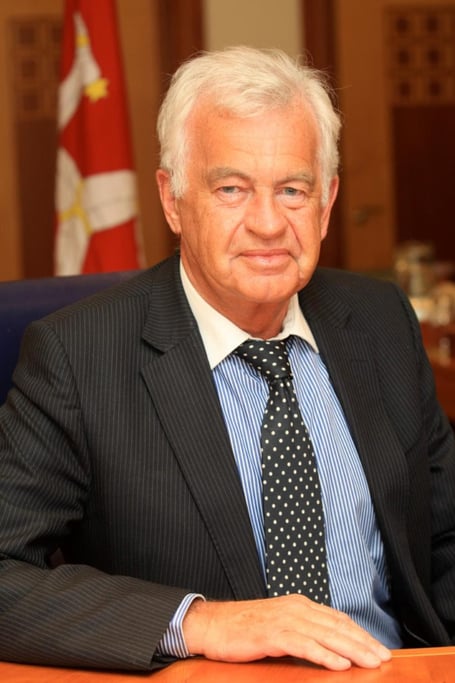
An MHK has warned that putting the Attorney General in charge of both the registration and regulation of charities is ’dangerous’.
The Charities Registration and Regulation Bill aims to modernise the register of Manx charities and increase the amount of information that will need to be submitted by organisations, including a requirement for all charities to have a written constitution.
Under the Bill, the Attorney General would perform the roles of both registrar and regulator and would be able to stipulate what information a charity must provide to be on the register.
Unusually for a Bill, it was first debated in the Legislative Council, with Attorney General John Quinn guiding it through the upper chamber.
 Most of ferry terminal's operating costs spent on dredging and riverside maintenance
 Peel Commissioners says LegCo measures will mitigate issues in local government bill
 Chief Minister stands firm on minimum wage rise but signals support for businesses
 Join festive carolling at St George's and enjoy a mince pie at Tynwald
After it completed its passage through LegCo, the bill was sent to the House of Keys, with Policy and Reform Minister Chris Thomas in charge. It was debated for the first time last week.
Bill Shimmins (Middle) warned the creation of a ’one-stop shop’ could be ’dangerous in an operational, regulatory and legal environment’.
He said: ’As it stands the Attorney General is promoting this Bill, which transfers functions to his department.
’I would be interested in the minister’s views on any conflicts of interest here.’
He added: ’The Attorney General’s chambers are making the regulations. It is proposed that they will now also carry out the day-to-day administration of charity registration, which is being transferred from the Department for Enterprise, and then they will also raise prosecutions if they consider that these are required.
’Is this healthy? Should there not be a separation of powers in this situation?’
Lawrie Hooper (LibVannin) also raised concerns. He said the attorney general, unlike ministers, did not have the power of ’executive oversight’, while as, as a crown appointment, was ’not really even answerable to Tynwald in respect of his regulatory functions’.
But Mr Thomas said he was ’not at all worried’ about there being any possible conflict of interest.
The minister added: ’One of the major reasons why charities registration is being linked together more closely with charities regulation - which was always with the attorney general’s chambers - is because the amount of advice, the level of advice, the frequency of advice, that was needed from chambers by the registry people, it is much better just to have that in one place, in the same way that we combined payroll and other aspects of HR to do with that in one place.
’It just is more efficient and effective.’
He compared it with the Financial Services Authority, which registers membership and also enforces regulations.
When the Bill was debated in the Legislative Council, the continuation of an exemption from the rules for ecclesiastical charities was queried.
Mr Thomas said the Bill was not intended to ’change the landscape’ of registration, which was why existing exemptions had been retained.
He also responded to suggestions from MLCs that small charities should be exempt from the requirements of the legislation, which some fear would be too onerous.
’This could be possible by making regulations under the bill,’ said Mr Thomas. ’However, there was no call for this during the consultation and so it has not been considered necessary.’
Members granted the Bill a second reading - covering the bill’s principles - last week. When it moves onto the clauses stage later this month, it will face more detailed scrutiny. It seems likely that a number of amendments will be tabled.
Comments
This article has no comments yet. Be the first to leave a comment.