

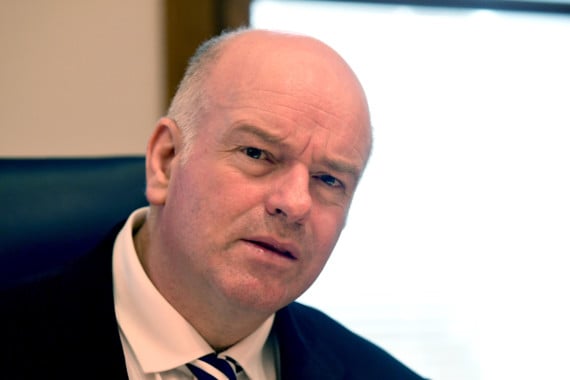
Chief Minister Howard Quayle successfully circumvented normal procedures in the House of Keys today to push on with legislation that some fear gives too much power to the Council of Ministers.
Although the Brexit bill was not due to be debated at this morning’s sitting, Mr Quayle sought a suspension of rules to allow an initial discussion to take place.
The European Union and Trade Bill was only listed on the Keys order paper for a first reading - when no discussion takes place - but Mr Quayle sought to bypass standing orders to allow a second reading, which would allow the general principle to be debated.
He said the urgency was because of need to ensure the enabling legislation was in place by the time the UK was due to leave the EU next March.


.jpeg?width=209&height=140&crop=209:145,smart&quality=75)
Although he confirmed that it had been the plan for some time to seek a suspension of standing orders, no such motion was placed on the order paper, coming instead only from the floor of the Keys.
It led to criticism from Liberal Vannin leader Kate Beecroft (Douglas South).
She said more time was needed to consider the implications of the bill before it went for a second reading.
’It gives the Council of Ministers too much power and takes it away from this House, which is where primary legislation should start.’
Her concern centred on provisions within the bill that would enable the Council of Ministers to introduce or remove laws by seeking Tynwald approval rather than going through the normal legislative process of scrutiny in the House of Keys and Legislative Council.
Mr Quayle argued that the volume of laws that would need to be re-applied, re-written or withdrawn after Brexit meant it would be impractical to use the normal processes.
He said Tynwald would act as a backstop in scrutinising any changes and would still have the power to intervene,
But Lawrie Hooper (LibVannin, Ramsey) agreed with Mrs Beecroft that major law changes should always be subject to primary legislation - going through both branches of Tynwald, with several stages of scrutiny - rather than secondary legislation that is usually dealt with at a single Tynwald sitting.
And he questioned the argument that Tynwald would give adequate scrutiny. He said over the past two years, there had been 531 statutory documents placed before Tynwald and only two rejected - before being brought back in a different form.
’Tynwald has not rejected a single piece of government policy or legislation,’ he said.
Members voted 17-3 to suspend standing orders and allow the second reading to take place (Mrs Beecroft, Mr Hooper and Acting Speaker Chris Robertshaw against).
They then voted 19-1 in favour of the second reading, after hearing Mr Quayle commit to introducing ’sunset’ provisions so that some decisions made under the bill would have to be reviewed after a certain time. Only Mrs Beecroft voted against.
The detailed scrutiny of the bill, at the clauses stage, is now expected to take place in two weeks’ time.
Comments
This article has no comments yet. Be the first to leave a comment.