

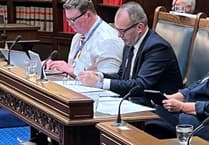
The social affairs policy review committee was meeting after Treasury published the results of an independent review into the personal capability assessments of invalidity benefit claimants carried out by Dependability Ltd.
Report author, experienced healthcare professional John Lancaster, was among those giving evidence to the committee, alongside Treasury Minister Alfred Cannan MHK, member for Treasury Bill Henderson MLC, director of Social Security Ross Stephens, and deputy director of operations Victoria McLauchlan.
Dependability Ltd was appointed in late 2014 to carry out personal capability assessments on invalidity benefit claimants. But its contract was terminated in July last year after it emerged an unregistered assessor had carried out some 20 face-to-face assessments.
.jpeg?width=209&height=140&crop=209:145,smart&quality=75)
.jpeg?width=209&height=140&crop=209:145,smart&quality=75)
Mr Lancaster’s report noted criticism was widespread. Many believed they had been treated with a lack of respect and the system lacked compassion. He recommended an occupational health style model be introduced using qualified occupational health staff following referral from the GP.
Mr Cannan told the committee: ’Compassion, an element of dignity and respect were missing. Treasury and social security have to consider those recommendations and start to work with the DHSC in terms of bringing those recommendations forward. ’
The committee heard that of the 845 claimants who had attended a face-to-face assessment with Dependability, 431 were found capable of work and 414 were found to be incapable of working.
Mr Lancaster told the committee: ’For a large number of people it came out with the right result. The key finding is that for those people with quite complex presentations the type of assessment that Dependability undertook could not make a robust decision. That’s possibly where the flaw lay.’
Mrs McLauchlan said Dependability was employed to assess people against a test that was not suitable for people with complex needs. Mr Henderson said: ’We started off with the best of intentions.’
Committee chairman David Cretney asked why when 50 per cent of appeals had been allowed, ’didn’t that make people think there was something badly wrong with the process?’ Mr Stephens replied: ’Had it stayed at that high level it would have been a cause of concern.’
Comments
This article has no comments yet. Be the first to leave a comment.