
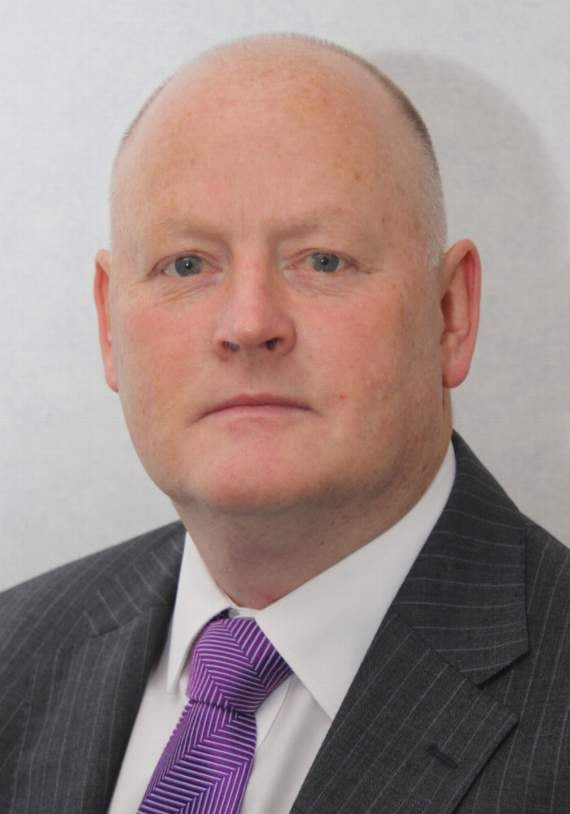
An Onchan MHK has claimed ’misleading’ figures are being used to justify the public sector rent increase of 1.9%.
Rob Callister has written to Infrastructure Minister Ray Harmer accusing his department of publishing incorrect figures, something Mr Harmer has denied.
Mr Callister said that, since the DoI introduced a new points system for local authority housing in April 2013, there had beenconsiderable rent hikes between 25% and 35% for some housing tenants.
He added: ’This was followed by a further 5% in 2014 and again in 2015, plus a further increase of 2.6% in 2016 and 2% April 2017, and an additional increase of 3.1% from April 2018 and 2.1% from April 2019.
.jpeg?width=209&height=140&crop=209:145,smart&quality=75)
.jpeg?width=209&height=140&crop=209:145,smart&quality=75)

’An increase of 1.9% or an increase of between £1.19 and £2.01 per week might appear to be reasonable to you as the minister, but I have to seriously question if your department has lost sight of the fact that social housing is meant to be set at an affordable rate, on a secure basis to individuals or families on low income or with a particular need.’
Mr Callister said he was not opposed to an overall annual average CPI inflation increase but that it needs to be a ’fair and equitable rent system’. He also sought reassurances over tenants ability to pay.
Mr Callister questioned why the department continued to use the deficiency figure of £6m, which is described as the cost for funding public sector housing - a figure I continue to dispute.
Previously, Mr Harmer had told Tynwald that the department had made a surplus of £2.9m in 2016/17 and £3.5m in 2017/18 and that ’the surplus monies are used to reduce the overall public sector rental deficiency figure’.
Mr Callister said: ’Therefore, your department needs to reissue the correct deficiency figure, because the figure of £6m is completely misleading to the general public and local media, a point that I have also raised on several occasions.’
In response to the letter, a DoI spokesman told the Examiner that Mr Harmer has invited Mr Callister to ’meet housing officers to allow them to demonstrate first-hand how public sector financing is managed and some of the complexities faced by this process’.
The spokesman added: ’The sum of £6m is the actual shortfall across all public sector housing stock after the operating cost, loans and liabilities are deducted from the total income.
’The sum in the region of £3-4m is the deficiency payment from the Treasury to local authorities after the DoI’s contribution has been made.
’The DoI does not make an operating surplus as any additional income above those of its operating costs, loans and liabilities is paid back to the Treasury who use the money to offset the total deficiency.’
Comments
This article has no comments yet. Be the first to leave a comment.