

The island’s public sector is now the smallest it’s been in 20 years as a proportion of the working population.
But we are paying more for some senior officers - although a policy to reduce pay grades for new starters will help close the gap between civil service salaries here and in the UK.
Policy and Reform Minister Chris Thomas has responded to claims made in Tynwald last month by LibVan MHK Julie Edge (Onchan) that some senior civil servants are paid at a much higher rate than their counterparts in the UK.
Ms Edge gave the example of a senior executive officer position in the UK Treasury receiving a maximum salary of £40,332 whereas the Isle of Man rate is £57,570 - and that is under the new terms and conditions for new starters. The old rate would have been £22,500 higher.
.jpg?width=209&height=140&crop=209:145,smart&quality=75)


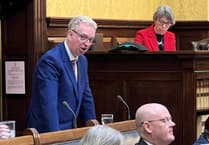
So has she got her figures correct? Mr Thomas said the maximum point for an SEO for new starters and promotions or re-gradings has been reduced from £57,570 to £51,228.
Given the differential between island and UK pay rates apparently being greatest for SEO grades and above, why are we paying more?
Mr Thomas told the Examiner: ’The civil service SEO salary range seems greater across than here, with some earning more in the UK than Isle of Man new terms e.g. a senior auditor in London seems to have earned £52,057 in 2016. There seems to be less divergence in very senior civil service pay between the Isle of Man and the UK and the Channel Islands.
’There are two general points here.
’Most Isle of Man public sector employment groups have different terms than the UK, although some have retained direct links e.g. teachers and police.
’And comparisons between salaries in different places are always problematic.
’But senior civil servants in smaller nations will usually have a broader range of more concentrated responsibilities than those in larger nations and local labour market conditions can be tighter.’
Mr Thomas said direct links with UK civil service pay were broken more than 25 years ago.
Do the incremental pay awards, and percentage pay settlements rather than lump sum awards, following arbitration, also play a part?
Mr Thomas said: ’UK public sector pay policy has restricted civil service pay increases to 1 per cent per annum in recent years, alongside a freeze on non-contractual automatic incremental pay, whereas in the island, civil service pay awards have been agreed through arbitration or conciliation on several occasions, resulting in an increased differential when the Isle of Man awards have been higher than those across.’
Paying more for civil service managers not only has an impact on the salary bill but also on the pensions bill. What can be done about the situation?
Mr Thomas told the Examiner: ’The public sector pension situation is affected by many factors including the size of the public service and remuneration of public servants. This will be revisited shortly by the actuaries.
’There is an important fiscal and local economy impact of public sector employment too. In this respect it is important to note that the census revealed a decline of nearly 900 in the public sector component of the economically active population between 2011 and 2016, greater than the decline in the private sector of 600.
’The public sector is now the smallest it has been as a proportion of the total economically active population since it was separately identified in 1996, at 21.4 per cent compared to a high of 23.9 per cent in 2006, falling from 10,042 people in 2011 to 9144 in 2016.
Mr Thomas said the new terms for new starters policy will make a significant difference.
He said: ’The "new terms for new starters" agreement will re-grade civil service pay downwards by an average of 10 per cent, with fewer automatic time service increments.
’This will have a significant impact in the medium term as people are promoted and leavers are replaced.
’After 12 months of the initiative 9 per cent of the workforce is already assimilated to the new scales. Pay comparisons - with the local private sector and international comparators - will be undertaken from time to time, as they have been in the past.’
Comments
This article has no comments yet. Be the first to leave a comment.