
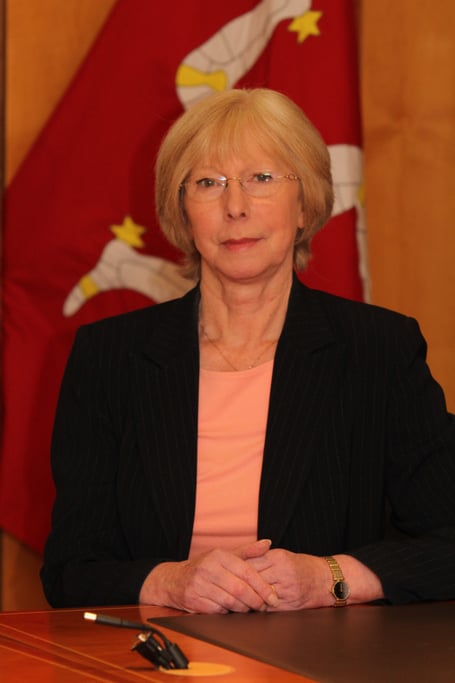
It was a lively 15 months, but the rollercoaster ride that was Kate Beecroft’s ministerial career - culminating in her forced resignation - was not exactly unexpected.
As soon as Chief Minister Howard Quayle appointed Mrs Beecroft as health minister, in October 2016, there was speculation as to the real motivation behind the appointment and how long we could expect what many expected to be an uncomfortable liaison to last.
One of the more vocal critics of the department when she was a backbencher, there was a suspicion that the Liberal Vannin leader was given the job with the aim of making her ’put up or shut up’.
Given that the health department is often regarded as a poisoned chalice, more so with the cuts it was expected to make, you could argue that Mr Quayle was onto a winner whatever happened. If Mrs Beecroft came up with the solutions, he could take the credit for appointing her. If she did not, then her position as a government critic was weakened.

.jpeg?width=209&height=140&crop=209:145,smart&quality=75)
.jpeg?width=209&height=140&crop=209:145,smart&quality=75)
Or, it could simply be that he thought Mrs Beecroft was the best person for the job.
After her tumultuous spell at the department, that could lead to questions over Mr Quayle’s judgement.
But, for all the headline-grabbing difficulties Mrs Beecroft encountered, from high-profile resignations to hugely unpopular cost-saving ideas - including increasing prescription charges and reducing exemptions - it was not all one-way traffic.
insiders
As some insiders have pointed out, Mrs Beecroft had the guts to make the difficult decisions.
Despite plenty of negative publicity and some well-founded criticism of the department’s ham-fisted handling of the decision to centralise endoscopy services at Noble’s Hospital - the number of procedures increased from 64 per week in October 2016, when the service was split between Noble’s and Ramsey Cottage Hospital, to 101 per week in October last year.
The decision to set up ’intermediate care’ services at Ramsey was in keeping with the long-term strategy at the department.
Mrs Beecroft insisted on having an office at Noble’s Hospital, so she could spend time at the hub of her department’s activity and, importantly, she was more visible to front-line staff.
Her focus was on balancing the budget and re-targeting finances on what she regarded as key areas. We will never know if she would have succeeded in the long-term. But, the short-term results, with Tynwald to be asked to approve more money for the department next week, did not do enough to keep her in the job.
She found herself in a similar position to a football manager whose board had lost faith in a vision that was, presumably, bought into at the beginning.
The difficult decisions with regards to making the cuts she was tasked with making, of course, are what made many regard the job as impossible.
Whatever you think of the proposed changes to prescription charges - yet to be agreed and possibly now facing a return to the drawing board - or the decision to end the subsidy of Age Concern’s Meals on Wheels services, to name just two, they were always going to be controversial.
argument
Depending on which side of the argument you side with, they took a steel will to make - or a lack of political nous, to come up with them.
Not all of her political colleagues would have had the same nerve, for better or worse.
But, every time there was a controversial proposal, it seemed to be followed by retro-explaining as to the motivation.
Be it the Meals on Wheels cut - with comparatively short notice and a failure to have the alternatives ready at the point of the announcement - the endoscopy changes, or the proposals for prescription charges, a great deal of explaining seemed to take place after criticism. It fuelled a suspicion that some decisions were made first and the justification found later.
Mrs Beecroft’s reputation for being hard-nosed and abrasive was not helped by incidents such as the resignation of department member Rob Callister early on in the 2017, apparently after the minister had asked department members to sign a letter that amounted to a vote of no confidence in chief executive Malcolm Couch.
With the year ending with another departmental resignation, by Clare Bettison, the Department of Health and Social Care carried with it the whiff of dysfunction at a political level.
There were potential problems ahead, too. It was clear she was uncomfortable with the proposed abortion law reform - some accused her of trying to delay the changes when she failed to support Dr Alex Allinson’s leave to introduce legislation. It would have left her in an awkward position if the changes were brought into force.
Ironically, she may now be in a better position to try and push Dr Allinson’s bill to a select committee than she would have been previously.
That aside, few would argue that Mrs Beecroft did not work hard.
In the run-up to Christmas, when the minister was struggling with her health, it is understood she continued to work from a hospital bed.
Whether she will rest on her backbench laurels, now that she no longer has the same responsibilities, remains to be seen.
Comments
This article has no comments yet. Be the first to leave a comment.