


Government funding of Manx Radio is set to be debated in Tynwald.
Treasury Minister Alfred Cannan revealed he had already been in talks with the station’s directors about its future plans.
That included whether the station had any proposals ’where it will find itself staying within the current subvention limits - but, more importantly, whether it has any proposals to be able to deliver its services with less subvention’.
The station receives a subvention of £875,000 per year, but last year recorded a loss of £82,000. Earlier this month it launched Manx Radio Vision, allowing video of certain shows to be viewed online via the likes of Facebook and YouTube - as well as through its new product, the Portal, which will also show videos from MTTV and Culture Vannin.
.jpeg?width=209&height=140&crop=209:145,smart&quality=75)
.jpeg?width=209&height=140&crop=209:145,smart&quality=75)

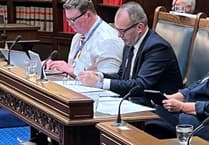
Although the cost of the new video service is low, it led to questions in Tynwald about the radio station’s funding.
Mr Cannan said Treasury was not involved in all aspects of Manx Radio spending, but added: ’Clearly, there are some items, including capital expenditure, that do come to the Treasury, but ultimately those items come before Tynwald and it is Tynwald which will ultimately decide what money and what funding the radio station receives.
’That is why it is almost certain that, within the next couple of months, we will indeed debate the radio, debate the subvention that is being received, and of course, members will have the opportunity to propose any changes that they wish to the current system in order to ensure that the public is receiving what they regard as fair value for money.’
Mr Cannan said, in the first week after the launch of Manx Radio Vision, more than 22,000 views had been recorded.
’I have been informed by the chief executive of Manx Radio that their investment in vision camera technology is £2,830 per annum for seven years,’ said Mr Cannan.
’The investment has been kept low because Manx Radio Vision primarily utilises the studio software and hardware that has been a central part of its studios for a number of years. There are no anticipated staffing or operating costs, as the system is fully automated.’
He was responding to a question tabled by Daphne Caine (Garff), who wanted to know about the operating costs.
Mrs Caine, a reporter for Isle of Man Newspapers from 1989-96, expressed concern about Manx Radio venturing into areas such as video.
’Given it is a publicly financed public service broadcaster, this could be seen as unfairly competing with other commercial providers on the island, who have also invested in video technology.’
Mrs Caine asked: ’When Manx Radio receives a subvention from government of £875,000 and it makes a loss of £82,000 on its year, goes off and spends more money buying equipment to expand the service, does anyone in Treasury approve such spending and does the Treasury Minister feel that this represents value for money in terms of Manx Radio?’
Mr Cannan said part of the issue on value for money depended on whether Tynwald required Manx Radio to act as a public service broadcaster.
But, he added: ’It is clear to me that there remain a number of questions about value for money being received from a public service broadcaster, and the size and scale of the subvention, given the many challenges facing government finances.’
Comments
This article has no comments yet. Be the first to leave a comment.