

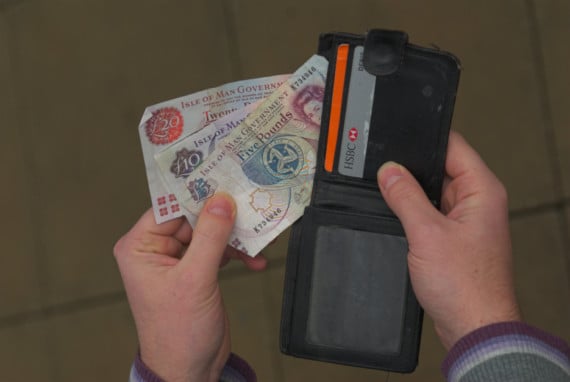
The minimum wage is set to increase to £8.25 per hour - an increase of 40p.
That’s the suggestion that will be put before Tynwald next week.
Members will be asked to approve the minimum rate of pay for workers aged 18 and over going from £7.85 to £8.25.
The recommendation was made by the Minimum Wage Committee in its latest report.
.JPG?width=209&height=140&crop=209:145,smart&quality=75)
.jpeg?width=209&height=140&crop=209:145,smart&quality=75)

At the same sitting next week, Tynwald members will be asked to approve the rate for school leavers under the age of 18 to go up from £5.85 to £6.15 and the rate for ’development workers’ - employees aged 18 and over who are in their first six months of employment and are on an accredited training programme - from £6.95 to £7.30.
The latter two rates were not recommended by the committee - employer and employee representatives could not agree on a figure for either - so the Department for Enterprise and Treasury decided to apply a ’broadly similar increase, in percentage terms’ to the main rate.
If the increases are approved by Tynwald, the legally enforceable rates will come into effect in October.
The Minimum Wage Committee report also says that 3.4% of the economically active population currently are paid the minimum wage - or below. It also says that 2.9% of working men are on the minimum wage, while for women it is 4.5%.
In the same report, the committee takes a swipe at the government over how it uses the concept of a voluntary ’living wage’. That was recently increased to £9.76 an hour. While the minimum wage is legally binding, the living wage is not enforceable.
The committee comments: ’While the committee commends government’s effort to assist the low paid and applauds those employers which have adopted the living wage, the committee notes that, for the time being, government has been left in the position of publishing the minimum amount on which a worker needs to live but legislating for a lower amount.’
Such a comment is likely to give ammunition to critics of the government’s use of the living wage.
At last month’s Tynwald, there was a spat between Speaker Juan Watterson and Policy and Reform Minister Chris Thomas over the living wage.
Mr Watterson asked the minister if he hoped that in future the gap the gap between the living wage and the mandatory minimum wage would ’close’. But Mr Thomas suggested the Speaker did not understand the difference between the two.
The purpose of the living wage was to understand the cost of living in relation to ’minimum income standards’, Mr Thomas argued, but Mr Watterson remained unimpressed and criticised the government’s record on alleviating poverty.
How does the Isle of Man minimum wage - set to increase to £8.25 - compare with other places?
Guernsey: The adult rate for over-18s was increased from £7.75 to £8.10 an hour in January.
Jersey: The adult rate became £7.88 for over-16s with effect from April. It is due to rise again in October, to £8.02.
Ireland: As of May 8, the adult hourly rate was the equivalent of £8.42 an hour (based on a Manx Government exchange rate of €1.164 to £1).
United Kingdom: Adult rate (age 21-24) increased from £7.38 to £7.70 in April. The rate for 18-20-year-olds was increased from £5.90 to £6.15 per hour.1.164 to £1).
United Kingdom: Adult rate (age 21 to 24) increased from £7.38 to £7.70 in April. The rate for 18- to 20-year-olds was increased from £5.90 to £6.15 per hour.
Comments
This article has no comments yet. Be the first to leave a comment.