

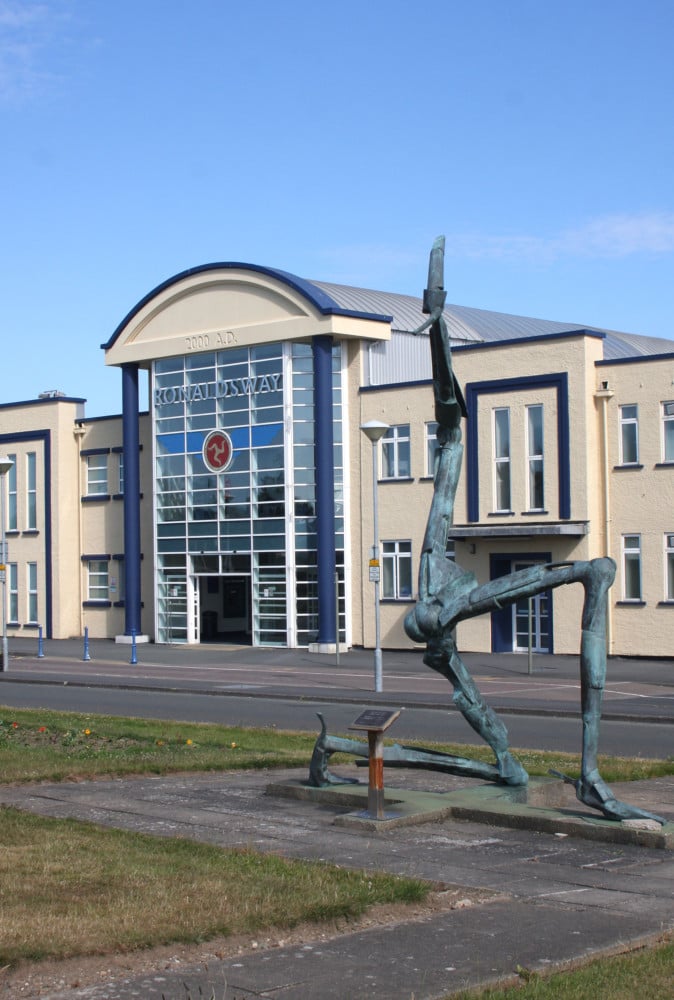
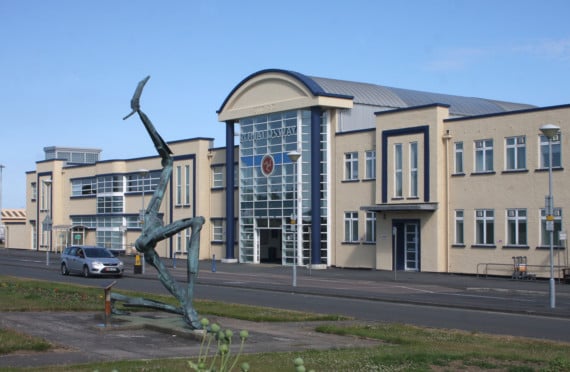
The loss-making airport could be part-privatised to cut its deficit and bring in more commercial income.
Tynwald will be asked this month to support the principle of creating a state-owned arm’s-length company to operate Ronaldsway Airport.
It’s one of the latest recommendations to come out of the government’s SAVE programme, and follows a review by consultants who claim the move could save £970,000 a year.
In its report York Aviation highlights a lack of transparency of financial information relating to the airport - making it difficult to establish the current true trading position.


This ’makes it hard for management to properly manage costs, which of itself creates a disincentive to improving performance’, notes the report.
The consultants said the best estimate they have been able to make was of a current trading deficit of about £3.7m.
This deficit is slightly worse than most comparative airports although the consultants note the difficulty of it being profitable where there are fewer than two million passengers a year.
Government income from Air Passenger Duty was likely to exceed the loss from the airport operation, however.
But the consultants noted this did not alter the ‘stand-alone’ position of Ronaldsway’s finances compared to other airports, which would not normally benefit from APD revenue.
Lack of transparency over the airport’s financial performance is partly due to centralised shared services, such as information technology and human resources, not being accurately costed or allocated and to uncertainty over how shared costs are divided between the airport and harbours in the merged ports division.
York Aviation said there were very limited realistic opportunities for completely new routes and little scope to ’grow’ the airport to profitability in the medium term at least.
Aeronautical revenues per passenger are at the lower end of the scale of other airports, reflecting the incentives currently being offered to the airlines to offer more services to the island.
Non-aeronautical revenue per passenger - or sales from shops in the airport etc - is significantly below even the closest comparison and there is scope for a more innovative and commercial approach to improve income from terminal retail and food and beverage concessions.
The consultants said the greatest potential for savings in operational costs is likely to lie in addressing the relatively high level of staff costs.
This also carries the greatest political risk, they noted, but that nevertheless there was some scope for reducing overtime costs without necessarily changing pay rates.
Consideration could also be given to how certain job functions are delivered, they added.
Having considered the different potential operating models, they concluded there are only two options for change achievable in the short to medium term - keeping the current business model but with some modifications, or forming an arm’s length company.
Consultants said a state-owned company, with appropriate government control and scrutiny, would not eliminate losses but would provide greater commercial incentives likely to minimise the need for subsidies in the future.
’We are conscious, however, of the political risks associated with this option and of the costs and time involved,’ they noted.
Projected savings could not be guaranteed, they said, but they estimated the deficit could be cut by up to £970,000 a year after five years.
Cumulative savings over that period could amount to £3.4m, although these would be offset by the costs of implementing the transition to a state-owned company.
York Aviation says the largest area of operational expenditure - two thirds - is staff costs and ’overtime’ appears relatively high in several sections and accounts for £612,000 of overall payroll costs in 2017/18.
Details of numbers of staff, payroll costs and basic pay have been redacted - or removed from public view - in the published report, however.
The report notes there has been a high degree of local opposition to increased parking charges,but these must be an option if the airport is to reduce its deficit. If the principle of an arm’s-length company is approved by Tynwald, a team led by the Cabinet Office will be formed to develop the project and bring a detailed plan to parliament for approval by April next year.
The SAVE programme began in 2017 with an initial call to the public to suggest ways government could cut costs and become more efficient.
Among other proposals revealed in the SAVE update report is the plan to appoint a third party higher education provider with the aim of increasing the number of students enrolled on-island from the current 164 to more than 1,000.
An invitation to tender process will be launched by the Department of Education, Sport and Culture.
The SAVE update report also notes that a review into the operation of quarry operations has concluded they are run efficiently and recommends they remain under government control.
It says the ongoing review into the provision of legal aid in the island will lead to two eight-week consultations being launched - one this month on criminal legal aid and one in November on civil and family legal aid.
Treasury Minister Alfred Cannan said: ’I am pleased to be bringing forward more positive reform to public service delivery and the SAVE report clearly shows that improvements can be made with the airport operation.
’There is also progress in other areas and I look forward to further updates in the next parliamentary year.’
Comments
This article has no comments yet. Be the first to leave a comment.