
Advocate Paul Beckett explains the constitutional position of the Isle of Man.
Brexit and the Paradise Papers fallout over registering beneficial owners of offshore companies has put into the spotlight the constitutional relationship between the Isle of Man, the UK and the European Union.
What does our independence consist of, and just how free and fair is the Isle of Man?
Fair, undoubtedly, and we sometimes take its beauty for granted.




Perhaps we take the constitutional position for granted in much the same way. But we must guard what freedoms we have, for if we don’t remain alert, they may no longer be there the day we go looking for them.
We are a Crown Dependency, and so are independent in all matters except foreign affairs and defence, which are the responsibility of the United Kingdom. We have our own laws (some still on the books and in use which go back to the 18th century, long before the Lordship of Man was sold to the English Crown in 1765). Our Courts are also set apart from the UK, and ultimately look to the Privy Council and not to the UK Supreme Court for any final level of appeals.
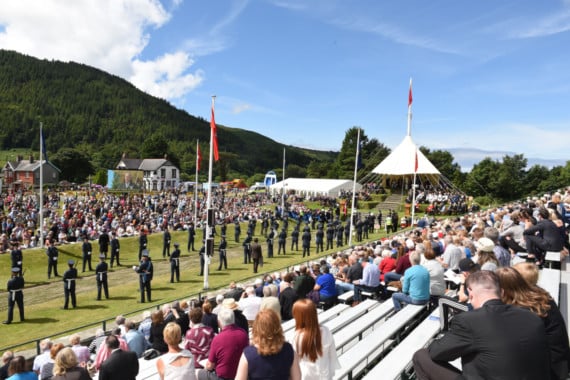
We have the longest unbroken history of parliamentary government in the world.
Tynwald is not a subordinate legislature and does not derive its authority from the United Kingdom Parliament.
Though some Westminster MPs may confuse the issue, we are not on a par with Scotland and Wales.
For many years we have been able safely to assume that it is unlikely that there would be a conflict between an Act of Parliament and an Act of Tynwald, because each legislature has been closely aware of the other’s activities and sensitive to the needs of its neighbour.
Times change, and Westminster seems rudderless in the face of Brexit.
Nevertheless, were such a conflict to occur (assuming each Act to have received the Royal Assent), then in the Isle of Man the Act of Tynwald would prevail.
The UK famously has no written constitution, and neither does the Isle of Man.
Nevertheless, some things are set down in black and white.
The constitutional relationship between the Isle of Man and the United Kingdom was last given formal voice on May 1 2007 with the signing of a framework agreement, intended to clarify that relationship.
The UK acknowledged that it ’has no democratic accountability in and for the Isle of Man, which is governed by its own democratically elected assembly’.
It continues: ’In the context of the UK’s responsibility for the Isle of Man’s international relations it is understood that the UK will not act internationally on behalf of the Isle of Man without prior consultation.’
This gives us comfort as regards the Brexit negotiations, particularly as ’The UK recognises that the interests of the Isle of Man may differ from those of the UK, and the UK will seek to represent any differing interests when acting in an international capacity.
’This is particularly evident in respect of the relationship with the European Union, where the UK interests can be expected to be those of an EU member state and the interests of the Isle of Man can be expected to reflect the fact that the UK’s membership of the EU only extends to the Isle of Man in certain circumstances as set out in Protocol 3 of the UK’s Treaty of Accession.’
The bottom line is: ’The Isle of Man has an international identity which is different from that of the UK. The UK has a role to play in assisting the development of the Isle of Man’s international identity. The role is one of support not interference.’
The Isle of Man is not a ’tax haven’, despite the mud which continues to be flung at us.
In the 2007 framework agreement it was agreed that: ’The Isle of Man and the UK will work jointly to promote the legitimate status of the Isle of Man as a responsible, stable and mature democracy with its own broad policy interests and which is willing to engage positively with the international community across a wide range of issues.’
And what of the European Union?
The Isle of Man has had a special relationship with the European Union.
The Treaty of Rome provides for its application to all European territories for whom a member state is responsible.
In the case of the United Kingdom, however, a Third Protocol was added to the United Kingdom Treaty of Accession of 1972.
This provides that the Treaty of Rome does not apply to the Isle of Man save that the Isle of Man is included within the customs territory of the European Union and is subject to the rules on the free movement of goods.
The Isle of Man therefore forms part of the European Union Single European Market.
European Union taxation and competition rules do not apply to the Isle of Man.
Following the decision of the United Kingdom to negotiate its withdrawal from membership of the European Union, the future position of the Isle of Man in relation to the European Union once that withdrawal process has been concluded currently remains as unclear as the United Kingdom’s relationship.
Perhaps the 2007 framework agreement is no longer uppermost in the minds of our and the UK’s negotiators.
t ought to be. We do not at such a difficult and uncertain time in international relations need to reinvent that 2007 wheel. It is our constitutional right to demand that the UK listens to us, acts on our concerns, and by what it does or fails to do, not frustrate our economy, our "responsible, stable and mature democracy" or our way of life.
Comments
This article has no comments yet. Be the first to leave a comment.