
The Isle of Man has become embroiled in a tax scandal that has left thousands of self-employed workers facing ruin.
More than 50,000 contract workers, including nurses, teachers, and small business owners, have been hit with backdated tax demands -sometimes for as much as hundreds of thousands of pounds.
The controversial Loan Charge, introduced in the 2016 UK Budget, aims to claw back unpaid taxes from as far back as 1999.
Contractors, quite legally at the time, reduced their tax bills by providing their services through umbrella companies based offshore.
.jpg?width=209&height=140&crop=209:145,smart&quality=75)



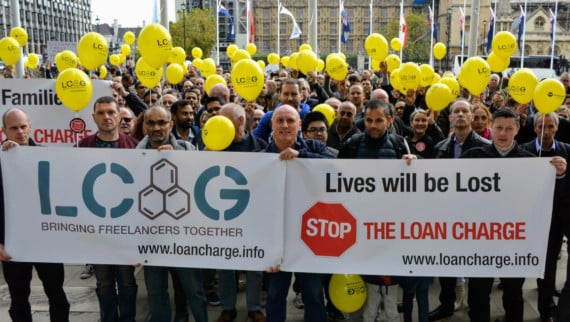
Campaigners from the Loan Charge Action Group claim lives will be lost as the result of Her Majesty’s Revenue and Customs imposing retrospective taxation on freelancers and contractors.
And they are planning a mass demonstration in London next month calling for the government to suspend and review the Loan Charge.
A recent tax tribunal judgment gives an indication of the scale of the problem.
IT specialist Stephen Hoey appealed against a decision of HMRC in 2013 and 2014 that he paid back tens of thousands of tax for the tax years 2008-09 and 2009-10.
He participated in a scheme involving Isle of Man-based Penfolds and the Guernsey-based Hamilton Trust to avoid tax on earnings. The Penfolds scheme had 3,014 users.
Mr Hoey’s appeal was one of two test cases, the other being subsequently withdrawn, involving more than 40 others who had used the same arrangements. The court heard that it had been common in the IT sector that companies did not want to take on extra staff on relatively short term contracts.
In order to obtain work therefore, Mr Hoey had to provide his services either as an independent consultant or through a company, either his own personal service company or an umbrella company employing a number of such contractors.
It was estimated that 15,000 contractors had used similar arrangements.
Mr Hoey had previously, in around 2004, supplied his services via a personal service company but had found the complexities of running his own company too much for him to deal with.
He therefore engaged the services of an intermediary, Dynamic Management Solutions Ltd, who in 2007-08 introduced him to Penfolds. In September 2009 Penfolds suggested he should transfer his employment to Hamilton Trust, a Guernsey-based trust company.
DMS, and a subsequent intermediary, Cascade, were Mr Hoey’s prime points of contact. The court heard he trusted them totally. He submitted his time sheets to them and they in turn submitted invoices to the end users. He had very little to do with the other parties to the arrangements.
Mr Hoey insisted that his motivation in entering into these schemes was solely to avoid the complexities of running his own company.
The cash he received under the Penfolds arrangement was slightly better but he said he did not really understand this was because he would be paid in a way designed to avoid paying UK tax on a large part of his earnings.
And, importantly, a substantial part of the hoped for benefit of avoiding UK tax was absorbed by the fees being charged by the promoters and facilitators of the scheme.
These were between 10% and 18% of his income, compared to the 1% which might be charged by a simple UK-based umbrella company.
But tribunal judgment Philip Gillett dismissed the appeal. Judge Gillett concluded in a judgment published on July 29: ’I regard the basic structure, of contractors being employed by an umbrella company which then provides their services to the end users, as being a perfectly reasonable commercial transaction.
’I regard the insertion of additional transactions, being the setting up of an umbrella company offshore, which makes payments to a trust, which then makes interest free loans to the contractors, with the expectation that those loans are never repaid, as constituting tax avoidance.’
Comments
This article has no comments yet. Be the first to leave a comment.