

The MHK who is guiding the new sex offences law through the House of Keys has confirmed that the identity of people made the subject of ’risk orders’ would only be revealed on a ’need to know’ basis.
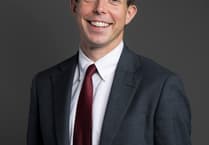
Dr Alex Allinson is taking the Sexual Offences and Obscene Publications Bill through the House of Keys.
It includes provision for the imposition of sexual risk orders, which would allow courts to declare someone to be a risk of offence, even before or without a conviction.
Under separate proposals in the Bill, the public naming of defendants in sex offence cases would not be allowed unless they are convicted.



The Manx Independent contacted Dr Allinson to ask how the new sexual risk orders would fit in with the anonymity rules for court cases.
He said: ’In our current legislation the constabulary have the ability to make risk of sexual harm orders, which are basically the same as the proposed sexual risk order and have the same ability to impose restrictions and notification requirements.
’This facility has never been used and I doubt that there would be a great demand in the future but it would enable the constabulary to deal with perceived risk to the public on a case by case basis.’
He added: ’Should a sexual risk order be required this would not be publicised but the information shared where necessary on a need to know basis.’
When the relevant clause was approved in the House of Keys, Dr Allinson explained the difference between the two orders.
He said: ’In terms of sexual harm prevention orders, these are imposed by the courts on people who have been found guilty of an offence, have been convicted of that offence, and perhaps have been either imprisoned or cautioned for that offence, whereas when we come on to sexual risk orders the offence has not necessarily led to a conviction.’
Of the SROs, he added: ’These might be brought in when a trial is abandoned, due to perhaps lack of evidence or intimidation of a witness, but there is circumstantial evidence to show that that person may still pose a risk to society.’
Both orders were to be used to protect vulnerable people and children generally and other members of the public deemed to be at risk of harm from the person.
In both cases, orders would set out prohibited activities for the subject of the order for a fixed time.
Breaching an order could lead to up to five years in jail.
The Bill will need to pass a third reading, before it can move on to the Legislative Council for further consideration.
Dr Alex Allinson is taking the Sexual Offences and Obscene Publications Bill through the House of Keys.
Comments
This article has no comments yet. Be the first to leave a comment.