
The Isle of Man suffers ’health inequalities’ but cannot identify them all.
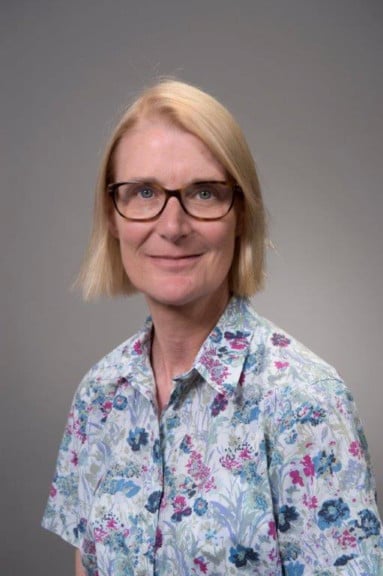
That’s the message from director of public health Dr Henrietta Ewart.
In her third annual report, she states: ’We have an extraordinary opportunity, as a small island nation, to address inequalities through co-ordinated action through government policy and service delivery, and the contribution of those beyond government.
’However, at present we simply do not know what inequalities there are across our population, whether our current policies and interventions are addressing and changing these, or whether we have gaps that we are not currently addressing at all.’
.jpeg?width=209&height=140&crop=209:145,smart&quality=75)
.jpeg?width=209&height=140&crop=209:145,smart&quality=75)
She adds: ’Health inequalities are the result of socio-economic inequalities and action to reduce them needs to be across all the wider determinants of health.
’This requires co-ordinated and sustained policies and interventions across government, third and private sectors and communities.’
Dr Ewart recommends the establishment of a ’high-level board to take strategic and policy ownership of health and social inequalities’.
It would include politicians and senior civil servants, along with representatives from the third sector, private sector and community groups.
The board would be responsible for ’receiving intelligence on health and social inequalities on-island, evidence of policy and other interventions likely to have an impact’.
It would also set out strategy.
Dr Ewart says: ’This year I’ve posed the question: "Are we an equal society and does that matter for health and wellbeing?".
’The short answer is we don’t know and it does matter.’
She adds: ’We cannot understand how health and social inequalities are distributed across our population or measure the impact of actions to address them until we have a dataset of indicators that will show where we are now and what are the priority issues for action.’
The annual report, entitled The Isle of Man: An Equal Society?, also recommends the delivery of a ’core dataset’ to measure inequalities in health and socio-economic status.
The feasibility of a ’geographically based Isle of Man Index of multiple deprivation’ should be investigated.
And the government should ’explore the potential of working with others to maximise learning relevant to our population’. At next week’s Tynwald sitting, a motion calling for the report’s recommendations to be approved is set to be be tabled by David Cretney MLC.
Mr Cretney is also chairman of the social affairs policy review committee, which has been investigating mental health issues and also suicide awareness and prevention in the last two years and has called for public health to take a more central role and include updates in regular reports.
His motion calls for the annual report, in future, to be laid before Tynwald ’as a matter of course’.
Comments
This article has no comments yet. Be the first to leave a comment.