
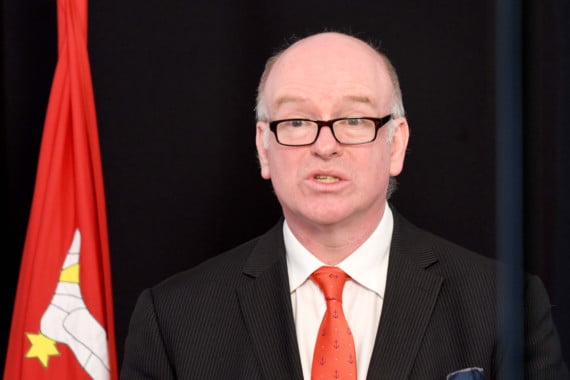
No one is being forced back to work, the Chief Minister has insisted.
Howard Quayle defended the decision to allow the construction industry and allied trades to return to work as from 6am tomorrow (Friday).
Up to 4,500 people in the sector, including builders, construction workers, tradesmen as well as window cleaners and gardeners, will be eligible to go back to their jobs.
Mr Quayle told an emergency sitting of the House of Keys yesterday (Wednesday) this would be carefully managed: ’We are not forcing people to go back to work. We are giving them the opportunity to return to the workplace if they are able to do so in a way that is safe. All we’ve done is allow one sector to go back to work.’
.jpeg?width=209&height=140&crop=209:145,smart&quality=75)



But there is uncertainty over how many will actually return to work.
Education Minister Dr Alex Allinson said there was no date yet set to open the schools up to more pupils - and that construction workers would not be able to access education for their children on Friday unless their partners are key workers.
He said meaningful discussions were under way with the teaching unions and staff and no announcement will be made until measures are in place to ensure the safety of teachers and that children can be taught in a safe environment.
Dr Allinson said the discussions involved looking at staffing levels, supply teachers, PPE and how social distancing can be achieved, and there would need to be a limit on class size and pupil numbers.
Kate Costain (Lib Vannin, Douglas South) asked whether the employees had the final say over whether they would return to work and what would happen if their employers made them go back.
The Chief Minister replied: ’If you have a clear health issue I would be highly surprised if the employer doesn’t allow you to stay at home.
’They can report it if they feel they are being forced to go back to work.’
Mr Quayle said people could speak to their union representatives and health and safety officers would police the guidelines.
Treasury Minister Alfred Cannan was asked if those in the construction sector who could not return to work would still be eligible to access government Covid support packages.
He replied that the salary support scheme and MERA benefit will continue to support individuals and their families for three months as initially envisaged.
Mr Quayle said the phased return to work would be reviewed after eight to 10 days and if figures for virus cases don’t spike, then other sectors could follow. But he said the time is not yet right to open up our borders, saying the situation in the UK had to improve first.
Stay-at-home guidance has also been relaxed from tomorrow, with Mr Quayle saying he wanted to ’allow our people a little more freedom and space’.
There will be no limit on the time people can spend outside their home and trips no longer have to be essential. There will also be a widening of the types of recreation that are allowed.
But social distancing rules remain so you still can’t visit family and friends.
’You still must not meet with people outside of your household,’ said the Chief Minister.
Mr Quayle said he could not promise that changes to the Covid restrictions would not bring risk but they were based on ’robust data, best clinical advice available and with the protection of life at the forefront of our deliberations’.
’Staying at home will continue to be our strongest weapon,’ he added.
Tynwald this week approved an amendment to the Emergency Powers regulations on banning or restricting gatherings.
The new amendment defines a gathering as two or more people who are not members of the same household.
Chief Constable Gary Roberts told the press briefing yesterday that police will focus on gatherings, infected and potentially infected people, roads and crime.
He revealed eight members of the Constabulary’s workforce had tested positive for coronavirus but some had since returned to work.