

Enforcing cannabis laws in the Isle of Man could undermine police authority as it could go against prevailing public opinion.
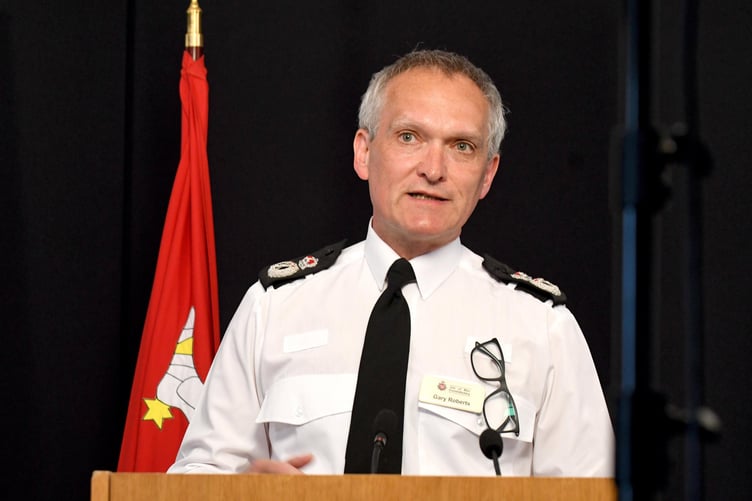
That was the view of Chief Constable Gary Roberts, who was giving evidence to Tynwald’s Constitutional and Legal Affairs Committee.
He said: ‘There is a threat to police legitimacy because as most of the people come to accept that cannabis is OK to use – and I won’t offer an opinion on whether it is or whether it isn’t – the police enforcing the law in a way that the public disagrees with, does threaten our legitimacy.
In terms of enforcement, there have been 98 cannabis offences committed to the Court of General Gaol since March 20, 2019.
.JPG?width=209&height=140&crop=209:145,smart&quality=75)
.jpeg?width=209&height=140&crop=209:145,smart&quality=75)
The figure was revealed by a Freedom of Information Request which was submitted on February 14.
Of the 98 offences, 39 were for possession of cannabis, three for possession of cannabis resin, 50 for production of cannabis, four for production of cannabis resin, and two for cultivation of cannabis.
None of these prosecutions proceeded with jury trials.
Instead, all of the cases concluded with guilty pleas.
These numbers also do not account for cannabis cases dealt with in the summary courts (magistrates, High Bailiff and Deputy High Bailiff), which have lower sentencing powers and which will be far greater in number.
On March 20, 2019, two public consultations closed – one looking into the medicinal use of cannabis, and one regarding the licensing of industrial hemp production in the island.
The consultation into the medicinal use of cannabis garnered the largest number of responses, with a total of 3,285 replies from both island residents and local organisations.
The hemp consultation received 1,012 responses.
These consultations evidenced public support for the legalisation of medicinal cannabis, and for industrial hemp production.
In the medicinal use of cannabis consultation, strongest support (55% of respondents) was shown for the option to offer quality-assured medicinal cannabis products direct to the public through accredited dispensaries.
There was also substantial support (36%) for developing a framework similar to that in the Netherlands, which gives medical professionals greater leeway in deciding when to prescribe medicinal cannabis.
The majority of respondents (62%) were also in favour of restricting access to medicinal cannabis to those over 18, except in a small number of clearly defined conditions.
There was also very strong support (95%) for allowing cannabis to be cultivated and processed on the island, subject to suitable regulation.
In January 2021, a resolution was passed to legalise the growing, production and export of medicinal cannabis, though it is still not legal to consume here as a recreational drug.
As we reported last month, regeneration and clean energy company Peel NRE wants to build what it calls a ‘science innovation and research centre sustainable energy park’ and medicinal cannabis facility on the outskirts of Douglas.
Peel NRE says the facility, planned for a 72-acre site, would create a ‘once-in-a-generation opportunity for the island to become a leader in the emerging medicinal cannabis sector’.
Located at the corner of Cooil Road and the New Castletown Road, it said the potential development will create ‘high quality technical jobs’, and help the island ‘develop home-grown talent that will contribute to research into cannabinoids for pharmaceutical uses’.
Peel says the facility could bring between £90m and £180m of investment to the island’s economy.
Comments
This article has no comments yet. Be the first to leave a comment.