
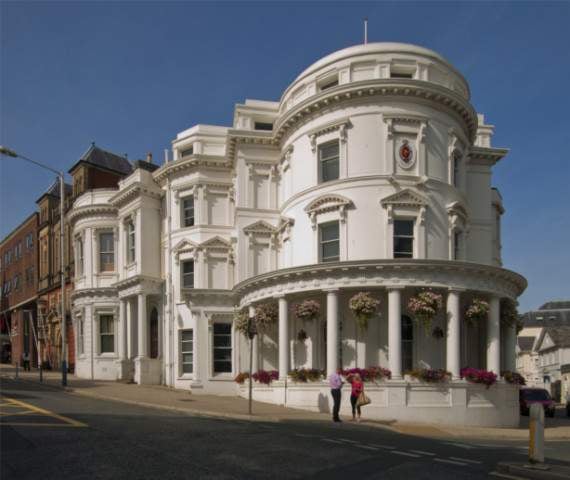
This week’s history and heritage public lecture at University College Isle of Man takes the long view on a current controversy - reforming the Legislative Council of Tynwald. Professor Peter Edge, of Oxford Brookes University, puts debates about the Council into a historical and theoretical framework, seeing the current controversies as examples of long-established themes of the Manx Constitution.
The Council has been a core component of Tynwald for centuries.
From 1609, legislation in Tynwald required the assent of both the Council and the Keys and, from 1704, they debated legislation as separate branches of Tynwald.
The Council comprised officers of the Lord of Man, led by the Governor. Composition before the 18th century was not set, but typically included key secular officers such as the Receiver, legal figures such as the Attorney General, ecclesiastical officers including the Bishop (and also lesser officers such as the Archdeacon), and the Deemsters.
.JPG?width=209&height=140&crop=209:145,smart&quality=75)
.jpeg?width=209&height=140&crop=209:145,smart&quality=75)
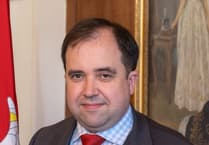

The Deemsters had a surprisingly ambiguous position in the early Council, initially being excluded from executive business. By the 17th century, they had become full members of the Council, despite almost always being Manx.
The Council was in clear counterpoise to the Keys, who were seen, even when not elected, as representatives of "the country".
The tension between the two chambers could occasional flare into conflict. For instance, between 1715 and 1726 a row over the powers of the Council led to mass imprisonment of the Keys, and a purge of the Keys by the Governor.
After the Revestment of 1765, until well into the 20 th century, the Council was seen as ’part and parcel of the colonial apparatus of government’. The officers of the Council may not have been legally bound to vote with the Governor, but as a Committee of the Keys noted in 1943 "in practice, they invariably did so".
Two reports by outside experts (the MacDonnell Report of 1911, and the MacDermott Commission of 1959) transformed the position of the Council in respect to the Keys.
Firstly, from 1919, membership of the Council was gradually transformed, with the officials who sat in the Council being replaced with MLCs appointed by the House of Keys.
At the start of the twentieth century, the eight members of the Council were all appointed by the Crown. By the end, one was appointed by Tynwald, and eight by the Keys. Only two officials remained - the non-voting Attorney General, and the Bishop. The continuing seat for the Bishop, and especially the Bishop’s vote, are seen by some as unfinished business. Secondly, before 1961, the consent of the Council was required for any Act of Tynwald to become law. In 1961 a cumbersome process was set up to allow the Keys, in time, to over-ride the objection of the Council.
As a result, in 1964 the Council reluctantly passed a Bill knowing that, if they did not, it would become law in any case. In 1979 the Council persevered in their resistance to Sunday licensing, and the over-ride was used for the first time.
In 2017, the Keys voted to over-ride the Council, and pass legislation which would remove the Council from the process for appointing the next Chief Minister. In doing so, the Keys continued the practice of the shift of executive power from the Council to the Keys which began just after the Second World War.
Until 1946, executive power was invested in the Lieutenant-Governor. The Governor was then ordered to form an Executive Council, including members of the Keys. ExCo was placed on a statutory footing in 1961, and eventually evolved into today’s Council of Ministers.
In 2015, Tynwald asked Lord Lisvane to conduct a review of the functioning of the branches of government and to recommend options for reform.
The Lisvane Report has not been unanimously endorsed by policy and law makers. However, it is clear that even constitutional debates which reject Lisvane’s recommendations are shaped by them.
Reform of the Legislative Council has already begun. Lisvane would go further. Some would go further still, abolishing the Legislative Council in favour of a single Tynwald chamber.
These debates form part of the continuous evolution of the Manx constitution. To quote Governor Walpole: ’the constitution of the Isle of Man, like the constitution of the United Kingdom, is no rigid law. It has never been embodied in any document or regulated in any statute. It has changed, it is changing, it is susceptible of future change’.
Prof. Edge’s lecture on ’Taking the Long View on LegCo: Reforming the Council, 1417-2018’ will take place at 6pm today (Wednesday) in the Main Hall at University College Isle of Man, Homefield Road, Douglas. All are welcome, and no booking is required. The lecture will be recorded and made available online at a later date.
l Further details about the history and heritage lecture series, together with videos of last year’s lectures can be found at http://catrionamackie.net/lectures/
Comments
This article has no comments yet. Be the first to leave a comment.