
Reflecting on my previous efforts to follow 10 tips from UNESCO Biosphere Isle of Man, I came to the conclusion that replacing plastic is no easy feat. Unfortunately it’s everywhere!
So my next question was, how have a family of four been making decisive changes to help them from depending on this nondegradable material?
Emma McEvoy, a mother of two, spoke to me about how her family have been making thoughtful alternatives since October last year.
’It grew from my husband Peter and I wanting to reuse things,’ she said. ’When we moved over to the island, we didn’t understand how you recycle here.


.png?width=209&height=140&crop=209:145,smart&quality=75)

’That really made us think about what we were buying. So I started following Instagram accounts that showed how to go plastic-free.
’I then bought some of the products shown, such as toothpaste in a glass jar, which are really good!’
Showing me to the family’s bathroom, Emma presented a range of plastic-free hygiene supplies, which included shampoo and conditioner bars, home-made soap and bath bombs, activated charcoal tooth floss and a bamboo toothbrush - just like mine!
Emma had also bought beeswax from a local beehive keeper to create a special wrap her soaps, made with shea and coconut butter, along with the natural wax.
The family go to Top Banana, a shop in Saddlestone, Douglas, to refill their washing liquids.
They also use something called Eco Egg, which uses natural cleaning pellets.
For food, they use small fabric bags for shopping and a stainless steel lunchbox to collect meat from their local butchers or chips from the Chinese takeaway.
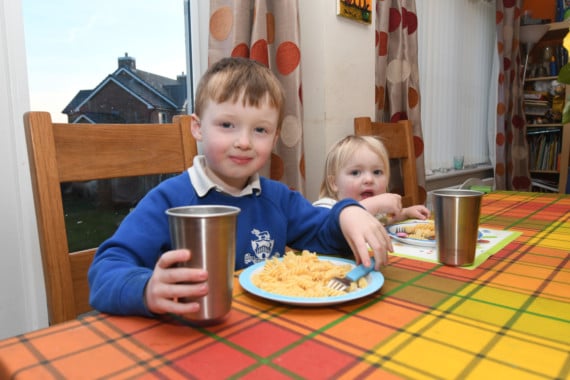
The kids also use stainless steel/plant-based straws, stainless steel cutlery, cups and now plates during mealtimes.
’It can be argued that stainless steel isn’t the most sustainable material, but we think that it is a better alternative compared to plastic,’ she explained.
When asked about the challenges her family face in trying to reduce their plastic waste, she said: ’Trying to go plastic-free can be expensive, but if you think about it, you can spend £12 on a steel bottle that would amount to 12 bottles of water in plastic bottles.
’We’ve had our steel bottles for about a year, which the kids bring to school and we bring to work, and they’re still in good shape.
’If I go into Marks and Spencer to buy the kids a cookie, it’s cheaper to buy five already encased in a plastic bag than it is buying them individually.
’Although some shops in the island provide a good range of plastic-free supplies, I sometimes have to order stuff in.
’There is a worry that it will be delivered in plastic wrap, but some producers have made efforts to use cardboard boxes and stuffing instead.’
Despite the difficulties, the family continues to make changes where they can.
Her five-year-old son, Finn, is very happy that these differences are helping to conserve wildlife, such as fish.
’We’re helping to save the world,’ he said. ’My favourite thing are the straws, but I do miss my cordial.
’We don’t get it any more because it’s in a plastic bottle and I don’t really like the squash in the glass bottle.’
Since starting their plastic-free journey, the family have noticed there has been a lot less rubbish going into their bins at the end of the week.
’We’ve realised that we don’t need a lot of products. We take this challenge one step at a time and it no longer feels like a chore, but a part of our life.
’Of course, there is sometimes a battle between the plastic issue, fairtrade and using organic materials.
’We’re not here to tell people that they should make these changes, but if people are interested then the best thing to do is to take it one step at a time, look at alternatives and then later make a choice on what they think is right for them,’ she said.
You can view their informative ’fairlyethicalfamily’ Instagram page for more ideas.
A family from Peel has been making steps to cut plastic out of their lives. Reporter Jess Ward finds out more.
Comments
This article has no comments yet. Be the first to leave a comment.