

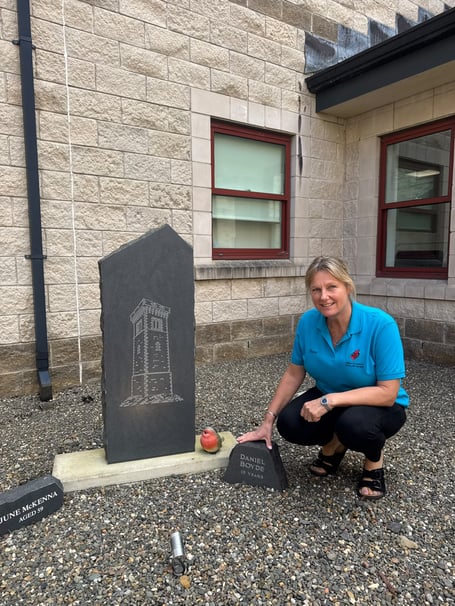
For Diane Taylor, organ donation is not an abstract issue or something discussed once a year during Organ Donation Week.
It is something that changed her family forever.
In 2007, Diane's 15-year-old son Daniel was involved in a road accident.
He suffered a traumatic brain injury and, despite doctors' efforts to save him, his parents were eventually told that he was brain dead.
Then came a question Diane and Daniel's father had never expected to be asked.
Would they consider donating their son's organs?
‘We hadn't ever thought about it or talked about it, so it was a massive question to be asked about your 15-year-old son,’ Diane said.
‘But it was an easy decision, and his dad and I agreed straight away and said yes.’
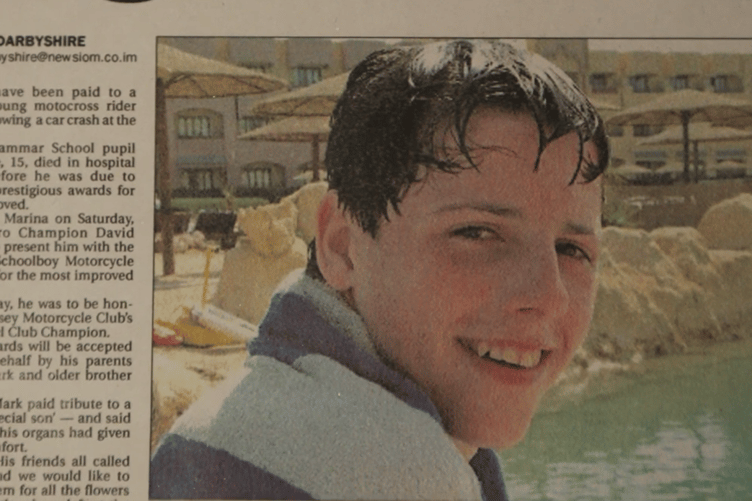
Daniel, a Ramsey Grammar School pupil, went on to become an organ donor, with his heart, liver, pancreas and kidneys donated following his death. His gift went on to save four lives.
-Border.png?width=209&height=140&crop=209:145,smart&quality=75)
Almost two decades later, his name is written into the Isle of Man's organ donation legislation.
The Human Tissue and Organ Donation Act 2021, which introduced the island's move to an opt-out system, is widely known as Daniel's Law, in memory of the teenager whose death prompted his mother to devote herself to improving awareness of organ donation.
But Diane never set out to become a campaigner. She was simply a mother trying to make sense of what had happened to her family.
Diane remembers the hours after the crash vividly. She and Daniel's father watched doctors battle to save their son.
‘We watched for 24 hours as they battled to save Daniel's life,’ she said.
Eventually, Diane and Daniel's father were taken into a room and told that their son had died.
‘It was only the machines keeping him alive,’ she said.
Daniel then underwent brainstem testing, involving two consecutive sets of tests, which confirmed that he had died.
For the family, the decision about organ donation was immediate.
‘There was no doubt,’ she said.
A promising young motocross rider, his legacy lives on.
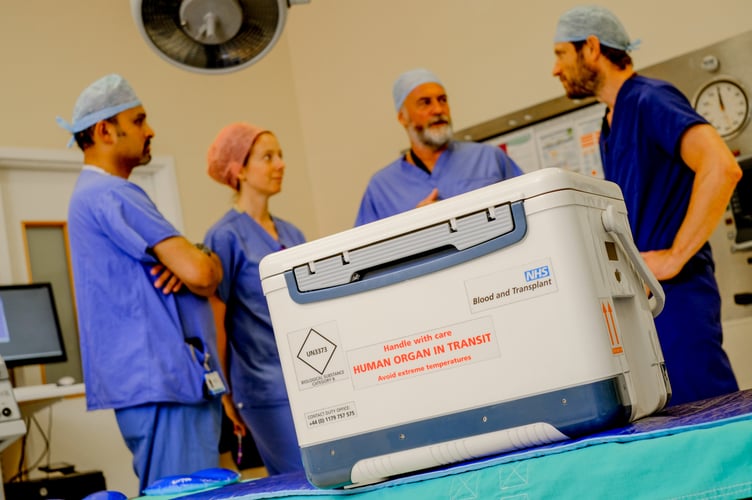
In the years that followed, Diane heard from NHS Blood and Transplant about some of the people who had received Daniel's organs.
Then came letters from recipients.
Those letters changed the way she thought about what had happened.
She heard about people whose lives had been transformed, including recipients who had gone on to walk their daughters down the aisle or bounce grandchildren on their knees.
‘I think from that I started thinking, well, we're not the only ones that find themselves in this position and being asked at such a traumatic time,’ Diane said.
‘Why aren't more people talking about it?’
It took three or four years before she began turning those thoughts into action.
Diane contacted Daniel's specialist nurse, who travelled from England to Noble's Hospital to meet her.
She wanted answers to questions about what had happened after she and Daniel's father had left the hospital that day.
That meeting led to another opportunity.
Diane was asked whether she would consider joining a newly formed organ donation committee at Noble's as a layperson. She agreed. She also started a Facebook page.
‘What started as a little page, I realised quickly, as it grew, that I needed to do something bigger,’ she said.
‘And more people did want to know more about organ donation and transplant.’
That eventually became charity Organ Donation Isle of Man.
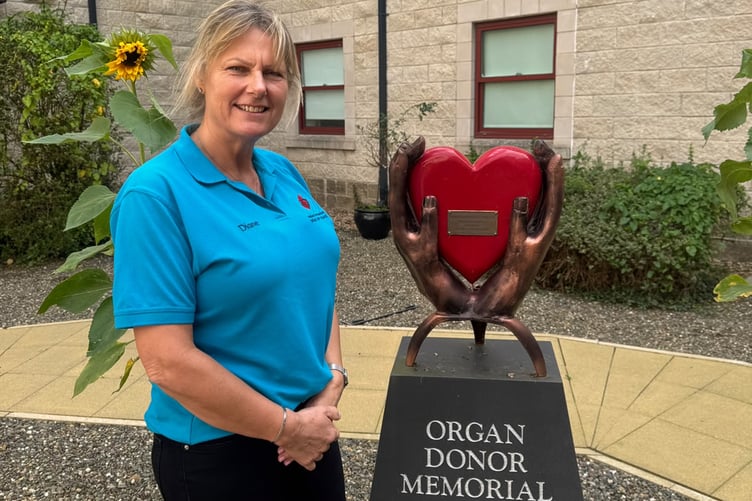
The organisation has grown into a team of about 15 people, with members working at the hospital alongside a lay member who is a heart transplant recipient.
Diane stresses that their campaigning and events are carried out in their own time.
‘They're so passionate about supporting the donor families and the transplant recipients, and just going out and talking to people in the community,’ she said.
The group has also helped create a memorial garden for organ donors at the hospital.
For Diane, it is a place to recognise the people whose deaths have given others the chance to live.
‘In this garden alone, there's probably about 100 lives being saved or more, probably more,’ she said.
A central part of the group's work has been trying to dispel myths and encourage people to have conversations about donation before a crisis occurs.
And this year, that message has particular relevance in the Isle of Man.
The island moved to an opt-out system for organ donation on January 1 this year.
Under the new system, most adults are considered to have agreed to organ donation unless they have recorded a decision not to donate or fall within an excluded group.
But the change does not remove personal choice, and families are still consulted before donation takes place. The government continues to encourage people to record their decision and tell their loved ones what they want.
Diane says that conversation is one of the most important things people can do.
Her message is not that everyone should make the same decision.
It is that people should make a decision and make sure their families know about it.
That is particularly important at a time when the UK is seeing a sharp decline in organ donation.
NHS Blood and Transplant has launched what it describes as its first urgent response plan after deceased donation rates fell by around nine per cent compared with the same period last year.
More than 8,700 people are currently waiting for a transplant in the UK, with nine people dying each week while waiting.
NHSBT says more than 700 potential donations did not proceed between April 2021 and March this year because families did not know their loved one's wishes.
Diane says the situation is reflected on the island, where 21 people are currently waiting for a transplant, the highest number she can remember seeing here.
For someone who once found herself being asked about organ donation in the worst possible circumstances, she knows why those conversations matter.
The campaign Diane began after Daniel's death eventually reached the political process.
The Organ Donation Bill was introduced by then MHK Martyn Perkins and the resulting legislation was named in Daniel's memory.
The Act received Royal Assent in 2021, before the opt-out system came into force this year.
For Diane, seeing her son's name attached to the law is still difficult to put into words.
‘It’s amazing,’ she said.
‘For me and his dad and his brother and sisters and nieces and nephews that never met him, it's just an amazing thing to have named after him.’
She describes Daniel as somebody who loved helping other people, joked around and enjoyed making people smile.
‘He'd just be made up,’ she said.
‘I think if by telling his story we can help inspire other people to sign up, it's just amazing.’
There is an obvious sadness when Diane talks about Daniel. But there is also pride.
The tragedy of losing a 15-year-old boy cannot be changed. Nor can the grief of his family.
What can be remembered is what happened afterwards.
Four people were given the chance to live because of a decision Diane and Daniel's father made at the most painful moment of their lives.
And almost 20 years later, his story is still being told.
Not because Diane wants people to make the same choice she did.
But because she wants them to talk about it before they are ever faced with having to make that decision for someone they love.