
With everything going on around us presently, I thought I would turn to lighter subjects this week!
A nostalgic look back at children’s TV, some well before my time and others which bring back happy memories.
The first children’s programme on UK TV was broadcast in April 1937 under the umbrella title of For the Children and consisted of different story readings, puppet shows and songs.
It was suspended in 1939, along with the rest of BBC Television, for the duration of World War II, returning in 1946. It was broadcast until 1951.

.jpeg?width=209&height=140&crop=209:145,smart&quality=75)
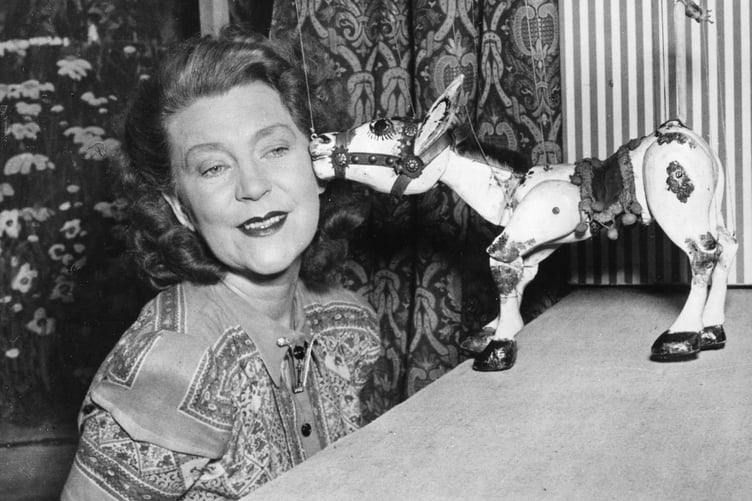
The first character I had heard of was Muffin the Mule, who would dance on top of a piano whilst presenter Annette Mills played it.
Does anyone remember his signature tune called ‘We Want Muffin’? If you did, it will be in your head for the rest of today!
Running firstly from 1946 to 1955, Muffin became a TV star, with a wide range of spin-off merchandise including books, records, games and toys. A die-cast movable puppet was produced by Lesney Products, ‘the first toy to be marketed under licence as a result of successful TV appearances’.
Moving on to the 1950s era, here I remember lots of shows, and I know readers will as well.
Andy Pandy was a marionette who lived in a picnic basket. He was later joined by Teddy and Looby Loo, a rag doll who came to life when Andy and Teddy were not around. Looby Loo sang ‘Here We Go Looby Loo’, and all three lived in the same picnic basket. Each episode ended with a variation on the song: ‘Time to go home, time to go home, Andy is waving goodbye’.
Blue Peter was first broadcast in 1958 and continues to the present day, the longest-running children’s TV show in the world.
Who can forget Captain Pugwash? Originally conceived as a comic strip for The Eagle comic, which I queued up for each week, Pugwash sailed the high seas in his ship called the Black Pig, assisted by cabin boy Tom, pirates Willy and Barnabas, and Master Mate.
His mortal enemy is Cut-Throat Jake, captain of the Flying Dustman. The series ran on TV from 1950 to 2008.
‘It’s Friday, it’s five o’clock and it’s Crackerjack’… between 1955 and 1984.
A variety show featuring comedy sketches, singers and quizzes, prizes included the booby prize of a cabbage and the famous Crackerjack pencil.
Stars included Eamonn Andrews, Max Bygraves, Leslie Crowther, Ed ‘Stewpot’ Stewart, Peter Glaze, Little and Large, The Krankies, Basil Brush, Bernie Clifton and Ronnie Corbett, amongst many others. The show was broadcast live in front of an audience, mainly of children, latterly at the BBC TV Theatre (since renamed Shepherd’s Bush Empire).
I loved The Flowerpot Men. Bill and Ben, made of terracotta flowerpots, lived at the bottom of an English garden. A third character who lived in between the flowerpots was Little Weed… ‘Weeeeeed!’
Whilst the man who worked in the garden was having his lunch, Bill and Ben would emerge from their pots for adventures, and the question would always be asked when a mishap occurred: ‘Was it Bill or was it Ben?’ before they disappeared back into the safety of their pots.
Ivor the Engine, first broadcast in 1959, told the tales of steam engines coming to life in North Wales.
The storylines drew heavily on, and were influenced by, the work of Dylan Thomas. The series was written, animated and narrated by the very talented Oliver Postgate, with artwork by Peter Firmin. Another favourite from this team was Noggin the Nog, considered a cult classic from the golden age of British children’s TV. Noggin is the simple, kind and unassuming ‘King of the North Men’ in a Viking-age setting, with various fantastic elements such as dragons, flying machines and talking birds.
Who remembers the singing puppet pigs, Pinky and Perky? The reason for their high-pitched singing voices was the re-playing at twice the original recorded speed, and some of us actually purchased their LP records!
Another animal-based show was Rag, Tag and Bobtail. Rag was a hedgehog, Tag a mouse, and Bobtail a rabbit, and it ran from 1953 to 1965. All the characters were glove puppets and the stories were of innocent times. I once naughtily described the Council of Ministers as something of a rag, tag and bobtail grouping because of the consensus nature of our politics, blending different views from different backgrounds.
Last time I had a wander down memory lane looking at children’s TV, I was told off by a friend who said I had failed to mention Sooty, Sweep and Soo! Created by Harry Corbett and produced for the BBC from 1955 to 1967, and ITV from 1968 to 1992, the show focuses on the mischievous adventures of the glove puppets.
Originally featuring slapstick comedy, music and stories, it was further developed by Matthew Corbett, son of the original creator. At the end of each episode, I can still recall Harry Corbett saying, ‘Bye bye, everybody… bye bye!’
Another puppet series I was fond of was Torchy the Battery Boy, which portrayed the adventures of a boy doll who has a battery inside him and a lamp on his head.
He had been created by Mr Bumbledrop, a lonely old toymaker who spent most of his days tending to his garden where the neighbourhood children played.
With his lamp on his head, Torchy presses a button on his jacket and utters a mysterious phrase; the light illuminates and gives Torchy magical insights. Mr Bumbledrop also built a cardboard rocket ship, allowing the boy to soar through the heavens to Topsy Turvy Land. I am certain I had my own light-up Torchy - simple things like light-up toys were treasured!
Can you remember the opening sequence to Watch with Mother? ‘Are you sitting comfortably? Then I’ll begin!’ This title covered a number of afternoon programmes between 1952 and 1975, including a number of those previously mentioned. Here’s a music question for you, just for fun: when was ‘Are You Sitting Comfortably?’ used in a song, and what was the band?
Picture Book, originally broadcast in 1955, commenced with the presenter opening the picture book at a relevant page. The programme encouraged children to make things, and the catchphrase was: ‘Do you think you could do this? I am sure you could if you tried.’
A favourite children’s show was The Woodentops: Daddy, Mummy, Jenny, Willy, Baby and of course Spotty Dog - ‘the very biggest spotty dog you ever did see’.
First shown in 1955, the main characters are the members of a family living on a farm.
Each episode commenced with the whole family being introduced as they sat in front of a tall curtain, apparently on a stage.
In 1983, the puppets were stolen from the BBC.
They were spotted a year later in an auction room in London and were returned.
They now reside in the Museum of London’s permanent collection.
In 2009, The Woodentops appeared in the official BBC Children in Need medley music video, which reached number one in the UK Singles Chart.
Another time, I will look at children’s TV from the 1960s and 1970s. Please get in touch with your favourite programme, and why!