
You might think it strange that we’re talking about fireworks this week, when November 5 has been and gone, but this year’s festivities are seemingly never ending – Ramsey town’s display will take place in Mooragh Park at 7.30pm on November 21, and Douglas’s is at 7pm on November 26.
This means that pet and livestock owners need to be on ‘high alert’ for longer than is necessary, ensuring that their animals are not adversely affected by the flashes, bangs and whistles that are part and parcel of a fireworks display. Or are they? Douglas town has held two very successful drone light shows to celebrate cultural events; and Port Erin celebrated bonfire night several years ago with low noise (or ‘silent’) fireworks.
At least public fireworks displays are well publicised, but private displays on private land are pretty much unregulated and can be held at random times (indeed, the MSPCA was advised of a display held in a field next to horses in Grenaby on October 30). This is despite the Fireworks Act (2004) stipulating that there should be a 10-day ‘window’ for displays from November 2 to allow for weather related delays.
In 2020 a petition to Tynwald was brought by a local lady, whose ponies and donkeys had been traumatised by a neighbour’s fireworks display. This led to a Tynwald select committee scrutinising the Act, but very little changed as a result.
Is it time for another review? The MSPCA thinks it is, and we would like your help.
If your pet or livestock have been adversely affected by this year’s fireworks, please let us know by emailing [email protected] with as much detail as possible (especially while it is still fresh in your mind).
We will compile a summary of responses, and then assess what action we can take. Ideally we would like the Isle of Man Government to undertake a formal public consultation with a view to amending the 2004 Act to make it more pet, livestock and wildlife friendly (not to mention lessening the impact on people who have sensory issues with loud noises).
The UK’s Guide Dogs charity is also asking the public for help. It would like them to donate footage of fireworks being set off, or fireworks displays, so that it can continue to improve its National Fireworks Archive video – a desensitisation training tool that allows dog owners to introduce their pets to realistic firework sounds at a level they can cope with, before slowly increasing the challenge over time.
Guide Dogs’s research shows that nearly two-thirds of the UK’s dogs are affected by firework anxiety, and that this is costing owners an estimated £1.4 billion a year: they spend an average of £145 helping their pets cope, with calming products, vet appointments and medication.
The toll isn’t just financial, but emotional and social too – nine in 10 dog owners state that fireworks season (whatever that is these days) means days of disrupted plans because they cannot leave their pet unattended.


The National Fireworks Archive video is supported by useful advice from Guide Dogs about how to use the training aid, not least that such training should be undertaken well in advance of bonfire night, and it can be accessed via the charity’s website www.guidedogs.org.uk
Dogs generally have acute hearing, but some breeds are more sensitive to noise than others, with collies being top of the list.
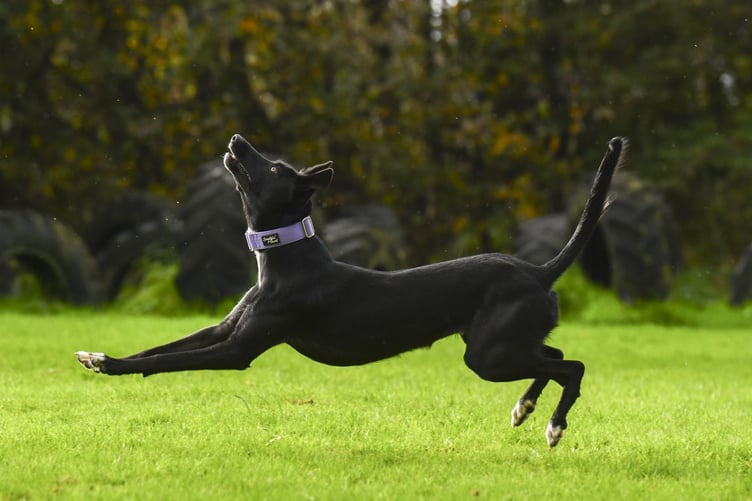
Stunning collie cross lurcher Koko is only nine months old, and so she has only experienced her first November 5 (and she coped surprisingly well).
She already understands basic commands, and likes nothing more than pleasing the humans in her life, and so she is at the perfect age and stage to continue with her training. She would excel at dog agility, and needs an active and energetic new owner to keep her physically and mentally stimulated.