
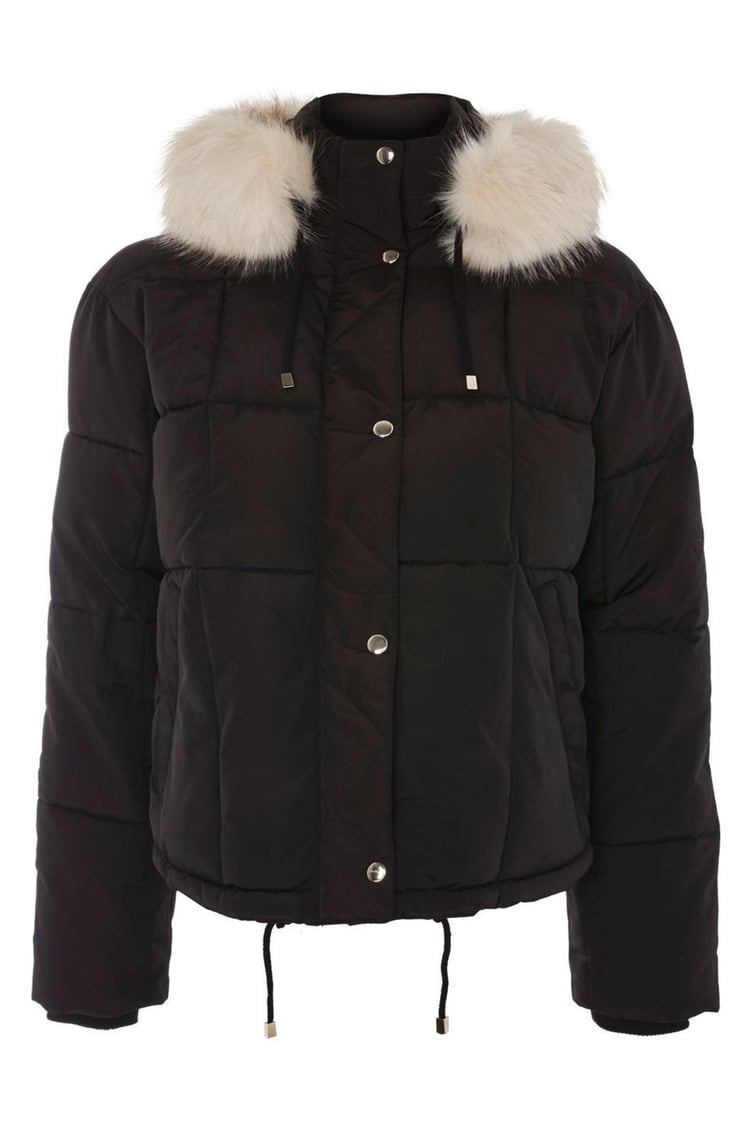
This is the time of year when we aim to heighten awareness about the sale of animal fur, on our high streets and online, as the weather turns colder and we start to buy warm clothing - coats and jackets with fur trim; hats with furry bobbles; and gloves with furry cuffs.
In past years we have focused on the welfare issues associated with fur farming, and how real fur is often mistaken for faux, but this year there is an added concern - fur farming is having an impact on human health.
The European Centre for Disease Control warned that the incidence of the SARS-CoV-2 virus in mink (the most commonly farmed species in Europe) could undermine the effectiveness of Covid vaccines in humans, and could lead to the development of further Covid variants.
In June this year, 67 virologists, epidemiologists, infectious disease specialists and veterinarians from across the globe called for action to end fur farming due to human health concerns, and they concluded that raw mink skins cannot be considered a safe commodity for international trade.

.jpeg?width=209&height=140&crop=209:145,smart&quality=75)

.png?width=209&height=140&crop=209:145,smart&quality=75)
Outbreaks of Covid-19 have been documented on 446 mink fur farms in 12 different countries in Europe and North America since April 2020.
According to the Humane Society (www.hsi.org) the ’appalling conditions on fur farms make them a ticking time bomb for pandemic disease risk’ and that it is a ’matter of when, not if, another deadly virus hits if we continue to keep animals in these unnatural and horrific conditions’.
Farmed animals are kept in tiny, barren, wire cages which induce stress and cause disease to spread quickly; and the lack of genetic diversity in fur farms’ breeding programmes renders animals more prone to illness.
These are ideal conditions for viruses to be transmitted and to mutate.
Concerning cases if animal-to-human (zoonotic) disease transmission have been documented. For example, one group of European researchers published a report (see www.eurosurveillance.org) that concluded that from June to November 2020, SARS-CoV-2 was detected in mink from 290 (25%) of the 1,147 Danish mink farms, rising to 48% in North Denmark where 30% of people connected to the mink farms became infected.
Approximately 4,000 human Covid cases are estimated to have been infected with a mink variant.
Although fur farming has been banned in the UK since 2000, it is not illegal to import fur from other countries.
We can all do our bit to make the trade less profitable by ensuring we don’t mistakenly buy real fur.
If it feels too good to be fake, then it probably is!
So, if you’re tempted to buy to a furry item of clothing or a pom-pom adorned accessory (such as a key ring), please make a note that there are two things you can do to test whether fur is real or fake:
Look at the tips of the fur. If they are pointed then the fur is probably real, because fake fur usually has rounded or blunt tips; and
Inspect the base of the fur. You should be able to see a woven or fabric base if the fur is fake, and if it’s real the base will look like skin (which, of course, it is).
The labelling on these items is often misleading or non-existent, so please take time to check and remember that more than 100 million animals are killed for their fur every year worldwide - that’s equivalent to three animals dying every second just for their fur.
And if you like the feel of real fur, then why not pop along to Ard Jerkyll and meet the cats, kittens, rabbits and guinea pigs we have here - all looking for new homes. We’re open every day expect Mondays and Thursdays, from 1pm to 4pm.
Comments
This article has no comments yet. Be the first to leave a comment.