
Regular readers of these articles will know all too well about the health problems associated with flat-faced (brachycephalic) dog breeds such as French bulldogs, British bulldogs and pugs.
The recent very warm weather will have exacerbated the breathing and sleeping issues commonly experienced by these breeds, necessitating veterinary intervention which is becoming more and more expensive.
The consequence of this, in England, has been a huge increase in the number of flat-faced dogs being given up for rehoming.
The RSPCA reported last week that it had seen a 3,800 per cent increase in French bulldogs coming into its care, from only six dogs in 2016 to 235 in 2025, and with the upward trend continuing in 2026.
Put aside pets being bought as ‘fashion accessories’ (let’s face it, there have always been fashionable and less fashionable dogs, with Rough Collies having a heyday in the 1970s as a result of the film ‘Lassie’, to English sheepdogs seeing a spike in popularity when they were used to promote Dulux paint), because the bigger issue is that these dogs are being bred to suffer because people want them to look a certain way.
The Royal Veterinary College has created a health checklist called the Innate Health Assessment (IHA) which assesses ten traits that determine whether a dog is healthy.
As well as flat faces, these traits include bulging eyes, little or no tail, bowed legs, stiff spines, and excessively wrinkly skin.
The IHA scheme is a voluntary one but it has wide support from animal charities, insurers and the Kennel Club, and it is hoped that it will eventually become a mandatory scheme to prohibit the breeding of unhealthy dogs.
However, it will only apply to licensed breeders, which could make the ‘black market’ even more lucrative for unscrupulous breeders.
The most effective way to reduce the breeding of unhealthy dogs is for people not to buy them in the first place.




And, of course, we always advocate for an ‘adopt don’t shop’ approach to pet ownership, whenever possible. We haven’t seen a big increase in French bulldogs coming into us for rehoming, but there has been an increase in flat-faced, bull-breed types overall.
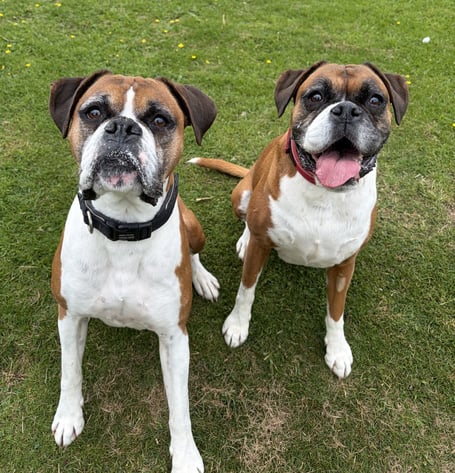
Whilst Boxer dogs are, technically, flat-faced the breed has been less prone to the influences of fashion and so this trait has not been overly developed in recent years.
We have two perfect examples of the breed in our kennels at the moment – eight-year-old siblings called Cookie (female) and Buster (male). In fact, such is the relative unfashionableness of Boxers, the last Boxer we had for rehoming was nine years ago.
The Boxer dog’s lineage dates back to 16th century Germany when they were used as hunting dogs, particularly the hunting of large animals like bears and boars.
In the early 19th century they were used in dog fighting, and this is probably how they gained their name. The most successful dogs were able to use their front legs, standing on their back legs, to ‘box’ their opponents and deliver forceful blows.
Despite their heritage as dogs bred for strength and resilience, today’s Boxers are renowned for their affectionate nature, their loyalty and their playfulness.
Cookie and Buster exhibit all of these characteristics in abundance, and they have clearly been much-loved family pets, Sadly, their previous owner died and no-one else in the family could take them.
They are healthy and active, and very bouncy and so they would be best suited to a home with older children.
They are a bonded pair, with Buster being completely devoted to Cookie (she, less so!) and so we will only rehome them together. This is more of a challenge, but we’re confident that it won’t be long before they meet someone with the time and resources needed to give them a perfect new home.