
I hope that you all had a good Christmas in these challenging times.
Spending time with those closest to you is the best use of this precious commodity.
Most people lead very busy lives with many having to take on additional employment in order to try and make ends meet.
I’ve mentioned here before that Christmas can be a lonely time for some, so if you have time before New Year try and call in to say hello to those people in this situation. That too would be time well spent for both of you.


.jpeg?width=209&height=140&crop=209:145,smart&quality=75)

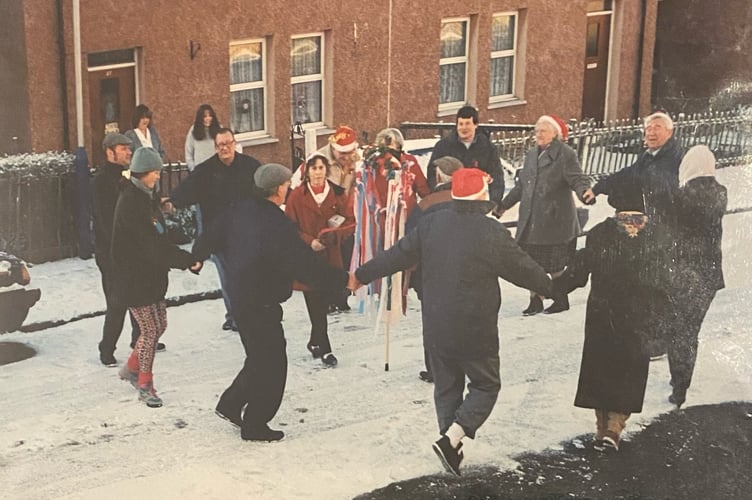
Did you get involved with the Hunt the Wren on St Stephen’s Day?
Over many years this was an important part of my Christmas where I would join families in Hillside Avenue, Douglas at about 9.30am because we had to finish our hunt by midday.
We were led by my old friend Willie Kneale and George Gelling, who though slight in stature had a big heart and would carry the pole with crepe ribbons placed around the cage.
When we set off Willie would start us off by encouraging us to sing ‘We saw three ships’.
People would emerge from their front doors to greet us and contribute towards good causes and take a piece of the ribbon for good luck.
I remember one of our group, Eveline Lee, always being keen on the red coloured ribbon to bring her household the best for the following year and her’s was one of the houses we stopped at to be invited in for a lovely home prepared buffet.
St Stephen’s Day is December 26 otherwise known as Boxing Day and it was her daughter Susan’s birthday so we enjoyed a double celebration.
Another popular calling place was Gwen Hammond’s who treated us to relatively new continental favourites like Panettone and more.
I didn’t know but am told Boxing Day gets its name from all the money collected in church alms boxes for the poor.
Who would have believed in 2023 that we would need food banks and thank goodness for those like the Salvation Army and the Nags Head in Douglas who lay on free Christmas lunches for those less fortunate.
We no longer have the soup kitchen in Myrtle Street but Christmas can see increased pressures on those in poverty, which despite living in a lovely island, we have so many facing difficulties with living, housing and energy costs being such a burden.
I have to say when I was recently in Birmingham and Manchester the homeless situation showed no sign of improvement and the former in particular I find is very cold at the best of times.
To see an ex-serviceman with only one leg begging on the street reminded me of the hollow promises for those who returned to the UK after World Wars supposedly to a country fit for heroes.
To read that more than 9,000 children would be homeless in Birmingham that night reminded me of the stark reality many face, which certainly isn’t a lifestyle choice.
Anyway back to Hunting the Wren, which had a number of verses and which as the morning wore on and refreshments had been consumed would sometimes get mixed up.
Others in our party that some might remember included Gabe Beedie, Ena Gelling, Billy and Maureen Smith, Dick and Gwen Cubbon, Vera Nuttall, John and Cecile Brookes and Micky Ventro.
We would end up at Willie’s house where his wife Joan together with his mum had been busy preparing ‘Desperate Dan’s Cow Pie’ and baking home made mince pies which are so much better than the shop-bought version.
It is so important to keep these Manx traditions alive and it’s so good that a new generation have embraced these special facets of island life.
I have always loved Christmas,I think because I never grew up.
We used to leave out a pillowcase in anticipation of a visit from Santa in our house before special seasonally branded bags and stockings were an option.
Did you know that hanging stockings came from the Dutch custom of leaving shoes packed with food for St Nicholas’s donkeys.
He would leave small gifts in return.
The tradition of putting tangerines in stockings (remember when you only got them at Christmas?) came from 12th century nuns who left socks full of fruit, nuts and tangerines at the houses of the poor.
How about Christmas crackers? When we operated Moochers I prided myself on having the best selection in Douglas at that time.
I would travel to Birmingham in February each year for four days for the annual Spring fair and ‘mock ups’ of the crackers and wrapping paper designs were available to pre-order ahead of receiving stock in late August.
The cracker was invented by a London sweet shop owner called Tom Smith.
In 1847 after spotting French bonbons wrapped in paper with a twist at each end, he sold similar sweets with a ‘ love motto’ inside. Isn’t that a good idea? More love less of the alternative.
He then included a little trinket and a ‘bang’.
His ‘bangs of expectation’ included gifts such as jewellery and miniature dolls.
By 1900 he was selling 13 million a year. Don’t tell anyone but Rudolph the red nosed reindeer was invented for a US firm’s Christmas promotion in 1939.
Santa I’m told hasn’t always been dressed in red.
Pre 1930s there were many different variations sporting a variety of different coloured garments and ranging in size from big to small.
The word ‘Carol’ actually means to dance or song of praise and joy and they used to be sung during all four seasons, but the tradition of only singing them at Christmas is the only one to survive.
Another item we used to sell stacks of, particularly this time of year was Sellotape, but I didn’t know that six million rolls would be sold in the UK and here in the run up to Christmas.
I’ve never had a Christmas jumper( bah Humbug!) but according to Matalan,82% of those they surveyed owned a Christmas jumper,with 25-34 year olds the most likely to buy one( that explains it then).
More than 75% of people buy their festive jumper to wear for a work event, while over half wear one on Christmas Day.
I love Christmas at home with the family but 4.25 million British people travel abroad for Christmas.
For a Christmas to be classified as ‘white’ in Britain a single snowflake needs to be observed falling in the 24 hours of December 25 on the rooftop of the Met Office headquarters in London.
During the 20th century there were only seven official white Christmases in the UK.
I’ve bought my grandchildren Ivy and Stan a sledge each (for me to borrow) so fingers crossed.
Nearly 60 million Christmas trees are grown in Europe but no worry about the effects of Brexit plenty are grown in the UK and here.
Christmas trees usually grow for up to 15 years before they are sold and on average three new ones are planted to replace each one harvested.
Finally the top three royalties earned from Christmas songs each year? Mariah Carey £375,000; The Pogues £400,000 and Slade £500,000.
Comments
This article has no comments yet. Be the first to leave a comment.