
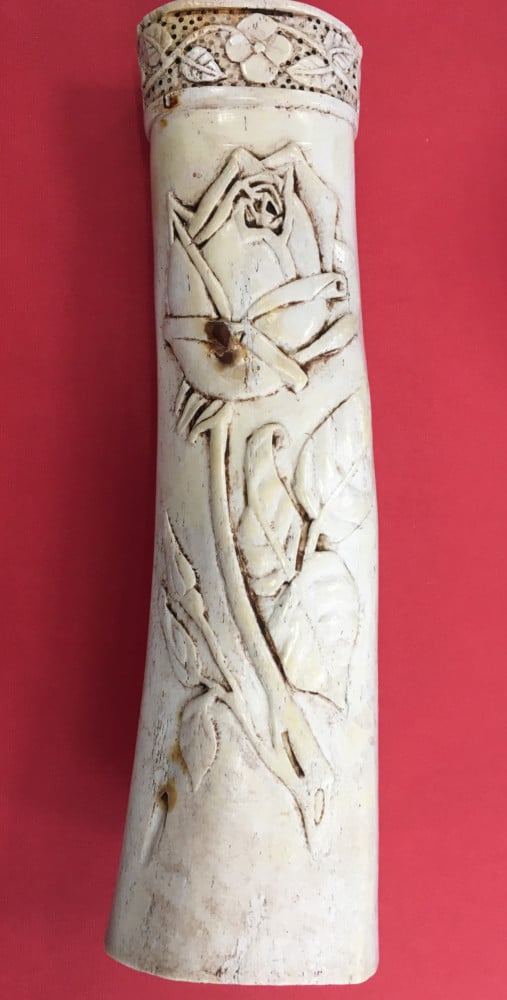
An unusual artefact has come to light as researchers look into the history of a site in the west of the island.
Work is currently under way at the Knockaloe Visitors’ Centre in Patrick.
Volunteers are collating and building a collection of photographs and letters relating to the site - not only as the Knockaloe internement camp but also the history of Patrick Schoolrooms - to help tell the story of the camp and the people who lived there 100 years ago.
Vivien Roworth from Peel contacted them and gave them a Knockaloe bone carving. It was hand-crafted from a beef bone by one of the Knockaloe internees from the First World War and depicts a rose on one side and the wording ’Knockaloe 1914â??1916’.
-(2).jpeg?width=209&height=140&crop=209:145,smart&quality=75)
.jpeg?width=209&height=140&crop=209:145,smart&quality=75)
Creating the bone carvings such as the one donated by Vivien, was one of the ways in which the men passed their time at the camp and each bone, or carved pair of bones, are individual and unique.
The men who lived at Knockaloe during the First World War were interned for up to five years in barbed wire compounds, with about 1,000 men in each compound.
The men slept in huts with up to 200 men to a hut, either on bunks or wooden beds moved into place each evening.
One internee, Paul Cohen-Portheim, later described the difficulties of internment and highlighted the impact of never being alone.
Lack of meaningful occupation and a sense of helplessness was a serious issue, and it did not take long before many started to become ill with a form of depression which became known as ’Barbed Wire Disease’ or ’Barbed Wire Sickness’, so named by Dr Adolf Lukas Vischer, a Swiss doctor working in both German and British camps at that time.
The authorities realised that, in order to prevent the men from becoming ill, they needed to be kept occupied.
With the approval of the UK Home Office, assistance was provided by the Quaker Friends Emergency Committee to the men interned in camps in the British Isles, together with their wives and families, many of whom were becoming destitute, with similar help also provided to the British internees and families in Germany.
Quaker James Bailey was sent to the Isle of Man and was fundamental in the development of industries and activities for the internees.
He arranged for tools and equipment to be sent to the camp so the men could create artefacts both for industry and occupation.
Some were made for the internees’ families, some as gifts for the guards but many were made to sell, both to other internees but also in England, Germany, Scandinavia and America so that the internees could buy extra provisions at the camp shop or to allow money to be sent home to their families.
Internees had to use whatever materials were readily available. Every week beef was sent to the camp to feed the 23,000 men. The remaining bones, left over from the cook houses, were one such material. These could be made into a variety of useful objects.
Vivien bought this bone at the Royal Show on the Knockaloe site a number of years ago and now would like the item to return home.
She first approached the charity last year to become a ’bed sponsor’ for £25 a year, and subsequently donated her Knockaloe bone carving to the charity.
Comments
This article has no comments yet. Be the first to leave a comment.